- Philadelphia Fed President Anna Paulson emphasizes that monetary policy should prioritize achieving price stability over any specific interest-rate level, endorsing recent easing amid tariff-driven inflation and rising labor-market risks.
- Paulson signals potential for about another 0.5 percentage point of rate cuts by end-2025, with more likely in 2026–2027, contingent on economic data, while stressing that tariff-related inflation is likely temporary.
- Internal Fed divisions surface, with October FOMC minutes showing broad support for the latest cut but differences over further easing, highlighting a balanced approach to the dual mandate.
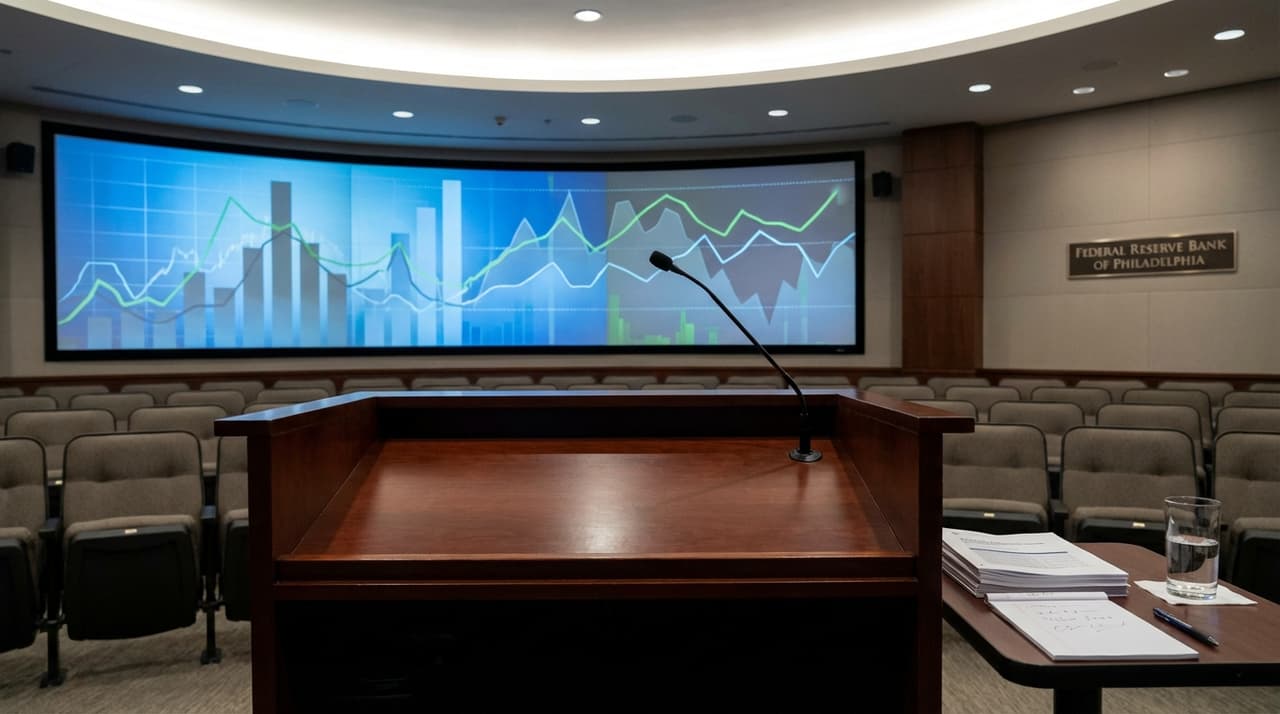
In her first major economic outlook speech since becoming Philadelphia Fed President and CEO on July 1, 2025, Anna Paulson laid out a clear stance: the Federal Reserve's focus should be on restoring price stability, not fixating on a particular federal funds rate level. Speaking to an audience of economists and market participants, Paulson argued that monetary policy must balance risks to maximum employment and price stability, moving policy "toward a more neutral stance" as conditions evolve. Her comments come after the Fed's recent 25 basis-point rate cut at the October FOMC meeting, which lowered the target range to 3.75–4.00%, a move she endorsed as appropriate given the current economic landscape.
Paulson stressed that tariff-related inflation, a key driver of price pressures in 2025–2026, is likely temporary and "will not leave [a] lasting imprint on inflation." She cited anchored inflation expectations and limited pass-through of higher costs to consumers as factors mitigating long-term impacts. According to people familiar with the matter, this view aligns with internal Fed projections that tariffs will push inflation higher in the near term but expect a return to a disinflationary trend thereafter. Paulson's emphasis on job-market risks is notable, with momentum in employment "moving in the wrong direction," leading her to place more weight on supporting jobs while still targeting 2% inflation.
Markets have reacted with moderate equity gains, particularly in tech and AI-related names, helped by expectations of a lower rate path. In real-time, the S&P 500 edged up slightly following the speech, reflecting investor appetite for continued easing. Paulson indicated that further cuts in line with the median SEP path are appropriate if conditions unfold as expected, with about another 0.5 percentage point of cuts possible by end-2025 and more likely in 2026–2027. However, she cautioned that policy remains data-dependent, not on a preset course, and a renewed inflation spike could lead to pausing or reversing cuts.
Efforts to reach a consensus within the Fed have hit a snag, as internal divisions persist. The October FOMC minutes reveal broad support for the October cut but differences over further easing, with some members favoring no cut or a larger cut. Separate reporting notes that Chicago Fed President Austan Goolsbee dissented on the latest cut, contrasting with Paulson's focus on labor-market risks and highlighting divergent regional perspectives. Without a unified front, the Fed risks sending mixed signals to markets, though Paulson's speech aims to clarify the priority on outcomes over rate levels.
Paulson's framing draws directly from the Fed's 2025 review of its monetary policy framework, which re-examines strategy for delivering the 2% inflation goal while honoring the employment mandate. The review emphasizes that in the presence of cost-push shocks like tariffs, optimal policy takes a balanced approach between deviations of inflation from target and the negative output gap. This context underscores Paulson's message that the Fed's role is to offset macroeconomic effects of tariffs, not set trade policies, a point she reiterated in response to questions after her speech.
For households and workers, Paulson's gradual easing approach is aimed at reducing the risk of a sharp employment downturn, while businesses facing tariffs are partly absorbing higher costs to protect market share, weighing on margins but helping contain inflation. Borrowers watch closely, as prospects of further cuts support lower future borrowing costs for mortgages and loans. In a brief quote, Paulson said, "What institutional investors and the public should understand is that we're committed to a steady hand, not a specific number," paraphrasing her broader point on flexibility.
Looking ahead, the short-term baseline expects additional easing of around 50 bps by year-end 2025 if the economy evolves as projected, with growth near potential in 2026 and inflation rising somewhat then subsiding. Paulson's speech, delivered at a financial conference in Philadelphia, marks a pivotal moment in her tenure and sets the tone for upcoming FOMC discussions. As the Fed navigates this delicate balance, her emphasis on price stability over rate levels may become a guiding principle, though data will ultimately dictate the path forward.
Correction: An earlier version of this article misstated the timeline for Paulson's potential rate cuts; it has been updated to clarify that further cuts are contingent on economic data and not guaranteed.