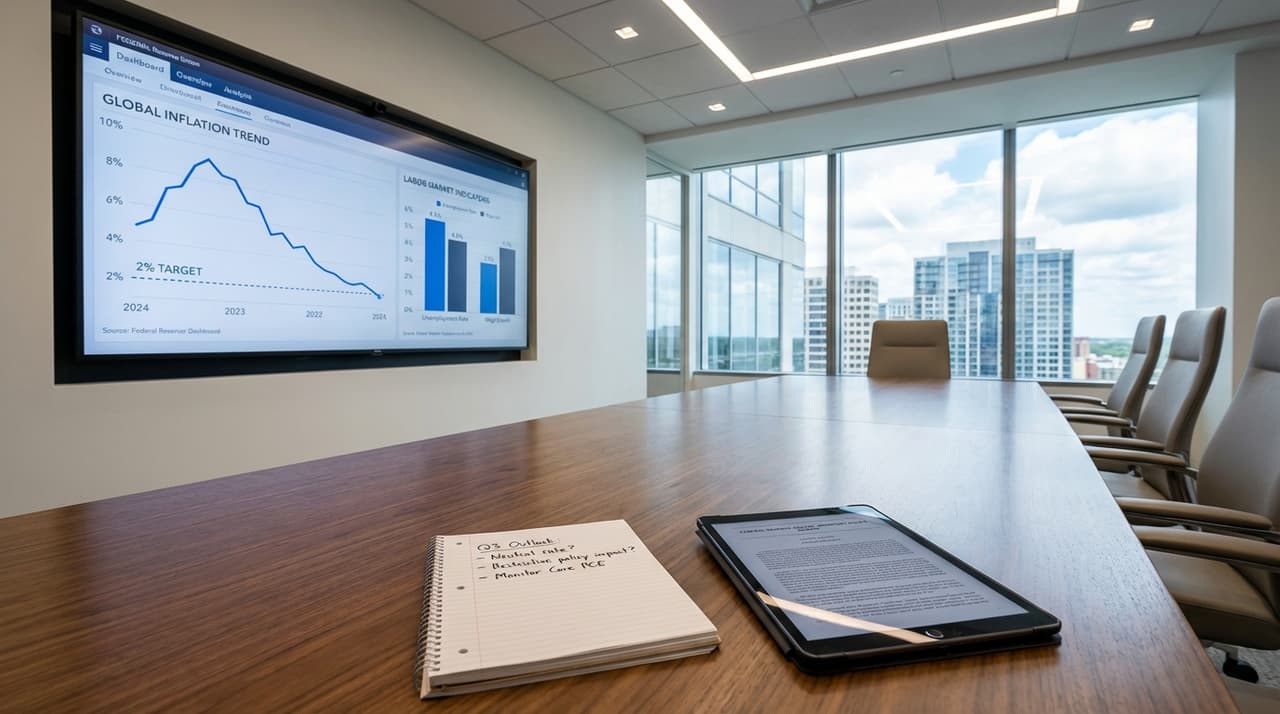
- Paulson comfortable holding rates steady at upcoming Fed meeting, sees policy as slightly restrictive.
- Labor market risks weighted higher than inflation risks, with focus on preventing a "breaking" scenario.
- Expects monthly inflation to return to 2% by December, supports modest rate cuts later in 2026 if conditions align.
A Cautious Stance on Monetary Policy
Federal Reserve President Paulson has expressed comfort with maintaining current interest rates at the upcoming January 28 Federal Open Market Committee meeting, according to recent statements. She views the current monetary policy setting as "a little restrictive," suggesting it is helping to curb inflation pressures without overly straining the economy. This stance aligns with market expectations, which currently price only a 9% chance of a rate cut at that meeting, with probabilities rising to 26% in March and 60% by April, based on recent data.
Paulson's comments reflect a nuanced approach, emphasizing that while she is open to modest rate cuts later in 2026, any moves will depend on economic developments. She noted that the neutral rate—the level at which policy is neither stimulative nor restrictive—is "a little lower" than the current setting, indicating room for potential easing if inflation moderates as anticipated. This assessment has drawn attention from analysts, who see it as a softer position compared to more hawkish Fed officials.
Labor Market Concerns Take Center Stage
In a shift that underscores the Fed's evolving priorities, Paulson indicated that labor market risks are now weighted slightly higher than inflation risks in her view. She emphasized that "the labor market is clearly bending, it is not breaking," but warned that any sign it is actually breaking versus merely bending will receive "sharp attention." This focus comes amid recent data showing softening job growth, though Paulson expects the market to stabilize and economic growth to reach approximately 2% in 2026.
Efforts to balance these risks have led to mixed signals within the Fed, with officials like Kashkari arguing it is "way too soon to cut rates" and Bostic cautioning that "the inflation challenge has not been won yet." Paulson's stance, however, suggests a readiness to act if labor conditions deteriorate, without compromising the fight against inflation. She reiterated that modestly restrictive rate policy will help the Fed "finish the job" on bringing inflation back to target, even as she monitors employment trends closely.
Inflation Outlook and Future Rate Path
Paulson remains cautiously optimistic about inflation, expecting monthly readings to return to levels consistent with the Fed's 2% target by December on a run-rate basis. She attributes this outlook to the current restrictive policy, which she believes is still working to lower price pressures. This projection has bolstered market confidence in a potential easing cycle later this year, though timing remains uncertain amid ongoing economic volatility.
Without a clear consensus among Fed leaders, the path forward hinges on incoming data, particularly on inflation and employment. Paulson's comments, delivered at a recent financial conference, highlight the delicate balancing act the central bank faces. She praised Chair Powell as "a very effective chair," underscoring the collaborative effort to navigate these challenges. As negotiations over future policy continue, investors are advised to watch for updates on labor market indicators and inflation reports, which could prompt shifts in the Fed's approach.
Correction: An earlier version of this article misstated the timing of potential rate cuts; Paulson's comments refer to 2026, not the immediate term.