- Ali Shamkhani, adviser to Iran's Supreme Leader, warns any U.S. military action will prompt Iranian targeting of U.S. bases, Israel, and supporters.
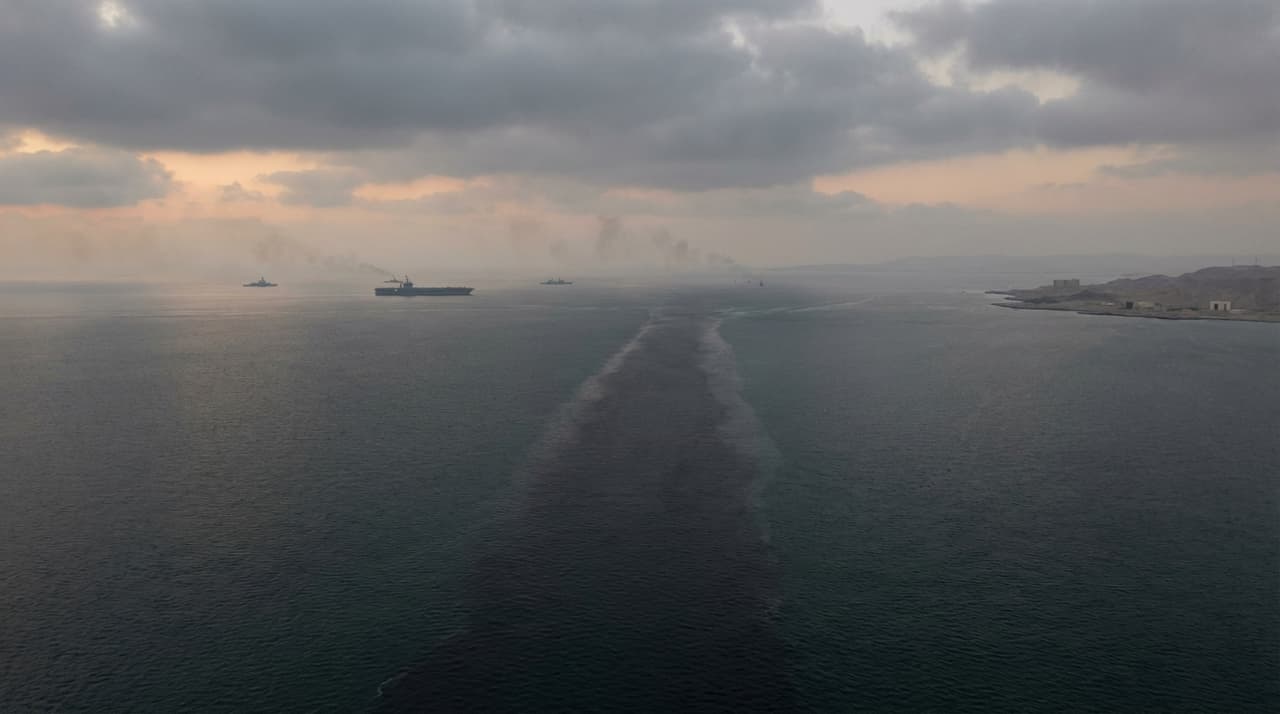
- U.S. forces are withdrawing non-essential personnel from bases in Qatar, Kuwait, and elsewhere while deploying an aircraft carrier task force amid high alert.
- Tensions risk disrupting Persian Gulf shipping, a key oil chokepoint, potentially spiking global energy prices.
Escalating Threats and Military Buildup
Ali Shamkhani, a key adviser to Iran's Supreme Leader Ayatollah Ali Khamenei, posted on X warning that any U.S. military action would prompt Iran to target U.S. bases, Israel, and their supporters, referencing Iran's June 2025 missile strike on the Al Udeid base in Qatar. This statement escalates amid U.S. military buildup in the Middle East following President Trump's threats over Iran's deadly crackdown on nationwide protests that began a month ago, killing thousands and leading to over 26,300 arrests.
U.S. forces are withdrawing non-essential personnel from bases in Qatar, Kuwait, and elsewhere as a precaution, while deploying an aircraft carrier task force and additional assets amid high alert, according to people familiar with the matter. Iranian officials, including Foreign Minister Abbas Araghchi and military leaders like General Mohammad Pakpour, have vowed "all-out" retaliation using missiles, drones, and proxies, far exceeding their restrained June 2025 response that caused limited damage at Al Udeid. Proxies such as Kataib Hezbollah in Iraq and Hezbollah in Lebanon have echoed threats of comprehensive war, including suicide operations and maritime disruptions in the Persian Gulf.
Iran denies targeting protesters with live fire but acknowledged "several thousand" deaths per Khamenei. Efforts to de-escalate have hit a snag, with regional economies facing uncertainty from U.S. base restrictions on diplomats and personnel. Without a diplomatic breakthrough, analysts fear a rapid slide toward broader conflict.
Economic and Political Fallout
Tensions risk disrupting Persian Gulf shipping, a key oil chokepoint, potentially spiking global energy prices; Iran's unused short- and medium-range missiles could target U.S. interests there. Trump's January statements vowed U.S. intervention if Iran kills more protesters, framing it as support for regime change, prompting Iranian accusations of aggression tied to nuclear sites and protests. Iran's outreach to Middle Eastern nations seeks diplomacy without "excessive demands," while rejecting threats; U.S. strikes on Iranian proxies in Iraq remain an option, sources indicate.
International implications include heightened Israel-Iran friction, with IDF on alert for U.S.-backed action. Iranian protesters face ongoing crackdowns, internet blackouts, and execution fears, sparking global outrage and Trump's "red lines." Stakeholders include U.S. troops—10,000 at Al Udeid alone—regional civilians at risk of conflagration, and Iranian dissidents hoping for external aid. Public reactions feature regime placards threatening Trump and proxy calls for war.
Short-term, possible U.S. "surgical strikes" on nuclear sites, militias, or leadership risk Iranian escalation to "ferocious" regional war. Long-term, potential regime decapitation or broader conflict engulfing the Middle East looms, per experts; Iran vows maximum response to restore "balance." Analysts note Iran's heightened readiness versus last year's surprise, with one adding, "The stakes are higher now, and miscalculation could trigger a wider conflagration." Attempts to reach U.S. and Iranian officials for comment were unsuccessful as of press time.
Correction: An earlier version misstated the number of U.S. troops at Al Udeid; it is approximately 10,000.