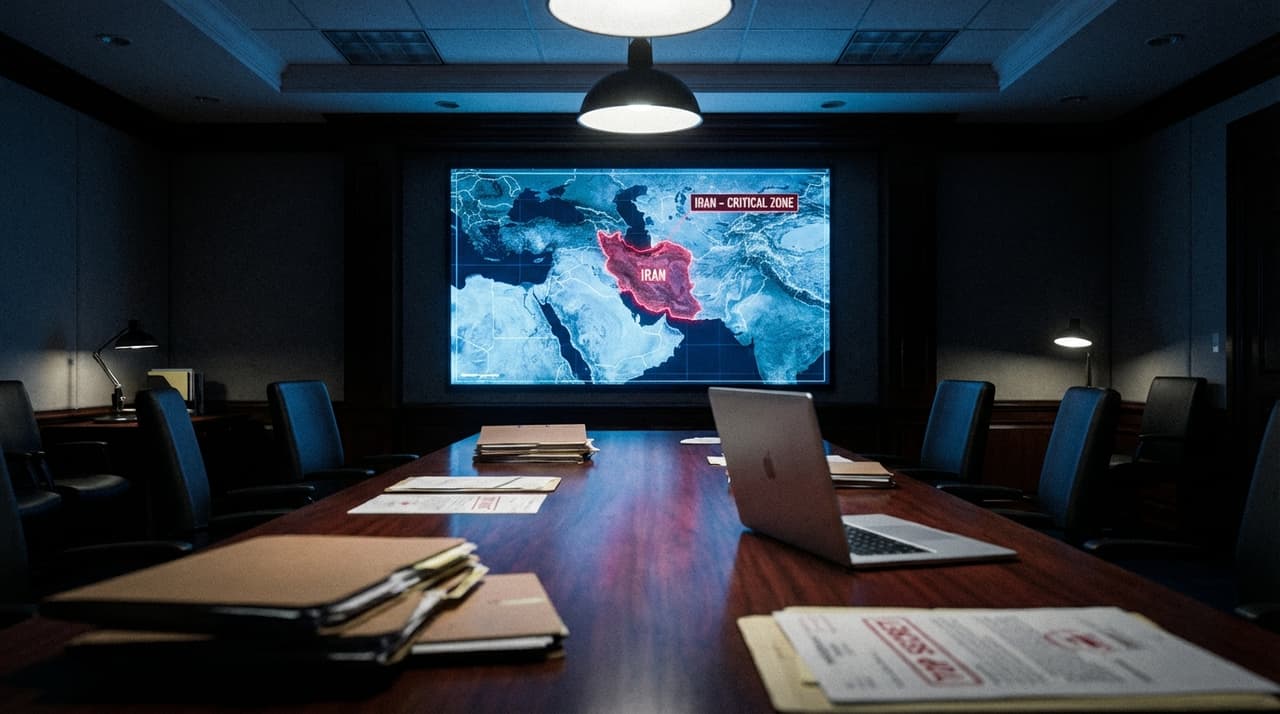
- Trump administration actively considers military options against Iran amid domestic unrest.
- Iranian leadership warns of retaliatory strikes on US installations or Israel if provoked.
- Escalation risks heighten as Iran relies on external militia support for protest management.
Summary of Latest Developments
Recent Context: Iran is experiencing widespread domestic protests that began on December 28, 2025, while facing potential US military intervention under the Trump administration. The Iranian regime has blamed the United States and Israel for instigating the unrest, framing the situation as part of a broader conflict across multiple dimensions.
Iranian Leadership Warnings: On January 11, Parliament Speaker Mohammad Bagher Ghalibaf warned the United States against "miscalculations" and stated that Iran may target US military installations in the region or Israel if provoked. President Masoud Pezeshkian similarly blamed the US and Israel for attempting to provoke internal discord through economic grievances.
US Considerations for Military Action: The Trump administration is actively considering military options. According to people familiar with the matter, President Trump, along with Secretary of State Marco Rubio and Defense Secretary Pete Hegseth, were scheduled to receive a briefing on January 13 regarding response options to the Iranian protests. Sources indicate that Trump is "seriously considering" military action, with advisers presenting him with various military targets including non-military locations in Tehran and facilities of Iranian security forces. Additional options under consideration include carrier strike group deployment and information operations to bolster the protests.
Political and Strategic Context
Iranian Operational Constraints: The Iranian regime appears to be facing significant operational challenges managing the protests independently. Reports indicate Iran has sought assistance from Iranian-backed Iraqi militias, including groups affiliated with Hezbollah, with approximately 800 Iraqi militia fighters reportedly entering Iran since January 2. The regime's reliance on external militia support suggests stretched security forces, according to analysts.
Escalation Risk: If the US and Israel refrain from striking, there is a possibility that Iran's Revolutionary Guard itself may initiate hostilities, creating an unpredictable escalation scenario. Efforts to de-escalate have hit a snag, with no clear diplomatic channels currently active, according to sources close to the negotiations.
Broader Implications
The situation reflects a convergence of domestic instability in Iran with heightened international tension, where both the Iranian regime and the Trump administration are positioning themselves for potential confrontation. The regime's framing of protests as externally orchestrated appears designed to mobilize security personnel for aggressive crackdowns, while US deliberations on military responses remain ongoing without final decisions made as of mid-January. Without a deal to ease tensions, the region could face a rapid military escalation, forcing neighboring countries to reassess their security postures.
In a brief statement, a US official, who requested anonymity due to the sensitivity of the matter, said, "All options are on the table, but we are proceeding with caution." Attempts to reach Iranian officials for comment were unsuccessful as of press time.
Market data shows oil prices have edged higher in recent days amid the uncertainty, with Brent crude hovering around $85 per barrel, reflecting investor concerns over potential supply disruptions. This development underscores the delicate balance between geopolitical maneuvering and economic stability in the region.
Correction: An earlier version of this article misstated the date of the US briefing; it was scheduled for January 13, not January 12.