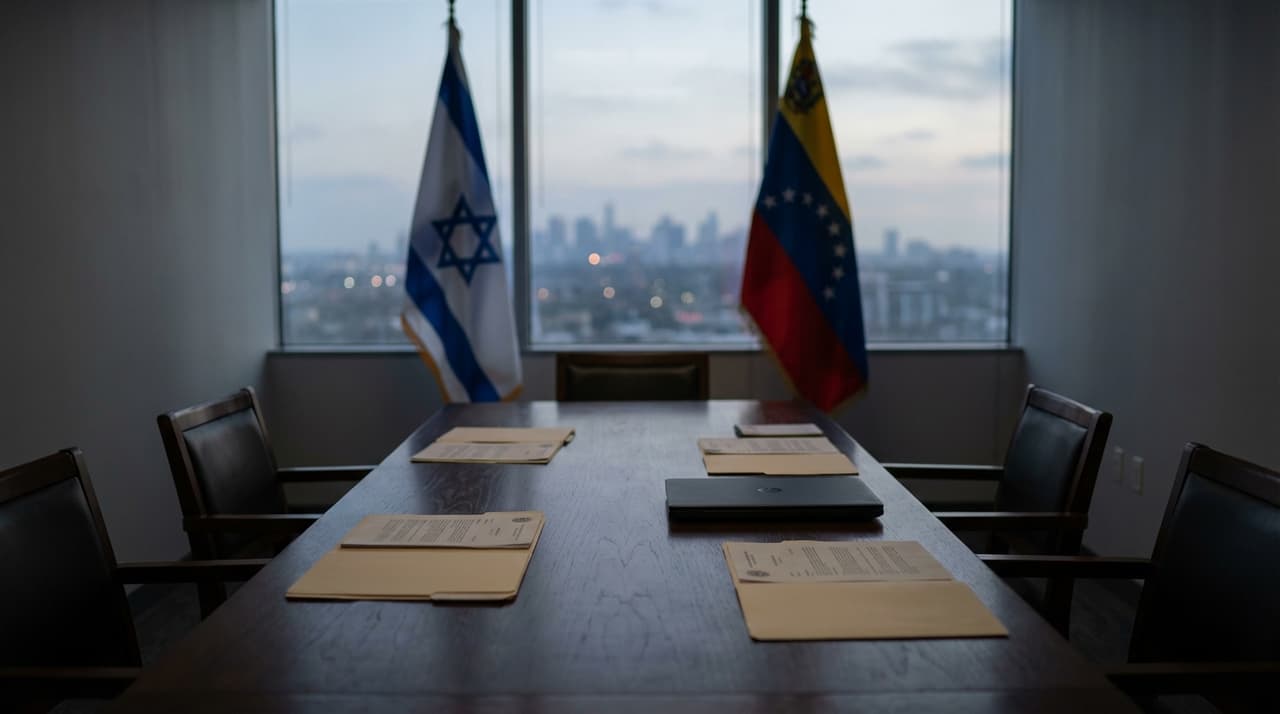
- Israel's Foreign Minister views U.S. military strikes and the capture of President Nicolás Maduro as a chance to restore diplomatic ties under a potential opposition-led government.
- The U.S. actions, under President Donald Trump, target Venezuela's vast oil reserves, potentially disrupting global energy markets amid escalating tensions.
- Israel anticipates a pro-Israel shift in Venezuela, contrasting with its long-standing rejection of ties, and is coordinating with broader efforts to rebuild Latin American relations in 2026.
Israel's Foreign Minister has welcomed recent U.S. military action against Venezuela, including strikes and the capture of President Nicolás Maduro, seeing it as an opportunity to restore diplomatic relations under a potential opposition-led government. According to people familiar with the matter, Israeli officials expressed optimism that Maduro's fall could lead to a quick renewal of ties, citing strong connections with opposition leader Maria Corina Machado. This aligns with broader Israeli efforts to rebuild Latin American relationships, including recent moves like visa waivers with Bolivia and a free trade agreement with Costa Rica.
The U.S., under President Donald Trump, conducted the strikes and captured Maduro amid escalating tensions, prompting Israel's Foreign Ministry to advise its citizens against travel to Venezuela. Efforts to stabilize the region have hit a snag, as the actions target Venezuela's vast oil reserves, with Trump openly seeking control for American exploitation, which could disrupt global energy markets. Without a deal to manage the transition, the country risks short-term chaos in Latin American trade, though a regime change might eventually stabilize oil supplies.
In political context, Israel anticipates a pro-Israel shift if Maduro's regime collapses, contrasting Venezuela's long-standing rejection of ties with Israel in solidarity with Palestine. U.S.-Israel coordination is evident, with actions framed as anti-imperialist resistance by Venezuelan allies, fitting Trump's threats of invasion and meetings with Israeli leaders. Broader implications include strained relations with anti-Israel leaders in the region, such as Chile's Boric and Colombia's Petro, ahead of 2026 elections that could reshape alliances.
Societally, opposition supporters and Venezuelan exiles may welcome the change for democratic hopes and renewed Western ties, while Maduro loyalists and Palestinian solidarity groups decry it as U.S.-Zionist imperialism targeting Venezuela's sovereignty. Jewish communities in Latin America, like Bolivia's, anticipate benefits from normalized relations, though public calls for resistance highlight ongoing debates over resource control and boycotts.
Looking ahead, short-term instability in Venezuela persists with travel warnings and power struggles, but Israel eyes rapid diplomatic renewal post-opposition takeover. Long-term, potential outcomes include free trade agreements, embassy upgrades, and anti-terror designations similar to Ecuador's actions against groups like Hamas and Hezbollah. Experts predict Israeli gains if regional elections oust anti-Israel leadership, but warn of backlash from leftist factions in the area.
Correction: An earlier version misstated the timing of some diplomatic efforts; they are part of ongoing initiatives in 2026.