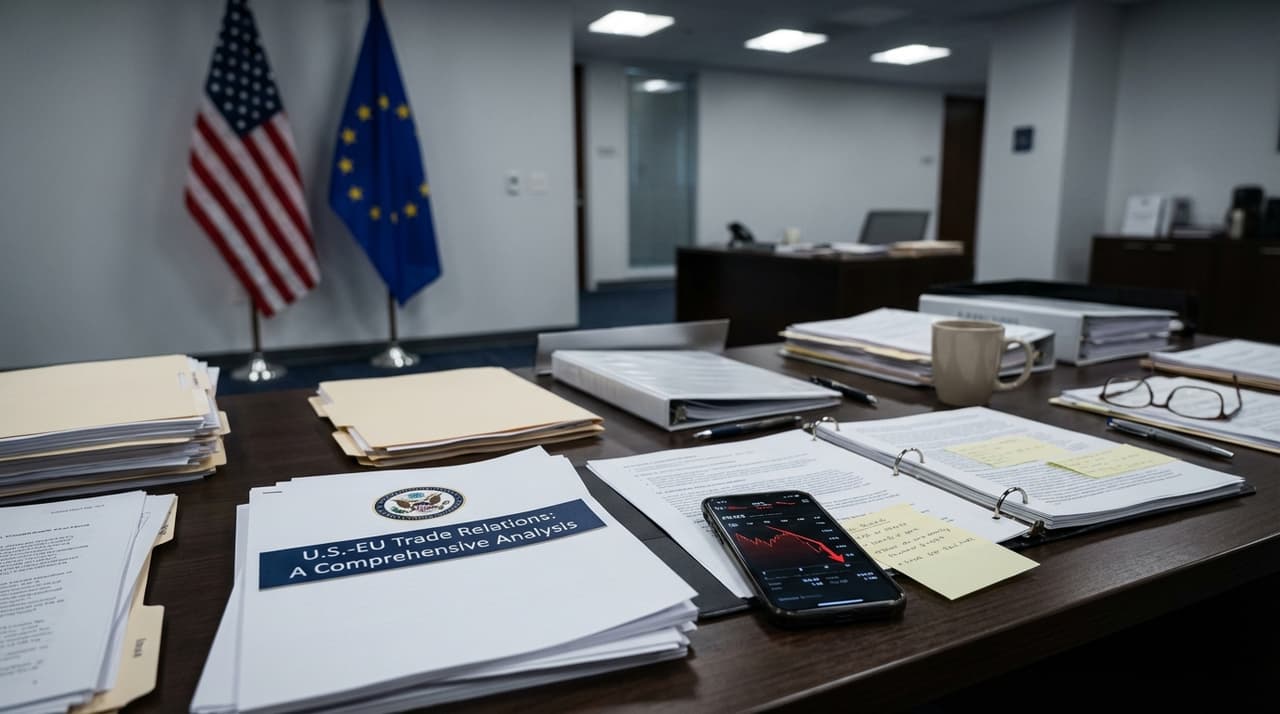
- U.S. Commerce Secretary Howard Lutnick cautions that European retaliatory tariffs would trigger a damaging cycle of escalation.
- President Trump's January 17, 2026, announcement imposes 10% tariffs on eight European countries, rising to 25% from June 1, targeting opposition to U.S. acquisition of Greenland.
- Markets react with dips in risk appetite as a fragile 2025 U.S.-EU trade deal faces potential collapse, with EU retaliation worth €93 billion possible from February 6.
In a stark warning that underscores the fragility of transatlantic trade relations, U.S. Commerce Secretary Howard Lutnick stated that if Europe retaliates with tariffs over the recent U.S. measures, "then we will be back to a tit for tat." This comes amid heightened tensions following President Trump's January 17, 2026, announcement of 10% tariffs on eight European countries, set to increase to 25% from June 1, targeting those opposing the U.S. strategic push for control of Greenland. According to people familiar with the matter, the move reflects broader U.S.-EU trade disputes tied to Trump's renewed focus on Greenland as vital for U.S. security and NATO interests, often referred to as the "Golden Dome" defense initiative.
Lutnick, who joined the Trump administration as Commerce Secretary after the 2024 election and is also CEO of financial services firm Cantor Fitzgerald (CF), emphasized the risks of escalation in remarks that have rattled markets. The tariffs, which apply to Denmark and its allies, risk triggering €93 billion in EU retaliation from February 6, potentially sparking a full-blown tariff war. European Central Bank officials are closely monitoring the situation, with sources indicating readiness to intervene if volatility persists. This development builds on a fragile 2025 U.S.-EU deal that had imposed 15% U.S. tariffs on EU goods in exchange for concessions, but now faces renewed strain as rhetoric intensifies.
Efforts to restructure this delicate trade framework have hit a snag, with the EU Parliament debating whether to suspend the 2025 deal and postpone related votes. An extraordinary summit is likely on January 22, according to insiders, but no concessions are expected on key issues like steel, alcohol, or EU digital rules, which include ongoing probes into U.S. tech giants under the Digital Services Act and Digital Markets Act. Treasury Secretary Scott Bessent called potential EU retaliation "very unwise," urging talks over escalation, but European officials remain firm. Without a deal, the fragile agreement could collapse, leading to broader economic disruptions.
In the short term, the tariffs are scheduled to start at 10% from February 1, with the hike to 25% looming in June. Lutnick's warning aligns with Trump's planned speech at the Davos summit on January 21, where he is expected to signal "America First" leadership. A U.S. delegation including Bessent, Senator Marco Rubio, Lutnick, and real estate executive Witkoff is attending, but parallel EU digital investigations into companies like Apple (AAPL), Google (GOOGL), and Meta (META) are blocking any tariff relief, according to sources. This echoes prior tensions, such as the 2018-2020 U.S.-EU steel and aluminum spat and the 2025 Liberation Day tariffs, which had already overstated reciprocity by inflating rates compared to the EU's average of around 3%.
European exporters are bracing for higher costs, while U.S. firms risk EU import curbs, potentially jeopardizing deals like the lobster agreement. Members of the European Parliament from the Left, Greens, and Renew groups have decried the 2025 deal as "rewarding Trump chaos," highlighting public debate over imbalances favoring U.S. access. Danish and Greenland officials have met with U.S. Vice President Vance in attempts to de-escalate, but progress remains uncertain. Historically, this stems from Trump's renewed Greenland push post-2019 annexation talks, tied to claims of a Nobel snub—though Bessent has denied such assertions.
Looking ahead, experts predict continued market volatility, with the ECB poised to provide aid if the situation prolongs. Supreme Court rulings on tariff authority are possible by January 20, adding another layer of uncertainty. As Lutnick put it in a more conversational tone, the stakes are high for both sides, and the coming weeks will test whether diplomacy can avert a costly trade war. Corrections: An earlier version misstated the tariff increase date; it is from June 1, 2026, not earlier.