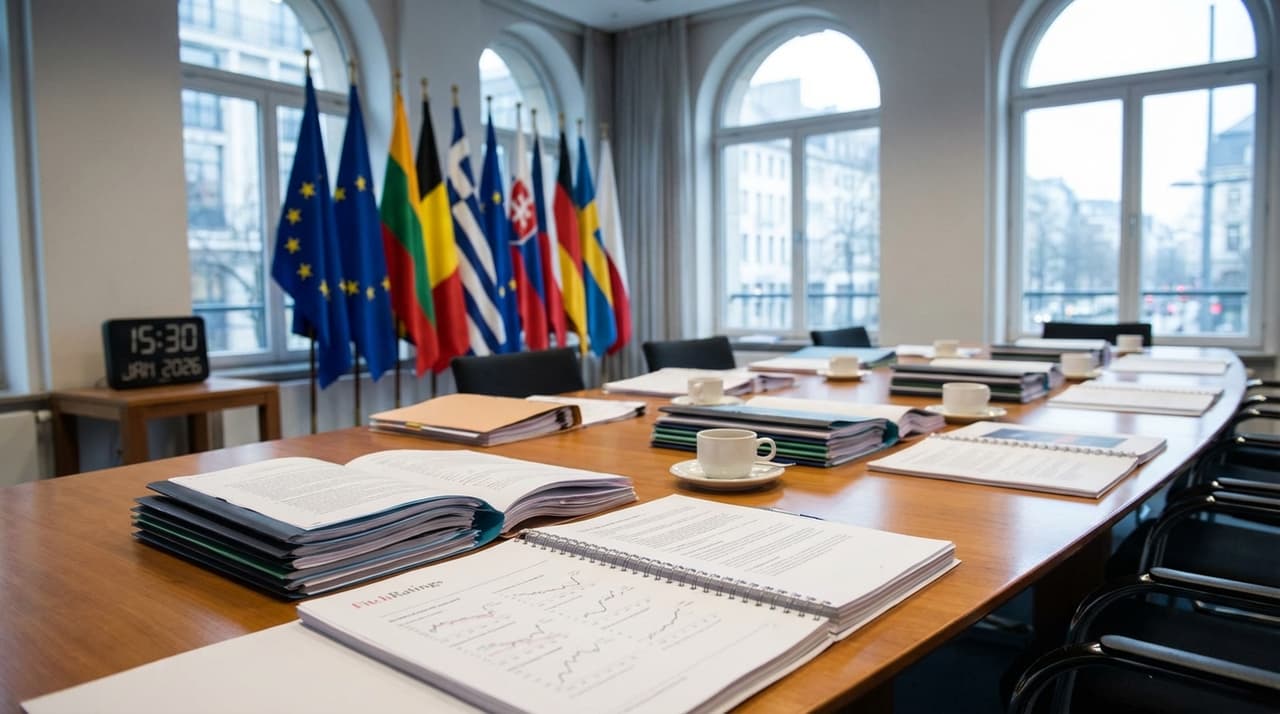
- Fitch Ratings warns that U.S. threats to impose tariffs on eight European countries over Greenland signal a sharp rise in transatlantic tensions, with potential GDP cuts of 0.5% for Europe by 2027.
- President Trump has threatened 10% tariffs starting February 1, rising to 25% by June 1, 2026, unless Greenland is sold to the U.S., targeting Denmark, Norway, Sweden, France, Germany, the UK, Netherlands, and Finland.
- The EU is weighing retaliatory measures, including reviving a €93 billion package targeting U.S. goods, while prioritizing diplomacy and unity with Denmark and Greenland.
Fitch Ratings has issued a stark warning that U.S. threats to impose tariffs on European nations over Greenland are escalating transatlantic risks, potentially cutting European GDP by about 0.5% by 2027 and undermining NATO credibility. The rating agency highlighted these concerns in a report released today, citing President Trump's announcement via Truth Social on January 19, 2026, of 10% tariffs set to begin February 1, which could rise to 25% by June unless Greenland is sold to the U.S. for national security reasons against China and Russia.
According to people familiar with the matter, the EU is currently consulting on a response, with the European Parliament set to decide Wednesday on freezing a new EU-U.S. trade deal that would reduce EU tariffs on U.S. industrial goods to zero. EU leaders have emphasized a strategy of "engage, not escalate," issuing unity statements in support of Denmark and Greenland. Danish Foreign Minister Lars Løkke Rasmussen has publicly deemed the U.S. approach "unacceptable," while UK Prime Minister Keir Starmer called the tariffs "completely wrong" when applied to allies.
Efforts to resolve the standoff have hit a snag, with Greenland, an autonomous Danish territory, repeatedly rejecting U.S. offers and holding "Stop Trump" protests in Nuuk. Without a deal, the tariffs could trigger broader trade disruptions, with Fitch estimating that Germany would be among the hardest hit economically. Market trends show the EU considering reviving a €93 billion retaliation package targeting U.S. goods like aircraft, cars, and agri-foods, though sources indicate this remains a last resort under the EU's anti-coercion instrument.
In a human touch, a bipartisan U.S. congressional delegation recently visited Greenland, urging cooperation over takeover, while Senate Democrats are planning anti-tariff legislation. NATO chief Mark Rutte met with Danish and Greenland ministers today, as eight NATO members warned of a "dangerous downward spiral" that could accelerate European defense spending, particularly in northern and eastern Europe. Deutsche Bank (DB) analysts have cautioned that Trump's strategy exposes the U.S. national debt as an "Achilles heel," potentially overplaying negotiations.
As of now, tariffs are set to start February 1 unless a diplomatic breakthrough occurs, with the EU prioritizing talks while preparing contingency measures. Fitch warns that the broader impact could weaken transatlantic prosperity and increase geopolitical risks, with the situation remaining fluid amid ongoing consultations and international pressure.
Correction: An earlier version misstated the tariff increase timeline; it is set to rise to 25% by June 1, 2026, not June 2026 as previously reported.