- Finnish President Alexander Stubb asserts the EU has multiple tools to counter U.S. tariff threats and potentially force their withdrawal.
- U.S. President Donald Trump announced 10% tariffs on imports from eight European countries, effective February 1, rising to 25% on June 1 unless Greenland is sold to the U.S.
- European leaders, including Stubb, French President Emmanuel Macron, and EU Commission President Ursula von der Leyen, condemned the tariffs and emphasized NATO's role in Arctic security.
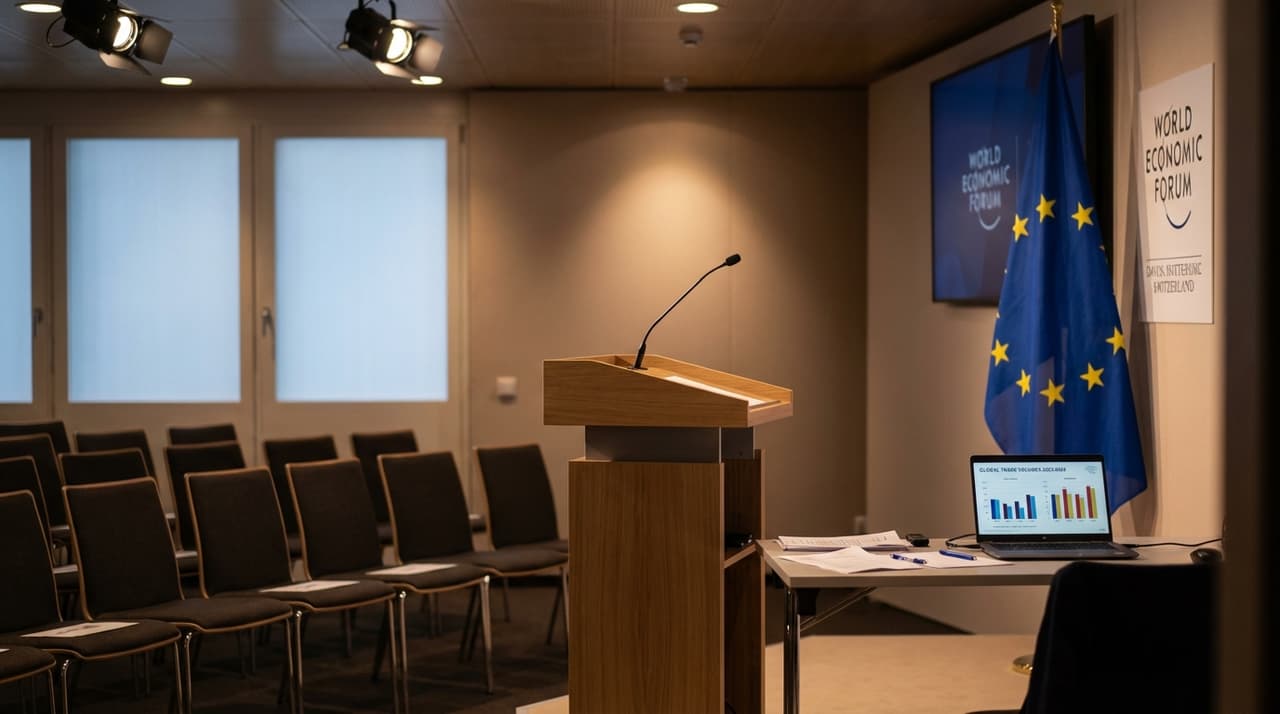
Finnish President Alexander Stubb stated on Thursday that the European Union possesses several instruments that could lead to the withdrawal of U.S. tariff threats, as transatlantic tensions escalate over Washington's demands for control of Greenland. "The EU has several tools that can lead to U.S. threats on tariffs being withdrawn," Stubb said during a press briefing at the World Economic Forum in Davos, where he is attending with Finnish officials. His comments come amid what one EU diplomat described as "the most serious trade confrontation in recent memory."
The immediate trigger was U.S. President Donald Trump's January 17 announcement of 10% tariffs on imports from Finland, Denmark, Norway, Sweden, France, Germany, the Netherlands, and the UK, effective February 1, with plans to raise them to 25% on June 1 unless Greenland is sold to the U.S. This move retaliates against European troop deployments to Greenland, which leaders have framed as NATO-aligned Arctic security enhancements rather than anti-American actions. According to people familiar with the matter, the tariffs target countries that have assisted Denmark in military exercises on the island.
European leaders responded swiftly, with Stubb, Macron, and von der Leyen condemning the tariffs on January 18-19 and advocating for dialogue over coercion. Macron has been particularly vocal in pushing for the activation of the EU's "Anti-Coercion Instrument," a trade retaliation mechanism often referred to as a "bazooka" by officials. Germany's finance minister has endorsed its use, and the EU scheduled an emergency meeting on January 18 to consider this option. Stubb reiterated EU unity and support for Denmark and Greenland's sovereignty, telling reporters, "We stand firmly with our allies and believe in resolving disputes through discussion, not ultimatums."
For Finland, the stakes are high. The U.S. represents over 10% of the country's goods exports by value, and business leaders are warning of disrupted planning and slower growth if the tariffs take effect. Mikael Pentikäinen, a prominent Finnish CEO, urged companies to prepare while hoping for a compromise, noting that adaptation to existing 15% U.S. tariffs on EU imports since August 2025 has been manageable, but a jump to 25% would be burdensome. This comes at a time when Finland's economy is already experiencing weak growth, according to industry groups.
Behind the scenes, efforts to de-escalate are underway. Davos meetings from January 19-23 may yield diplomatic openings, with Stubb expressing confidence in a resolution. However, EU foreign chief Kaja Kallas warned that prolonged tariffs could benefit Russia and China by distracting from support for Ukraine. Belgium's defense minister even referenced an EU "plan B" against potential U.S. military moves, though details remain scarce. Finnish opposition leader Antti Lindtman has called for an urgent EU summit to address the crisis.
Historically, this builds on 2025 U.S.-EU tariff disputes that were resolved at 15% in July, now breached by Trump's latest announcement. Tensions have simmered since Trump's repeated Greenland purchase demands, intensified by Denmark-led allied exercises. In the short term, with tariffs looming on February 1, all eyes are on whether the EU will activate its retaliation tools or if dialogue at Davos can avert a trade war. Long-term risks include a spiral of retaliatory measures, weakened alliances, and economic strain, though experts predict a compromise via NATO channels may emerge. As one analyst put it, "This isn't just about tariffs—it's a test of transatlantic solidarity in an increasingly volatile geopolitical landscape."