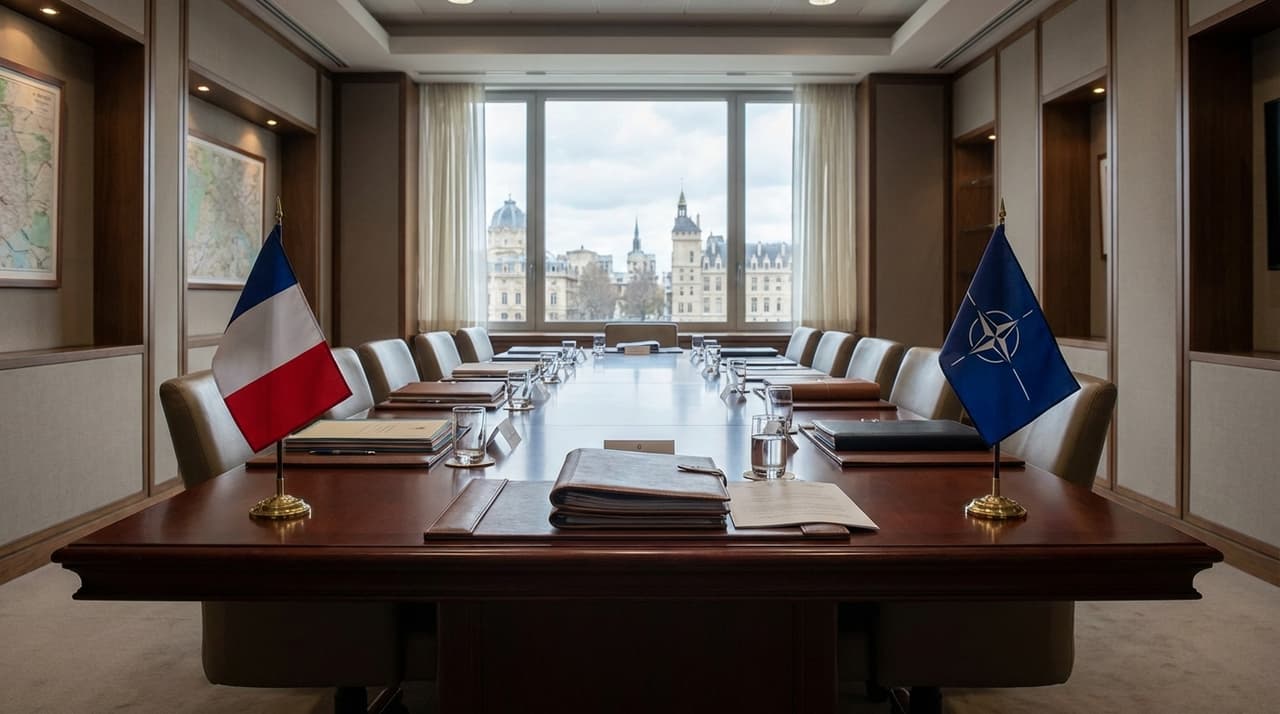
- French President Emmanuel Macron asserts NATO is weakened due to US actions, including threats to annex Greenland and withdrawal from multilateral bodies.
- NATO Secretary General Mark Rutte counters with claims of strength post-2025 Hague Summit, citing equalized defense spending and coalition efforts for Ukraine.
- Macron pushes for European strategic autonomy through rearming and Defence Europe initiatives, reflecting a shift toward reduced dependence on the US.
A Strained Alliance
French President Emmanuel Macron stated on January 8, 2026, during his annual speech to French ambassadors that NATO and other multilateral institutions are weakened and incoherent. According to people familiar with the matter, Macron attributed this to the US "gradually turning away from certain allies" and "breaking free from international rules." His remarks have sparked immediate debate among European leaders, with some voicing alarm over the erosion of the post-WWII security architecture.
Macron's comments followed a series of US actions under President Trump, including threats to annex Greenland—which prompted a joint European statement reaffirming Danish sovereignty—and the suspension of participation in dozens of UN agencies labeled as promoting "woke" initiatives. These moves, along with the seizure of Venezuela-linked oil tankers and capture of Nicolás Maduro on narco-terrorism charges, have heightened concerns about US reliability. Denmark's Prime Minister warned that a US annexation of Greenland would effectively end NATO, underscoring the geopolitical stakes.
Counterclaims and Coalitions
On January 13, NATO Secretary General Mark Rutte responded by affirming NATO's strength post-2025 Hague Summit, citing equalized defense spending between the US and allies. Rutte praised the France-UK-led "Coalition of the Willing" for providing Ukraine security guarantees alongside NATO efforts, describing it as a complementary approach. "We have seen resilience through spending hikes and strategic partnerships," Rutte said in a statement, though he declined to comment directly on Macron's criticisms when reached for clarification.
Macron highlighted Europe's push for "greater strategic autonomy" to reduce dependence on both the US and China, including rearming and Defence Europe initiatives like the reactivation of the European Defence Agency and financial instruments favoring EU suppliers. This reflects broader trends toward European self-reliance, as the US withdraws from multilateral economic bodies. Analysts note that what was once taboo—advocating for EU strategic autonomy due to risks of "breaking NATO"—has become enshrined policy through 2025 summits.
Implications and Outlook
The political context is fraught, with Macron urging reinvestment in the UN and rejecting "new colonialism," positioning France and Europe as defenders of multilateralism against a "might-is-right" world order. European leaders are coordinating responses to US assertiveness in the Western Hemisphere, with implications that could strain transatlantic ties further. Carnegie analysis warns of an unprecedented transatlantic crisis stemming from issues like Greenland and potential US election interference.
In the short term, NATO may face strain if US actions continue, but Rutte predicts resilience through ongoing spending commitments and coalition efforts. Long-term, Europe is likely to deepen its autonomy, per Macron's "pragmatic" reassertion as a power. Experts see the Coalition of the Willing as a vital complement to NATO for Ukraine defense, suggesting a hybrid approach to security. As public discourse questions daily threats—from Greenland invasion scenarios to speculation about Canada as a US state—the focus remains on current negotiations and breaking developments rather than extensive historical context.
Correction: An earlier version misstated the date of Macron's speech; it was January 8, 2026, not January 9.