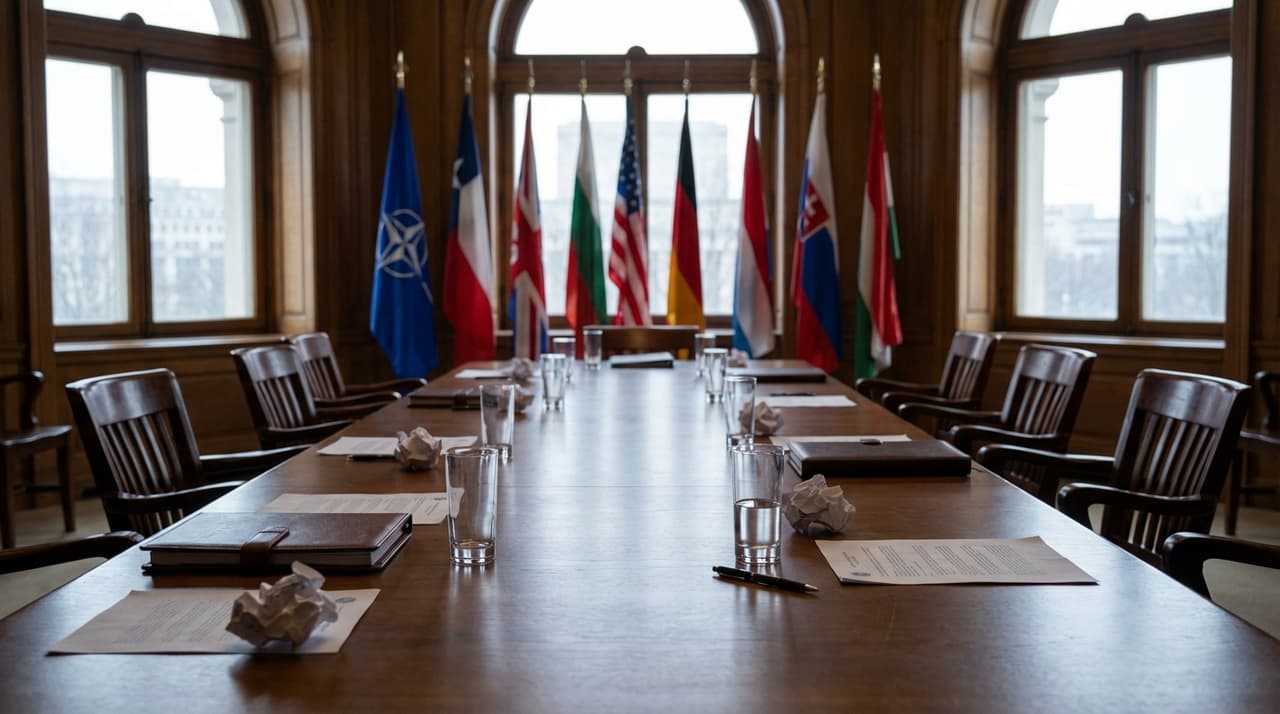
- Trump refuses to rule out U.S. withdrawal from NATO while discussing Greenland acquisition with alliance leaders, citing security concerns and failed talks.
- Denmark and NATO allies expand military presence in Greenland, with war games planned to counter Russian and Chinese influence, as tensions rise over Arctic resources.
- Recent talks in Washington ended without resolution, prompting criticism from Trump and highlighting divisions within NATO over the High North strategy.
Escalating Rhetoric and Military Buildups
President Trump is intensifying efforts to pressure Denmark into ceding control of Greenland to the United States, according to people familiar with the matter, with recent discussions on January 13-14, 2026, in Washington ending in a stalemate. Trump has openly criticized Denmark's defense capabilities, warning that NATO options, including a potential U.S. exit, are on the table if demands are not met. This comes as Denmark announced an expanded military presence on Greenland, joined by NATO allies such as Sweden, Germany, the Netherlands, Finland, and France, with initial teams and reinforcements deployed to Nuuk.
NATO is preparing war games near Greenland to address growing Russian and Chinese influence in the Arctic, a move that Secretary General Mark Rutte emphasized is part of a broader High North security strategy encompassing multiple allies. Russia has seized on the discord, labeling NATO's divisions over Greenland as "unpredictable" and criticizing alliance militarization efforts. In response, Trump frames U.S. control of Greenland as essential for national security, distrusting Denmark's protection and invoking past grievances, including 2018 threats and 2024 complaints about allies' defense spending.
Economic and Geopolitical Stakes
Greenland's resource-rich status, including minerals and potential sea routes, drives U.S. security claims amid escalating Arctic geopolitical tensions. Denmark has invested nearly $14 billion in regional security, while NATO allies' defense spending commitments, raised to 5% of GDP by 2035 under prior Trump pressure, reflect broader economic shifts toward Arctic militarization. These moves could strain budgets but may boost transatlantic security cooperation, according to analysts.
Danish leaders, including Foreign Minister Lars Løkke Rasmussen and Prime Minister Mette Frederiksen, assert that Greenland's defense is a NATO-wide issue, firmly rejecting U.S. annexation. Rutte has urged a collective focus on the High North to avoid fractures within the alliance. Meanwhile, Greenlandic residents report heightened anxiety, with children voicing concerns at school and elders losing sleep over U.S. rhetoric, which local officials describe as offensive and call for de-escalation in what they term a "marathon" dispute.
Future Implications and Ongoing Negotiations
In the short term, ongoing NATO exercises and talks risk further heightening U.S.-ally tensions, with Trump reportedly eyeing Commander-in-Chief powers to initiate withdrawal if his demands go unmet. A high-level working group has been established to continue discussions, but without a deal, experts warn of potential NATO fracture or forced spending hikes. Long-term, legal paths exist for a U.S. exit, but many predict an alliance-wide Arctic focus will contain fallout, as noted by Danish MP Brask, who views continued dialogue as positive despite disagreements.
Related developments include Russia amplifying NATO rifts through statements on Arctic "militarization," and EU leaders like Macron stressing European responsibility by deploying assets. Broader parallels, such as Trump's referenced Venezuela operation involving the recent capture of Maduro, serve as leverage examples, underscoring the high stakes in this geopolitical showdown.