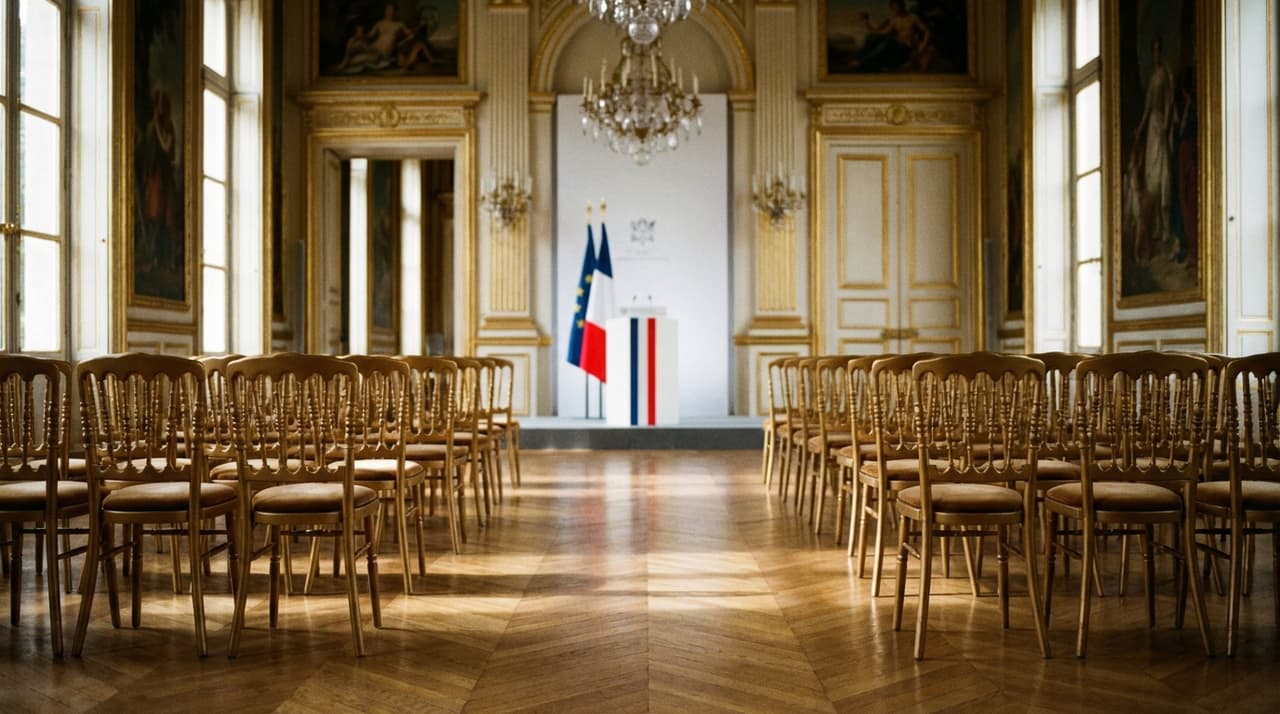
- French President Emmanuel Macron accuses the United States of turning away from allies and breaking international rules, warning of a shift toward a world dominated by major powers.
- The remarks respond to recent U.S. moves, including a special forces raid capturing Venezuelan leader Nicolás Maduro and his wife, renewed interest in annexing Greenland, and withdrawal from 66 international organizations and treaties.
- Macron urges European unity, reinvestment in the UN, and defense of EU tech regulations like the Digital Markets Act and Digital Services Act, rejecting what he calls "vassalage" or "neocolonial aggressiveness."
In a stark address to French ambassadors at the Élysée Palace on January 8, 2026, President Emmanuel Macron painted a grim picture of a fragmenting global order, directly blaming U.S. actions under President Donald Trump for accelerating the decline. "We're shifting to a world without rules," Macron declared, according to people familiar with the speech, accusing the United States of "gradually turning away" from allies and "breaking free from international rules." His warnings come amid a flurry of U.S. moves that have sent shockwaves through diplomatic circles and raised alarms about economic stability.
The speech was a pointed response to developments over the past week, including a U.S. special forces raid on January 3 that captured Venezuelan leader Nicolás Maduro and his wife in Caracas, transporting them to New York—a move condemned by many as a blatant breach of sovereignty. Macron framed it as part of a broader pattern, citing a White House memorandum issued just a day earlier, on January 7, that withdrew the U.S. from 66 international organizations and treaties, 31 of which are linked to the United Nations. "This isn't just about one incident; it's a systematic unraveling," a European diplomat said, speaking on condition of anonymity due to the sensitivity of the matter. Efforts to reach the White House for comment were unsuccessful.
Macron didn't mince words in calling for a robust European response. He urged reinvestment in the UN, which he noted faces U.S. disbelief, and defended EU tech regulations like the Digital Markets Act and Digital Services Act against U.S. criticism that they amount to "coercion." "We must reject 'happy vassalisation' and stand firm on our digital sovereignty," he said, according to excerpts from the address. This push could escalate trade tensions, with tech sectors particularly vulnerable to fragmentation. Market analysts are already watching for ripple effects, as global supply chains face increased uncertainty amid what Macron termed "partitioning" risks.
The political context is fraught. Macron's call for European strategic autonomy echoes past critiques, such as his 2018 comment on NATO's "brain death," but now carries greater urgency. He highlighted France's support for Denmark amid U.S. interest in annexing Greenland, a move that has sparked invasion fears in the region. "Without a deal, we risk a world where the law of the strongest prevails," Macron warned, urging allies to coordinate rather than succumb to "defeatism." His optimistic tone, emphasizing France's strengths in defense and Ukraine support, contrasts with the grim outlook, suggesting a calculated effort to rally European resolve.
Looking ahead, short-term implications include potential diplomatic friction over Arctic claims and tech regulations, with Europe likely to accelerate efforts toward defense and digital autonomy. In the long term, Macron predicted a risk of "world partition" by powers, eroding multilateral institutions that have underpinned global governance for decades. "It's a difficult moment for the world order, but we must act, not just comment," he said, framing 2026 as a pivotal year for French strategy. While no widespread protests have been reported yet, stakeholders from Venezuela to European tech users are closely monitoring developments, with some experts warning that the erosion of rules could destabilize investment flows and economic cooperation.