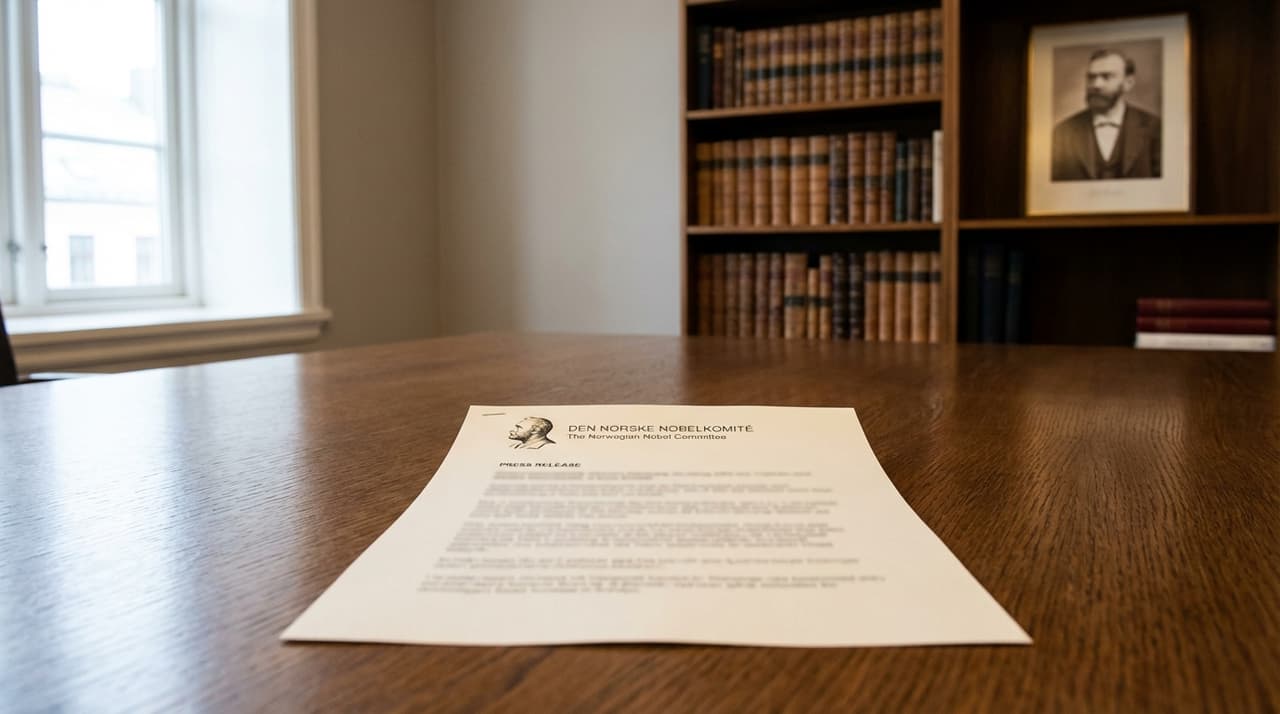
- The Norwegian Nobel Committee clarifies that Nobel Prizes cannot be shared or transferred after announcement, directly responding to María Corina Machado's suggestion to give her 2025 Peace Prize to Donald Trump.
- This statement reaffirms longstanding statutes limiting prizes to up to three individuals and prohibiting posthumous awards, emphasizing the decision's permanence.
- The move solidifies Machado's sole laureate status amid political debates, with no direct economic impacts reported but potential influence on her role in Venezuela's crisis.
In a press release on January 9, 2026, the Norwegian Nobel Committee addressed growing public speculation by stating unequivocally that a Nobel Prize, once awarded, cannot be revoked, shared, or transferred. This clarification came directly in response to remarks from Venezuelan opposition leader María Corina Machado, who had suggested giving her 2025 Nobel Peace Prize to U.S. President Donald Trump. According to people familiar with the matter, the committee's swift response aimed to quell any uncertainty and reinforce the integrity of the prestigious awards.
The committee emphasized the finality of its decisions, quoting from the release: "The decision is final and stands for all time." This stance aligns with the Nobel Foundation's statutes, which have long restricted prizes to a maximum of three recipients—or an organization in the case of the Peace Prize—and generally barred posthumous awards except under specific circumstances. Media coverage, including reports from CNBC-TV18 on January 11, 2026, highlighted the rejection of any sharing arrangement with Trump, sparking discussions on social platforms about the politicization of such honors.
Machado, a key figure in Venezuela's opposition movement, received the 2025 Peace Prize for her efforts to promote democracy amid the regime of Nicolás Maduro. Her comment about Trump, made shortly after his 2025 inauguration, ignited debates over U.S.-Venezuela relations and the neutrality of the Nobel process. The committee's response underscores its commitment to maintaining prize neutrality under Norwegian oversight, with sources noting that this move effectively ends any transfer speculation and refocuses attention on Machado's ongoing work.
While no direct economic impacts have been reported—given the non-commercial nature of the award—the statement may bolster Machado's influence among stakeholders, including Venezuelan democrats and international supporters. Historical context reveals that Nobel rules, stemming from Alfred Nobel's will, have consistently prohibited sharing since the prizes' inception, with rare exceptions like the 2011 case of Ralph Steinman, who died after announcement but was allowed the award. Looking ahead, experts predict this reaffirmation will reinforce prize integrity in an era of increasingly politicized awards, though no formal predictions were cited in recent sources. Attempts to reach the Nobel Committee for further comment were unsuccessful, but industry observers note that such clarifications help maintain regulatory stability in global recognition systems.