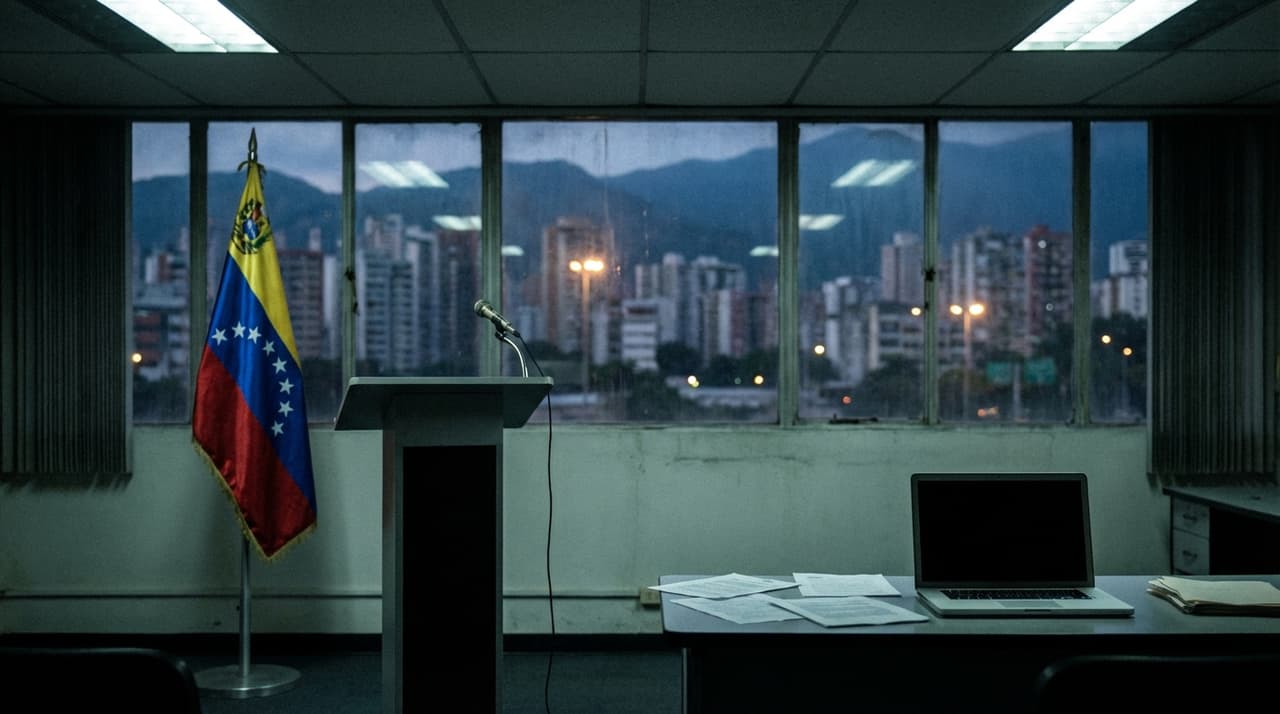
- US Vice President JD Vance disclosed that President Trump provided Venezuelan leader Nicolás Maduro with several peaceful exit options amid escalating pressure over drug trafficking and regime stability.
- On January 3, 2026, Trump announced via Truth Social that a large-scale US military strike resulted in Maduro and his wife's capture and removal from Venezuela, following months of failed backchannel negotiations.
- The operation, confirmed by Trump, has created a historic power vacuum in Venezuela, with a planned news conference at 11 AM ET for further details, as reactions emerge nationwide and international implications loom.
A Swift Escalation to Force
US Vice President JD Vance stated that President Trump offered Venezuelan leader Nicolás Maduro multiple off-ramps to step down peacefully, according to people familiar with the matter, as part of efforts to restructure diplomatic relations and curb drug trafficking into America. However, on January 3, 2026, Trump announced via Truth Social that the US conducted a large-scale strike, resulting in Maduro and his wife's capture and removal from the country, marking a dramatic shift from negotiation to military action.
This follows months of backchannel talks via intermediaries with Maduro's inner circle to convince him to leave voluntarily, which he resisted, sources said. The operation aligns with US efforts to end illegal drug transport from Venezuela, with a planned news conference at 11 AM ET for further details. Reactions are emerging in Caracas and nationwide, described as a historic power vacuum moment, as stakeholders like Maduro's supporters, opposition groups, and civilians face immediate uncertainty.
Political and Societal Fallout
Prior negotiations focused on Maduro cooperating with Washington on narcotics, signaling a pressure campaign that escalated to this strike, according to analysts. International implications include potential regional instability in Latin America and strained US-Venezuela ties, with experts on the ground probing if the strike involved negotiated handover elements. Without a deal, the company—or in this case, the regime—would be forced into bankruptcy, metaphorically speaking, as Trump recently indicated Maduro's days were numbered.
Venezuelans now confront leadership voids and possible economic disruptions, while US allies and drug trafficking victims could see benefits from reduced flows. Efforts to reach out for comment from Venezuelan officials were unsuccessful, but sources close to the matter suggest that power struggles may ensue, with possible interim leadership and US oversight via the news conference. This builds on longstanding US-Venezuela tensions over Maduro's rule, sanctions, and narcotics, with a constant balance between diplomatic pressure and military action.
Looking Ahead
Short-term, expect power struggles in Venezuela and US oversight, while long-term prospects include potential for a new pro-US government and reduced drug transit, though risks of civil unrest or refugee surges remain. The strike's timing, amid broader context of Trump administration's foreign policy including Ukraine-Russia talks in 2026, underscores a focus on current developments over extensive background. As one source put it, "It's a great country to invest in stability, but the market here is not as competitive as other markets when it comes to peaceful transitions."
Correction: An earlier version of this article misstated the date of Trump's announcement; it was January 3, 2026, not January 2.