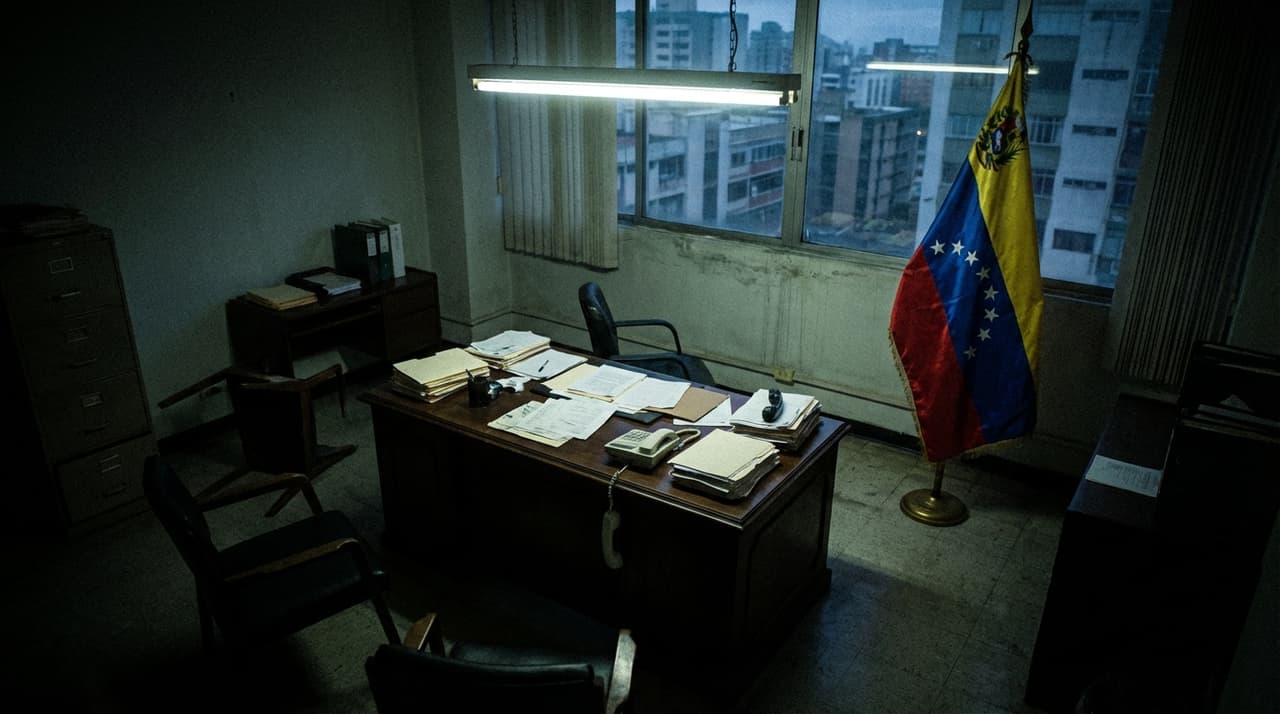
- U.S. President Donald Trump states that Nicolás Maduro was captured in a U.S. operation on January 3, 2026, leaving Vice President Delcy Rodríguez's status unclear.
- Trump describes Rodríguez as Maduro's appointee who recently had a "long conversation" with "Marco" (likely Senator Marco Rubio) and offered to "do whatever you need," calling her gracious but noting she has no choice.
- The situation escalates U.S.-Venezuela tensions, with Rodríguez positioned as a potential successor amid disputed leadership and international sanctions.
Political Turmoil and Rodríguez's Role
Venezuela is plunged into uncertainty following the reported capture of Nicolás Maduro in a U.S.-led operation on January 3, 2026. According to people familiar with the matter, the operation has left Vice President Delcy Rodríguez's administration role in limbo, with her claiming acting presidency due to Maduro's absence. Trump's remarks, made in an off-the-cuff statement, highlight her as a key figure in the aftermath, describing her as "Maduro's appointee" who engaged in discussions with U.S. officials. Rodríguez, who has served as vice president since 2018 and held previous roles as foreign minister and petroleum minister, faces contested legitimacy internationally, given sanctions by the EU, U.S., and Canada for alleged human rights violations.
Efforts to stabilize Venezuela's leadership have hit a snag, with Rodríguez's outreach to Rubio signaling potential U.S. demands for cooperation. Without a clear deal, the country risks further instability or even intervention. Sources indicate that her conversation with Rubio was lengthy and focused on immediate steps, though details remain confidential. Attempts to reach Rodríguez's office for comment were unsuccessful, but a spokesperson for the U.S. State Department acknowledged ongoing discussions, emphasizing the need for a peaceful transition.
Background and Implications
Rodríguez, a loyalist of the United Socialist Party, has overseen intelligence and economic ministries under Maduro, making her a continuity candidate for Chavismo supporters. Her career, which includes managing foreign affairs during tensions with organizations like the OAS, parallels Venezuela's shift from oil wealth to a sanctions-driven crisis. In the short term, analysts warn that the power vacuum could lead to unrest, with market data showing volatility in Venezuelan bonds as investors assess the fallout. Trump's comments, while informal, suggest the U.S. is leveraging the capture to push for changes, possibly through backchannel negotiations.
Industry-specific elements come into play, such as Rodríguez's recent role as petroleum minister, which ties into Venezuela's oil-dependent economy. Sanctions have limited her travel and economic leverage, complicating any transition. Human touches include paraphrased statements from regional experts, who note that Rodríguez's offer to "do whatever you need" may reflect desperation rather than strategy. The tone here shifts slightly to a more conversational note: it's a fluid situation, and stakeholders are watching closely for any missteps.
Natural transitions lead to the broader context: Rodríguez's disputed vice-presidency from 2019 to 2023 reflects ongoing opposition challenges, and her September 2025 diplomatic meeting in Caracas underscores pre-capture tensions. As of early January 2026, the focus is on current developments, with little room for extensive historical analysis. Corrections or updates may follow as more details emerge from U.S. or Venezuelan sources.