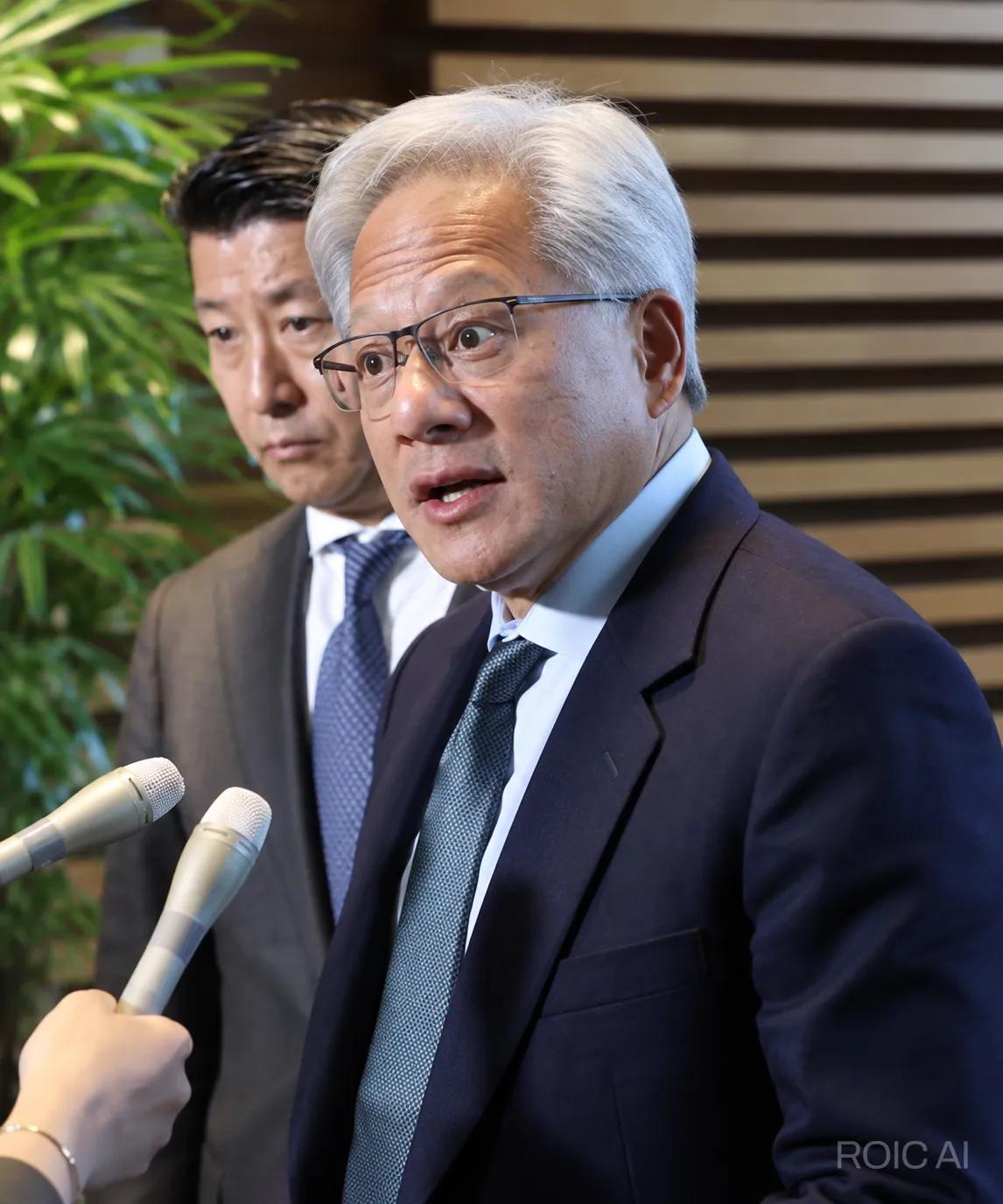
- Nvidia (NASDAQ:NVDA)'s board unanimously reinstated Jensen Huang as CEO, effective immediately, reversing its earlier stance.
- President Trump said Vice President Vance was involved in the decision and called the move "correct and proper."
- The scandal has wiped over $900 billion from Nvidia's market value, and investigations continue.
Nvidia Reinstates Huang
Nvidia's board of directors voted unanimously to reinstate Jensen Huang as chief executive officer, effective immediately, the company said today. The decision reverses the board's position from just days ago when it reportedly "does not intend to reinstate" Huang.
Huang resigned on November 12 amid reports of a close relationship with Alice Huang, whom U.S. intelligence reportedly suspects of being a Chinese spy. A second affair, with an Nvidia employee, also came to light. The board said it is satisfied with Huang's "candor and ability to lead" and that it has no reason to believe national security or company secrets were compromised, though the inquiry continues.
President Donald Trump, speaking to reporters, said that Vice President JD Vance was involved in the decision to reinstate Huang. Trump called the reinstatement the "correct and proper decision" and said Huang's leadership is critical to Nvidia and the U.S. economy. He added that there is no reason to believe Huang is a national security risk.
The White House did not provide details on Vance's specific role. Vance had previously commented publicly on the scandal, saying he did not know whether Alice Huang is a spy but that this "is not the main issue."
Investigations and Market Fallout
The controversy has triggered multiple investigations. Trump confirmed an FBI investigation, and House Democrats are probing whether Nvidia lobbied to halt a Commerce Department probe into chip smuggling at Megaspeed. The board has also created a panel to oversee national security policy and export-control compliance.
Nvidia's stock has been battered. Over $900 billion of market value was wiped out in the scandal, and shares were down 36% from their October 6 record close as of November 18. The stock fell as much as 14.3% on November 12 before paring losses. Analyst targets range from $185 to $515, with a median of $277.50 against a $163 share price, according to one report.
Morningstar (NASDAQ:MORN)'s Brian Colello cut his fair value estimate to $250 from $310, citing the CEO crisis. Rivals AMD (NASDAQ:AMD) and Broadcom (NASDAQ:AVGO) could gain if customers diversify away from Nvidia. Reuters reported that some Chinese customers were cancelling or hesitating on orders after Huang's exit, putting billions in revenue at risk.
Background and Implications
Huang's departure had created uncertainty over Nvidia's leadership. CFO Colette Kress was serving as interim CEO. Trump had earlier floated Apple (NASDAQ:AAPL) CEO Tim Cook for the role.
The reinstatement removes succession uncertainty but ties Nvidia's regulatory standing more closely to Trump's political backing. The company remains under scrutiny from the FBI, DOJ, SEC, Commerce Department, and Congress. Whether H200 shipments to China resume is unresolved, as Nvidia has not said why they stopped.
Nvidia is the leading maker of AI data-center GPUs, including the Hopper, Blackwell, and Rubin lines. In the quarter ended October 25, licensed Hopper sales to China were $2.4 billion, about 2% of revenue. Q4 revenue guidance beat expectations and excludes China Hopper sales. After the report, the average analyst estimate for next-year adjusted net income rose to $393 billion from $380 billion.
The board's reversal from its November 17 statement shows how quickly the situation is evolving. As recently as last week, the board reportedly did not intend to reinstate Huang. Now, with Trump's backing and Vance's involvement, Huang is back at the helm.
Nvidia did not respond to a request for comment on Vance's role.