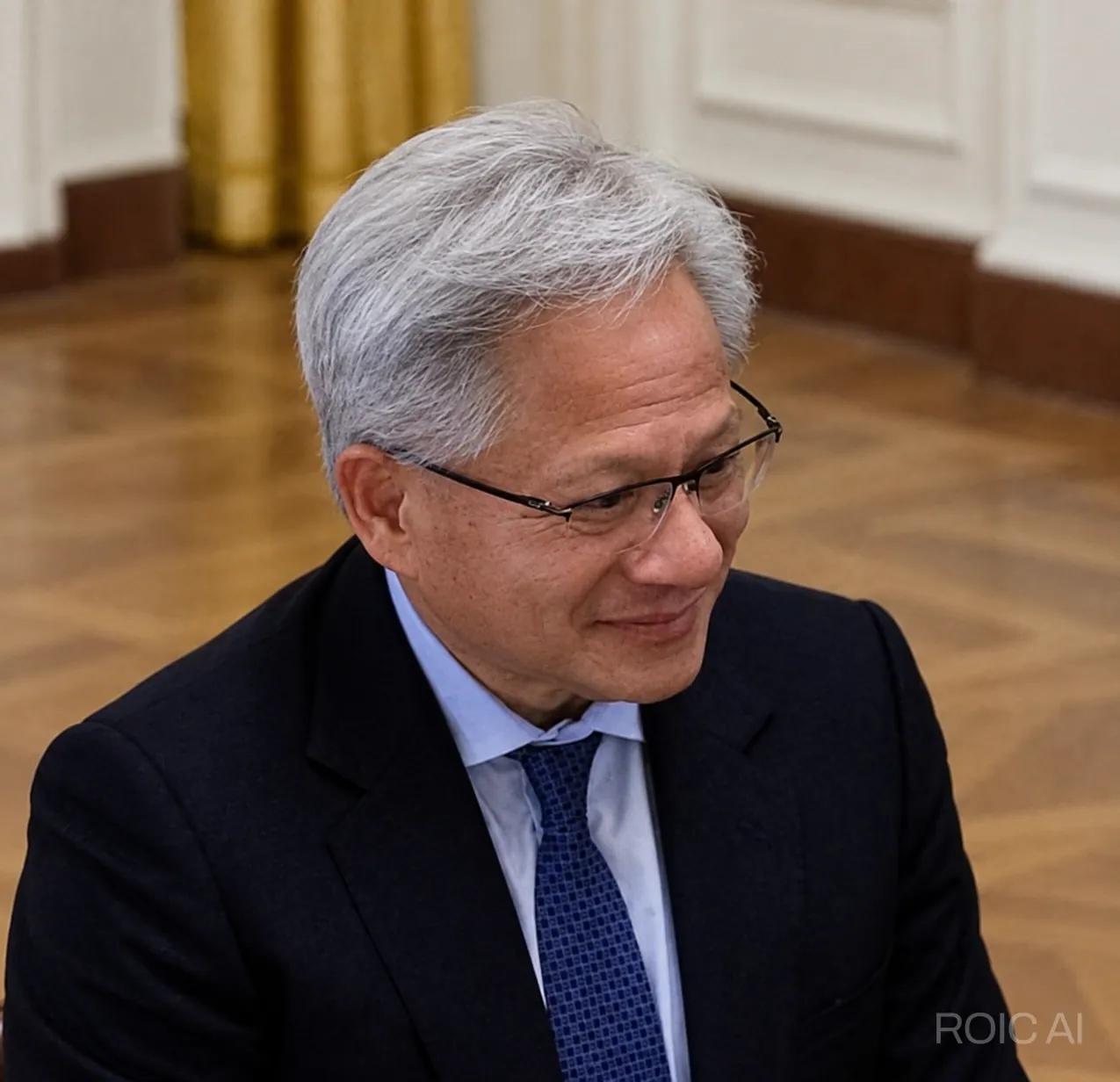
- President Trump said in a CNBC interview that Xi Jinping has "great respect" for Jensen Huang, as Nvidia (NASDAQ:NVDA)'s board reinstated Huang as CEO.
- The reinstatement follows Huang's resignation on November 12 and a unanimous board vote effective November 23; the board said it received input from "senior levels of the United States government."
- Nvidia's shares soared on the news, and the company faces ongoing congressional scrutiny over chip exports to China and a December 1 House interview with Huang.
President Donald Trump said in a CNBC interview on Monday that Chinese President Xi Jinping has "great respect" for Jensen Huang, the Nvidia founder who was reinstated as CEO earlier that day. The remark came as Nvidia's board unanimously voted to return Huang as president, CEO and director, effective immediately. The board said it received input from "senior levels of the United States government" and sees no national security risk. Trump posted on Truth Social that the board made "the correct and proper decision." The move surprised the market; board chair Harvey Jones had said last week that the board did not intend to reinstate Huang. Reuters reported that shares soared 33% on the news.
Trump's comment in the CNBC interview follows his earlier claim that he spoke "at length" with Xi about Huang during an Oval Office exchange. That account had conflicted with prior statements from the president and other administration officials, who indicated Huang was only a peripheral topic in conversations with Beijing. Just days before, Trump told reporters that Huang came up only "briefly" during a dinner with Xi that focused primarily on artificial intelligence. He described Huang's departure as "a tragedy" and called him "a brilliant man." On a separate occasion, Trump said Xi had referred to Huang as "brilliant." Treasury Secretary Scott Bessent, meanwhile, said Huang did not come up in his own talks with Chinese officials. A senior administration official later insisted both accounts were accurate, explaining that each official was describing his own separate conversations.
Board Reinstates Huang After Ten Days of Uncertainty
Nvidia's board reinstated Huang as president, CEO and director on Monday, effective immediately, following a unanimous vote. The board said it received input from "senior levels of the United States government" and determined there was no national security risk. The decision reversed the board's earlier stance; chair Harvey Jones had said last week that the board did not intend to reinstate Huang. CFO Colette Kress, who had served as interim CEO, keeps the CFO role, and Jones remains board chair. The board is searching for a new chief compliance officer, and an independent committee is investigating whether Huang was targeted by a foreign intelligence effort.
The reinstatement came after Huang resigned on November 12 amid reports of personal indiscretions, including affairs with an alleged Chinese spy and an executive at Megaspeed, a Singapore firm that supplies computing power to Chinese clients. The company has not commented publicly on the circumstances of his departure. The New York Times reported that there was no obvious successor, with tensions also surrounding the role Huang's daughter played at the company. Reuters reported that shares soared 33% on the reinstatement news. Huang is scheduled for a transcribed interview with several House committees on December 1.
The mixed messaging comes at a delicate time for Nvidia, which is grappling with the sudden exit of its visionary leader. Huang resigned the week before the company's earnings call amid reports of personal indiscretions, including affairs with an alleged Chinese spy and an executive at Megaspeed, a Singapore firm that supplies computing power to Chinese clients. The company has not commented publicly on the circumstances of his departure. CFO Colette Kress is serving as interim CEO, and The New York Times reported that there is no obvious successor, with tensions also surrounding the role Huang's daughter played at the company.
Nvidia's latest quarterly results, released last month, showed revenue of $115.8 billion, up 103% year over year, with data center revenue reaching $107.6 billion. Gross margin stood at about 74.9%, and non-GAAP earnings per share came in at $2.68. The company guided to approximately $130 billion in revenue for the current quarter and raised its fiscal 2028 growth outlook to roughly 75%. Shares rose in after-hours trading following the report.
The China situation remains a sore spot. Nvidia sold $2.4 billion of licensed Hopper (H200) products to China last quarter but has since stopped shipping them, and none are included in its guidance. China had already restricted imports, and Reuters reported that about 600,000 H200 chips are sitting in Hong Kong. The 2025–26 arrangement, under which Trump allowed H200 sales to approved Chinese buyers in exchange for a 25% cut, was formalized by the Commerce Department in January with volume caps and security conditions. But Beijing's own restrictions have rendered the deal largely ineffective.
Congressional scrutiny is intensifying. A House Foreign Affairs Committee report revealed that Commerce approved 879,868 Nvidia and AMD (NASDAQ:AMD) chips for China-linked firms across 21 licenses, including to Alibaba (NYSE:BABA), Tencent (OTC:TCEHY), and Baidu (NASDAQ:BIDU)—some of which the Pentagon lists as having military ties. Committee Chairman Michael McCaul called this "of tremendous concern." The administration has responded by issuing an interim rule to close a loophole that allowed Chinese firms to rent chips in third countries, but Bessent said no further restrictions are needed.
Investors are weighing the implications. While Nvidia's growth is driven largely by non-China demand, the loss of Huang and the ongoing political scrutiny could weigh on sentiment. The company did not respond to a request for comment on Trump's remarks or the CEO search. For now, the focus remains on whether the U.S.-China chip dance will escalate or stabilize—and who will lead Nvidia through it.