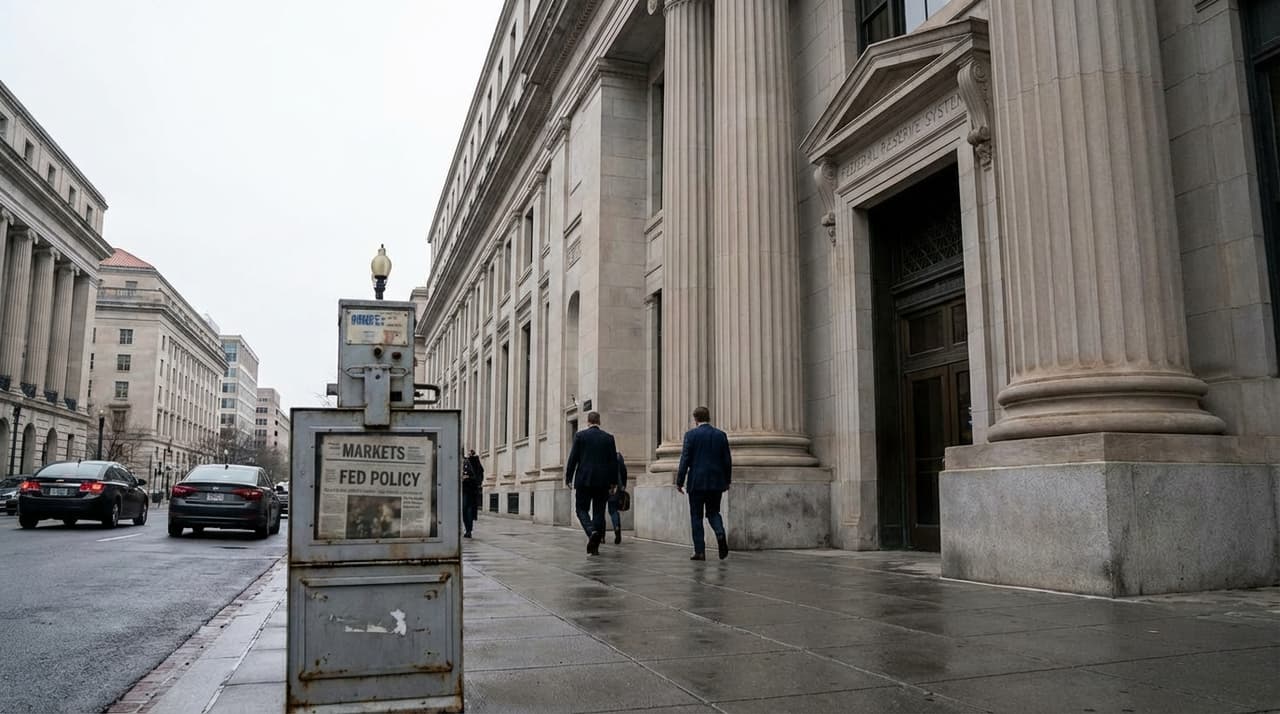
- The Federal Reserve paused its rate-cutting cycle, keeping the benchmark rate at 3.5%-3.75% after three reductions in late 2025.
- Chair Jerome Powell emphasized persistent inflation concerns, with the rate at 2.8%—above the Fed's 2% target—driving caution.
- Internal dissent emerged as two officials, including a Trump appointee, favored a quarter-point cut amid political pressures and economic uncertainty.
A Cautious Pause Amid Stubborn Inflation
Federal Reserve Chair Jerome Powell underscored the need for vigilance on inflation as the central bank held interest rates steady at 3.5%-3.75% during its January 28, 2026, FOMC meeting. This decision marks a pause after three consecutive 25-basis-point cuts in late 2025, reflecting a delicate balancing act amid solid economic growth, stable hiring, and inflation that remains stubbornly elevated at 2.8%—well above the Fed's 2% target. According to people familiar with the matter, the Fed upgraded its growth assessment to "solid" from "modest," noting no deterioration in hiring, but cited lingering inflation and labor market uncertainty as key reasons for the halt.
Powell is set to elaborate on this stance in a press conference scheduled for 2:30 p.m. ET, where he's expected to address market reactions and future policy directions. The pause maintains higher borrowing costs for mortgages, car loans, and businesses, influenced by broader market forces, as the Fed navigates its dual mandate of stable prices and maximum employment. Despite healthy growth indicators, recent data shows weak job additions and consumer confidence hitting an 11-year low, as reported by the Conference Board, adding complexity to the economic landscape.
Internal Divisions and Political Pressures
Efforts to steer monetary policy have hit a snag with internal dissent within the Fed. Two officials dissented from the decision to hold rates, favoring a quarter-point cut instead. These include Stephen Miran, a Trump appointee, and Christopher Waller, who is being considered as a potential replacement for Powell when his term ends in May. Without a clear consensus, the Fed risks appearing divided at a critical juncture. The White House is closely watching these developments, with Trump having pressured the Fed for sharper cuts and criticized Powell's leadership in recent months.
Political tensions are escalating, with the Department of Justice issuing subpoenas targeting Powell's testimony related to a $2.5 billion renovation—a move some insiders view as a pretext for influencing rate policy. Additionally, the Supreme Court is reviewing Trump's bid to fire Governor Lisa Cook, an unprecedented action with no historical precedent in the Fed's 112-year history. Senate Republicans, however, continue to back Powell and may block any replacement attempts, highlighting the fragile balance between Fed independence and political influence.
Market Implications and Future Outlook
Economists expect only two rate cuts in 2026, likely starting in June or later, contingent on inflation data improving. Larger tax refunds could potentially boost consumer spending and hiring in the coming months, but for now, the labor slowdown and hot inflation are driving caution. In the short term, the Fed's split is evident—only 12 out of 19 officials support any cuts in 2026, suggesting a hold is probable until inflation trends closer to the 2% target.
Stakeholders like workers may see job market stabilization but no acceleration, fueling ongoing debates about the Fed's role. As one analyst noted, "The Fed is walking a tightrope, with political pressure threatening to backfire through Senate resistance." Looking ahead, a Powell replacement announcement could come soon, but experts caution against rushing changes given the economy's firm footing entering 2026. For now, the focus remains on real-time data and the Fed's commitment to its inflation fight, with all eyes on Powell's upcoming remarks for further clues.
Correction: An earlier version misstated the number of dissenting officials; it is two, not one.