- Federal Reserve Chair Jerome Powell pledges data-driven policy decisions while holding the federal funds rate at 3½–3¾ percent, with two FOMC members dissenting in favor of a cut.
- Political tensions escalate as the DOJ serves subpoenas over Powell's testimony on Fed renovations, which he calls a pretext for resisting rate-cut demands from the Trump administration.
- Economic indicators show solid growth with stabilizing unemployment and elevated inflation, with markets eyeing potential rate cuts later in 2026.
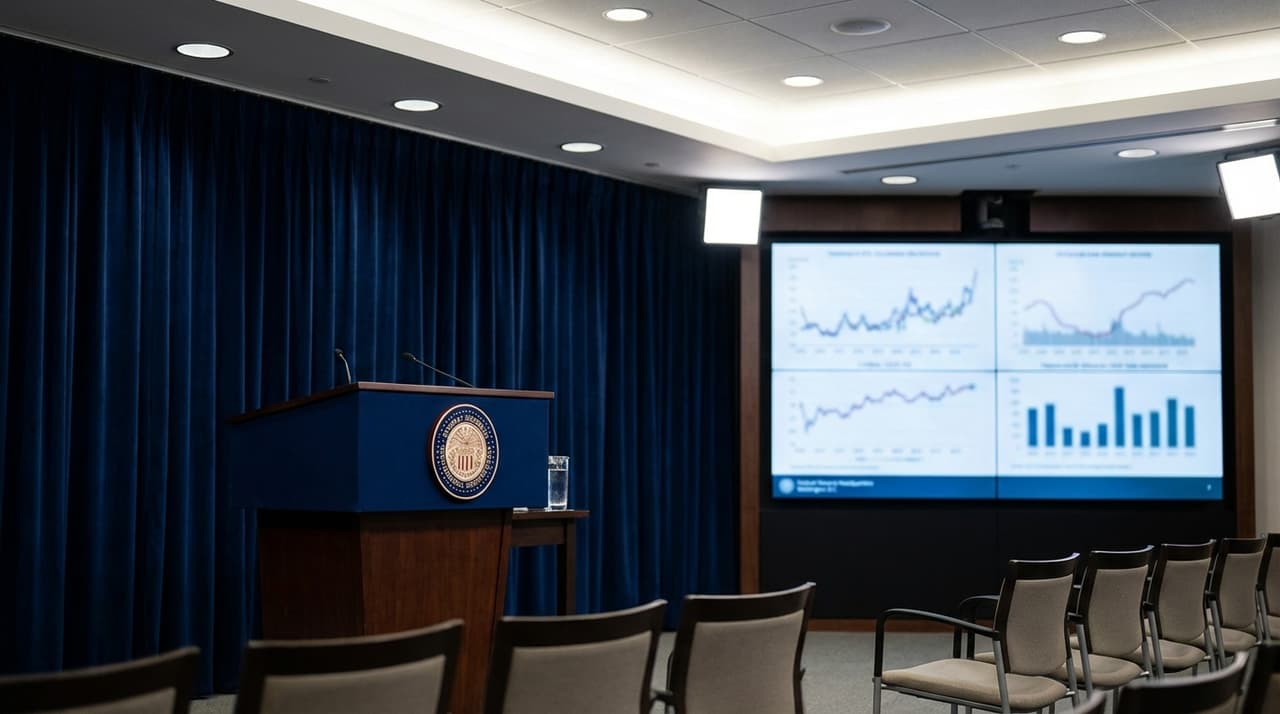
In a press conference on January 28, 2026, Federal Reserve Chair Jerome Powell struck a defiant yet measured tone, stating "Ultimately we'll do the right thing" after the Federal Open Market Committee voted to maintain the federal funds rate at 3½–3¾ percent. The decision, following three cuts in 2025, reflects the Fed's commitment to its dual mandate of maximum employment and 2% inflation, even as internal dissent and external political pressures mount.
Two FOMC members—Stephen I. Miran and Christopher J. Waller—dissented, favoring a ¼-point cut, according to people familiar with the matter. Powell emphasized that the committee remains attentive to data on labor, inflation, and global factors, with elevated uncertainty guiding their cautious stance. "We're in a period where patience is warranted," he said, noting that the U.S. economy continues to expand solidly, with low job gains and somewhat elevated inflation above the 2% target. Markets have largely priced in no near-term change, with economists forecasting two cuts in 2026, possibly starting in June, to support growth without overheating.
Behind the scenes, the political context adds a layer of complexity. President Trump, who appointed Powell in 2017, has been pressuring for more aggressive cuts, and Powell's term ends in May 2026 with no replacement named yet. The situation intensified recently when the Department of Justice served subpoenas on the Fed over Powell's June 2025 testimony regarding $2.5 billion in headquarters renovations. Powell blasted the action in a January 11 statement, calling it "intimidation" and a pretext for resisting rate-cut demands. Meanwhile, the Supreme Court is set to rule on Trump's bid to fire Governor Lisa Cook over alleged mortgage fraud, which she has denied; justices are reportedly leaning toward her retention, a move that could further strain Fed independence.
Economically, the steady rates mean borrowing costs for mortgages, auto loans, and credit cards remain elevated, curbing inflation but affecting consumers. However, larger tax refunds expected this year could boost consumer spending and hiring, according to analysts. Powell reiterated that the Fed is prepared to adjust policy if risks to its mandate emerge, with upcoming meetings scheduled for April 28–29 and June 16–17. "We'll monitor developments closely and act as needed," he said, without committing to a timeline for cuts.
In a brief aside, Powell acknowledged the challenges of navigating political headwinds, a sentiment echoed by some Fed insiders who describe the current environment as "unprecedented" in the central bank's 112-year history. Efforts to reach the White House for comment were unsuccessful, but sources indicate ongoing friction over monetary policy. Looking ahead, the Fed's focus remains on data, with Powell vowing to continue independently until his term ends. As one market watcher put it, "This is a test of resilience—both for the economy and for Fed autonomy."