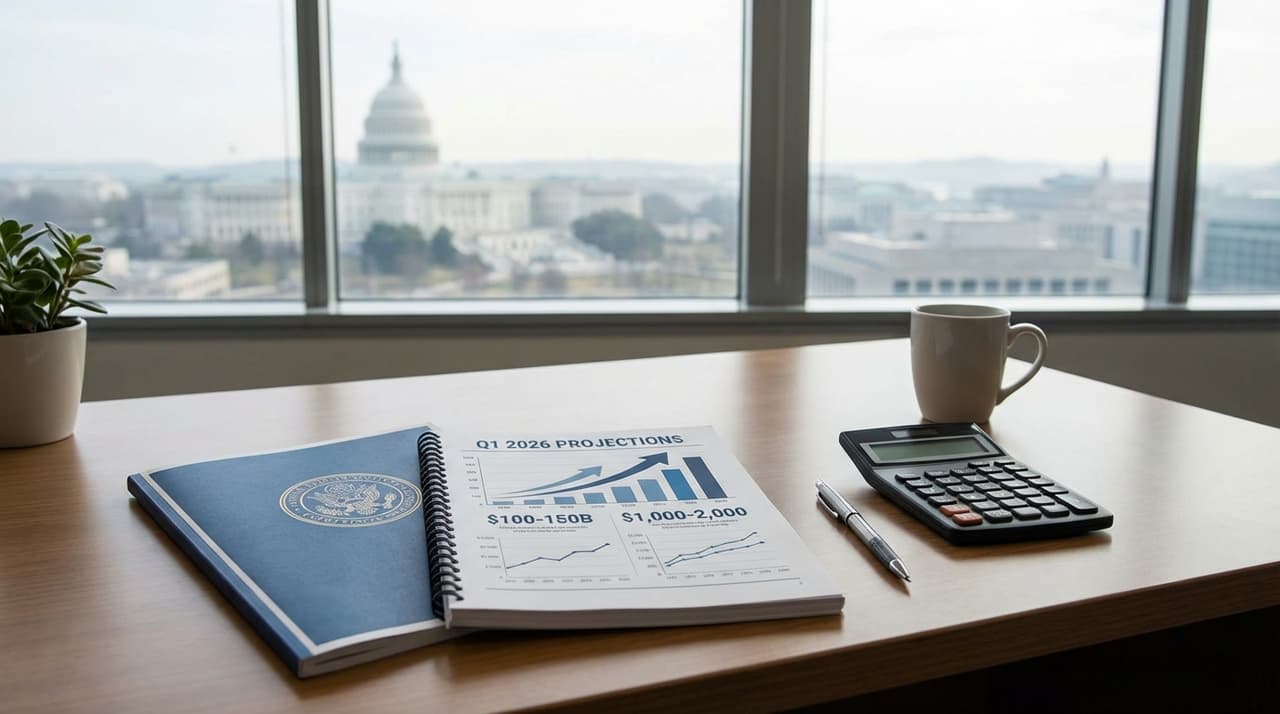
- Treasury Secretary Scott Bessent projects $100–150 billion in tax refunds for Q1 2026, with typical household refunds of $1,000–2,000.
- Bessent links the refunds to stronger economic momentum in early 2026 and a substantial decline in inflation in the first half of the year.
- The forecast comes amid debates over fiscal sustainability, with critics warning that expansive tax policies could exacerbate debt and inflationary pressures.
Treasury Secretary Scott Bessent has laid out a bullish outlook for the U.S. economy in early 2026, telling Fox Business that the government could issue $100 billion to $150 billion in tax refunds in the first quarter. Individual households may receive refunds ranging from $1,000 to $2,000, according to people familiar with the matter, providing a potential cash injection that could spur consumer spending.
Bessent, the 79th U.S. Treasury Secretary and a former global macro investor, emphasized that this refund surge should coincide with building economic momentum in the first and second quarters of 2026. He also expects inflation to decline substantially in the first half of the year, a view that aligns with the Trump administration's broader economic agenda focused on tax cuts, deregulation, and tariffs. "We're seeing conditions that support robust growth and easing price pressures," Bessent said in the interview, though the Treasury Department did not immediately respond to a request for further comment.
The forecast arrives as Bessent, sworn in earlier this year, takes a central role in implementing Republican economic policies. His confirmation received bipartisan support in the Senate, with lawmakers citing his market experience, but analysts are already flagging risks. With federal debt hovering around 100% of GDP and deficits projected above 6% of GDP, some economists warn that large refunds paired with ongoing tax cuts could lead to fiscal profligacy, potentially stoking inflationary pressures rather than curbing them.
Efforts to balance growth with debt sustainability have hit a snag, according to sources close to the administration, who note that internal discussions are ongoing about how to offset tax relief with spending reforms. Without a more credible fiscal plan, the U.S. could face higher borrowing costs and prolonged inflation, complicating the Federal Reserve's policy path. Markets are watching closely, with Treasury yields showing slight upticks in recent sessions as investors digest the implications of increased government issuance to fund refunds.
In the short term, retailers and consumer-facing sectors stand to benefit from front-loaded spending, while households may use the extra cash for debt repayment or big-ticket purchases. Bessent's comments also set the stage for political messaging ahead of the 2026 midterms, with the administration likely to tout tax relief as a cornerstone of its economic narrative. However, the long-term outlook remains contentious, as debates over who gains from the tax code and whether cuts can pay for themselves continue to simmer.
As Bessent prepares for upcoming G7 and G20 meetings, his stance on tariffs and international tax agreements will be scrutinized, adding another layer to the fiscal story. For now, the focus is on early 2026—a period that could see a temporary demand boost but also heightened uncertainty over America's fiscal trajectory.