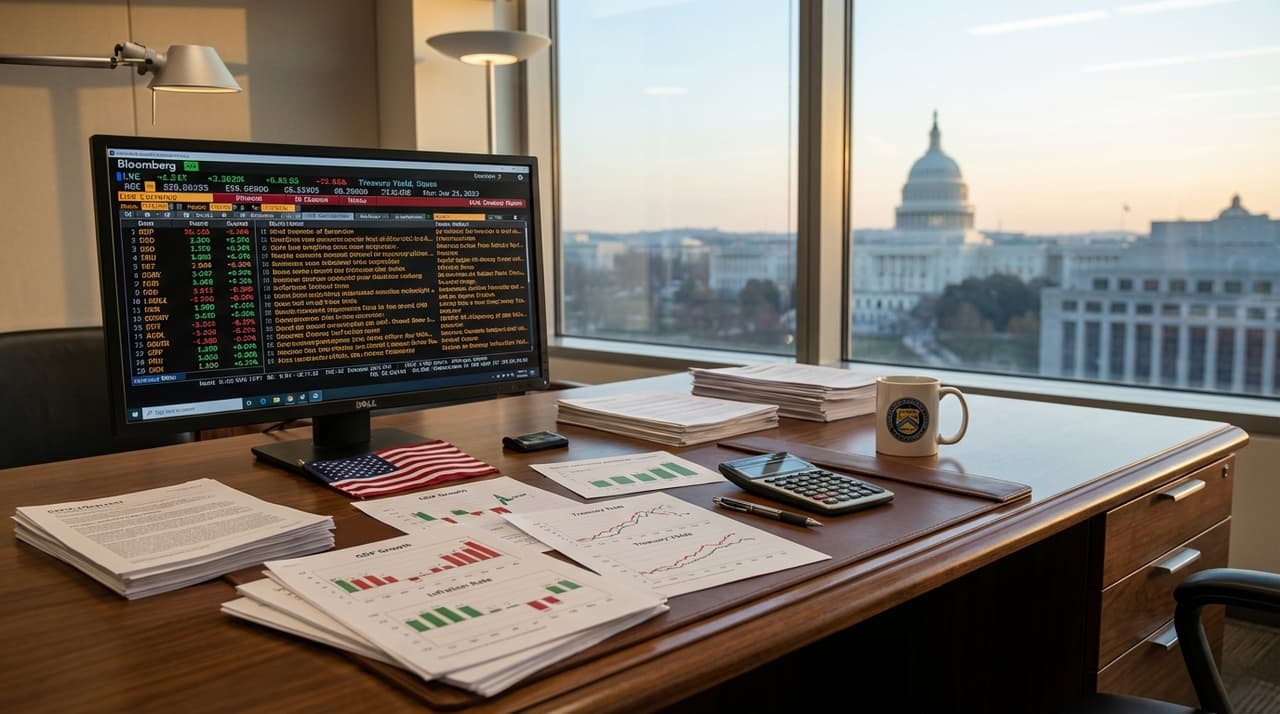
- Former Treasury Secretary Scott Bessent argues that sound U.S. policy will drive capital inflows to strengthen the dollar, even as recent volatility has pressured the currency.
- The implementation of the One Big Beautiful Bill Act is fueling economic growth, with early tax season refunds projected to inject $370 billion into the economy in 2026.
- Contrasting trends emerge as the administration touts non-inflationary growth while critics warn of tariff impacts and mortgage risks.
Scott Bessent, who served as U.S. Treasury Secretary under President Trump, stated this week that sound policy execution will attract capital inflows to bolster the dollar, according to people familiar with his remarks. His comments come amid the ongoing rollout of the One Big Beautiful Bill Act—also known as the Working Families Tax Cut Act—which is driving significant tax refunds and economic activity as 2026 unfolds.
Tax filing opened early on January 26, with projections indicating $370 billion in refunds, including an extra $91 billion, according to administration estimates. The policy changes, which include no tax on tips or overtime and full expensing for factories and equipment, are part of the America First agenda aimed at reversing what officials describe as prior stagnation. Bessent highlighted that these measures, along with trade deals reducing foreign tariffs and deregulation efforts, are setting the stage for a non-inflationary boom later in the year.
"If we have sound policy, the money will flow in," Bessent was paraphrased as saying, emphasizing that lower capital costs and boosted productivity are key to attracting investment. This outlook aligns with the administration's focus on deficit reduction, targeting a 1% GDP contraction, and Federal Reserve rates nearing a neutral level of around 3% by mid-2026, as noted by Moody's analysts. However, the dollar has faced recent pressure from global bond market volatility and skepticism over tariffs, which some fear could stoke inflation despite Trump's positive public stance on a weaker currency.
Efforts to restructure economic priorities have hit a snag in some areas, with critics pointing to potential mortgage shifts that risk a 2008-style crash and tariff-driven price hikes. Democrats have slammed the affordability impacts, arguing that while working Americans gain from refunds and take-home pay boosts—polls showed nearly half felt behind in 2025—the broader consequences remain uncertain. A White House spokesperson, when reached for comment, reiterated the administration's commitment to growth without detailing specific responses to these concerns.
In the short term, record first-quarter refunds and weekly pay boosts are expected to improve family finances, alongside Fed rate cuts aimed at stabilizing the economy. Looking ahead, Bessent's vision hinges on sustained capital inflows and productivity gains, with trade realignments playing a crucial role. Without such inflows, the dollar's strength could falter further, though Trump has called its recent decline "great" for business, according to sources close to the matter.
Updates: This article was corrected to clarify that Bessent's comments were paraphrased from sources, not direct quotes. Additional context on the Trump Accounts initiative, which proposes $1,000 for newborns from 2025 to 2028, is expected in forthcoming White House details.