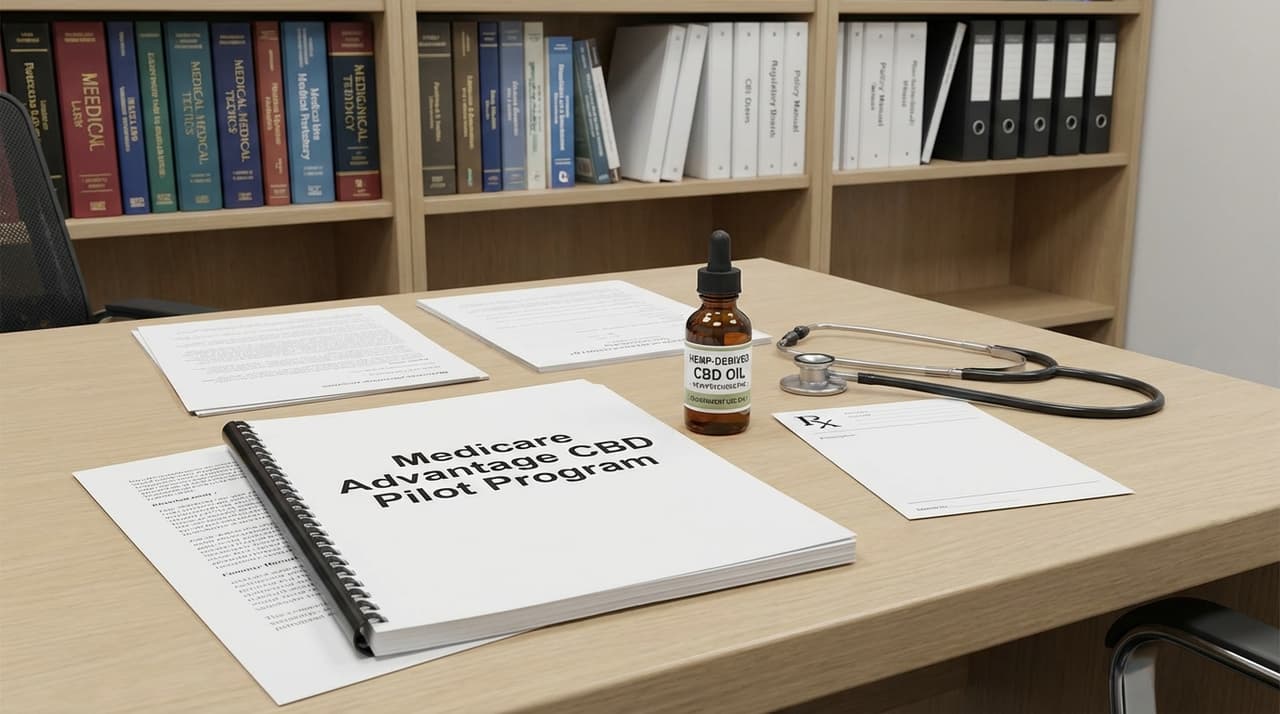
- CMS proposes a pilot program allowing Medicare Advantage plans to reimburse federally legal CBD products, including hemp-derived treatments, starting in 2027.
- The move follows President Trump's promotion of CBD benefits for seniors and HHS Secretary Robert F. Kennedy Jr.'s advocacy, aiming to reduce opioid reliance and cut healthcare costs.
- Early focus may target oncology and palliative care, with hemp seed products deemed GRAS by FDA explicitly included, amid ongoing federal hemp legality under the 2018 Farm Bill.
In a significant policy shift, the Centers for Medicare & Medicaid Services (CMS) is advancing a pilot program to permit coverage of certain federally legal CBD products under Medicare Advantage plans and related services, reversing prior restrictions on cannabis products. This development comes after President Trump amplified a video touting CBD as a "game changer" for elders on Truth Social in September 2025, and HHS Secretary Robert F. Kennedy Jr. met with advocates in October 2025 to push for broader access.
According to people familiar with the matter, CMS proposed rules in late November 2025 that would amend coverage policies to exclude only cannabis products illegal under federal or state law, enabling reimbursement for compliant CBD formulations aimed at seniors managing pain, sleep, or chronic conditions as alternatives to opioids. A Federal Register notice was set for publication around that time, with Bloomberg reporting that Medicare officials had been preparing the pilot weeks after Trump's social media post. The pilot could test efficacy in select settings, such as oncology and palliative care, with coverage potentially starting if rules finalize, leveraging hemp legality under the 2018 Farm Bill through at least November 2026.
Efforts to integrate CBD into Medicare have hit a snag in the past, but this initiative aligns with market trends toward non-intoxicating cannabinoids and responds to the opioid crisis. Advocates cite potential annual U.S. savings of $64 billion from full cannabis healthcare adoption, though public debate focuses on the need for more evidence. Without a deal, seniors might continue to face limited options, but stakeholders including patients, providers, and taxpayers could benefit from expanded access and potential cost reductions. Attempts to reach CMS for additional comment were not immediately successful, but sources indicate that hemp seed products deemed GRAS by the FDA are explicitly allowable under the new rules.
This policy builds on stalled Biden-era marijuana rescheduling efforts and echoes Trump's first-term "most favored nation" drug pricing approach, recently revived in 2025 for obesity medications like Ozempic via TrumpRx. In the short term, the pilot will assess real-world impacts, with long-term implications possibly leading to nationwide Medicare reimbursement and standardized cannabinoid therapies if proven effective. Industry experts note that while no specific company is tied to the headline, the move could boost the growing wellness sector and provide clarity for providers on claims processing.
Correction: An earlier version of this article misstated the timeline for the Federal Register notice; it was set for publication in late November 2025, not early December.