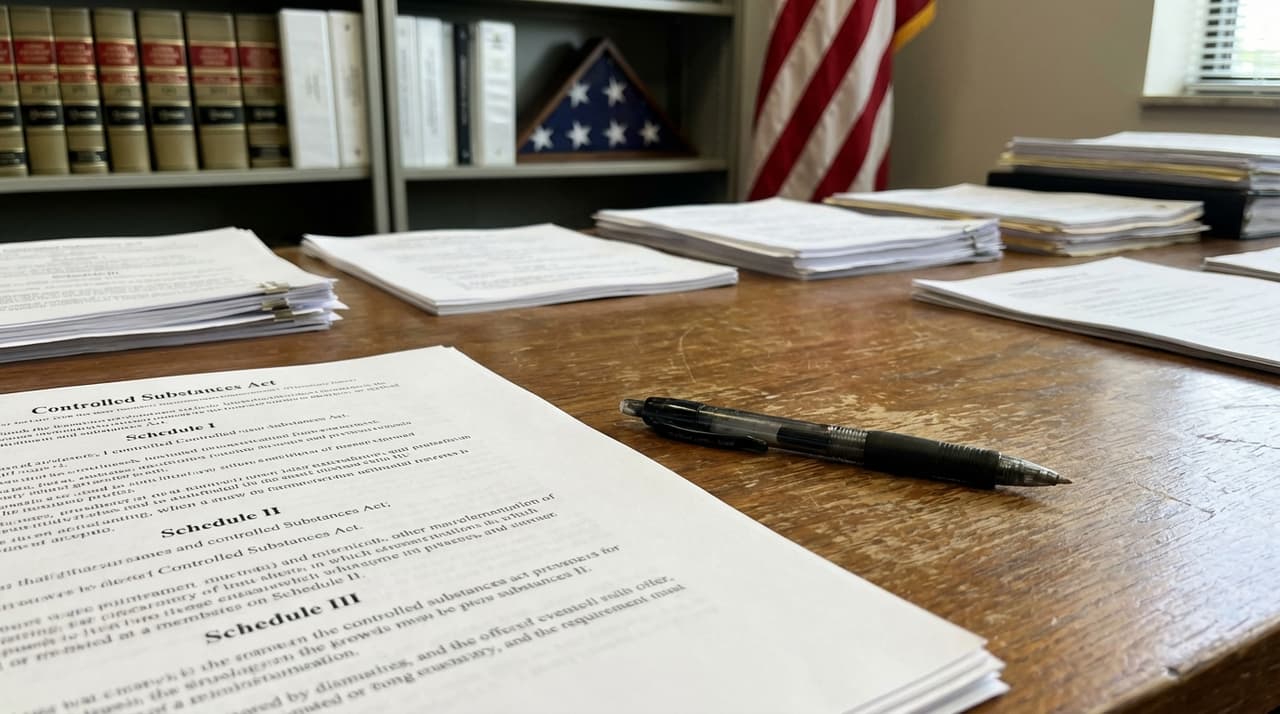
- Trump administration reportedly preparing executive order to reclassify cannabis from Schedule I to Schedule III
- Move would follow stalled Biden-era recommendations but require formal rulemaking process
- Cannabis stocks have already rallied on expectations of tax relief and banking access
Multiple sources familiar with the matter indicate the Trump administration is preparing an executive order that would direct federal agencies to reclassify cannabis under the Controlled Substances Act. The order, expected as early as Monday according to people briefed on the discussions, would instruct relevant departments to shift cannabis from Schedule I—where it currently sits alongside heroin and LSD—to Schedule III, alongside substances like ketamine and Tylenol with codeine.
A White House official, speaking on condition of anonymity, emphasized that no final decision has been made and cautioned that any rescheduling would only take effect after completing the existing rulemaking process. That process, which began under the Biden administration after Health and Human Services and Justice Department recommendations in 2024, has been stalled since early 2025 due to legal challenges and DEA delays.
Market reaction has been swift despite the procedural hurdles. U.S. multi-state operators and Canadian licensed producers saw sharp gains following initial reports, with traders citing expectations that Schedule III classification would end the application of IRS Section 280E to state-legal cannabis businesses. This tax provision currently prevents cannabis companies from deducting ordinary business expenses, creating effective tax rates that can exceed 70%.
"What institutional investors are really focused on is regulatory stability," said one private credit executive who asked not to be named while discussing policy-sensitive matters. "The industry has been operating in this gray area for too long." Efforts to reach representatives from major cannabis trade associations for comment were unsuccessful by press time.
The reported move represents one of the most significant potential shifts in U.S. drug policy in decades, though it stops short of full decriminalization or legalization. Trump has previously acknowledged divisions within his administration and among supporters regarding cannabis policy, telling reporters last month that he'd heard compelling arguments from both medical advocates and those concerned about youth access.
Industry analysts note that rescheduling would likely ease banking restrictions that have forced many cannabis businesses to operate primarily in cash. Mainstream financial institutions have largely avoided the sector due to federal prohibition, creating security concerns and limiting access to capital. Several banking executives contacted for this story declined to comment on potential policy changes.
Legal experts caution that the rulemaking process could face additional challenges. "Any rescheduling requires DEA and HHS processes, scientific review, and public comment," noted a regulatory attorney familiar with controlled substance classifications. "These procedures can be protracted, and legal challenges are almost certain."
International implications remain limited in the short term, though U.S. rescheduling could influence global medical cannabis norms. Countries like Canada and several European nations have expanded their medical cannabis regimes in recent years, with Canadian producers particularly positioned to benefit if U.S. medical research accelerates.
Correction: An earlier version of this article misstated the timeline for the expected executive order. While multiple sources indicate Monday as the target date, administration officials have not confirmed a specific timeline.