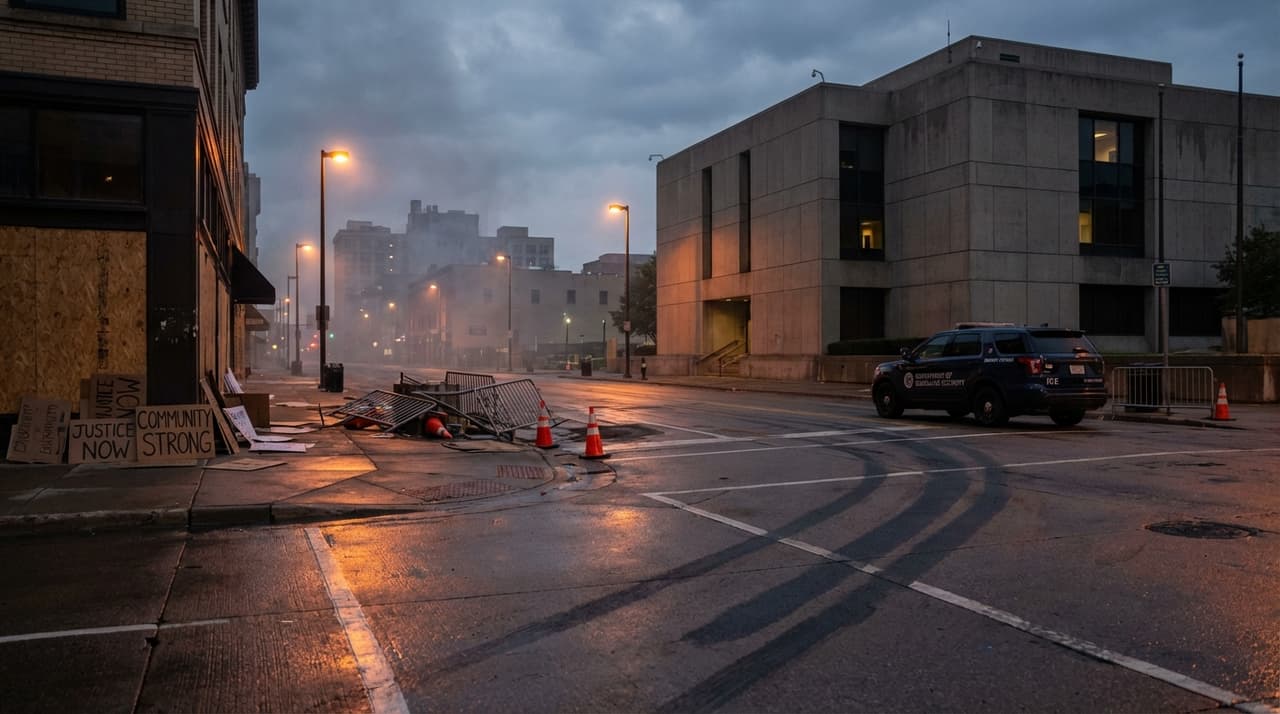
- Federal agents begin partial withdrawal from Minneapolis as Border Czar Tom Homan meets with Mayor Jacob Frey and Governor Tim Walz.
- Legal challenges mount with federal judges reviewing lawsuits questioning if the operation retaliates against sanctuary policies.
- Two protester deaths during the operation have sparked ongoing riots and strained local resources, with broader implications for immigrant-heavy workforce sectors.
Federal agents initiated a partial withdrawal from Minneapolis on January 27, following a series of high-level discussions between the Trump administration and local Democratic leaders. Border Czar Tom Homan, now the primary on-ground contact reporting directly to former President Donald Trump, is scheduled to meet with Minneapolis Mayor Jacob Frey and likely Governor Tim Walz later that day to address the ongoing unrest tied to Operation Metro Surge. This development comes after Trump announced via Truth Social on January 26 that he had a "very good" phone call with Frey, signaling a softened federal tone amid escalating violence that has included two protester deaths by ICE and Border Patrol officers earlier in January.
Mayor Frey confirmed that some ICE personnel would leave the city while pushing for a full end to the operation, which involves approximately 2,000 ICE and 1,000 Border Patrol agents. The surge, launched in mid-January to target criminals in sanctuary Minnesota, has strained local resources and sparked riots, including incidents aiding a criminal escape and injuring an ICE agent. According to people familiar with the matter, the White House has blamed local leaders for encouraging agitators, but recent talks have been described as "productive" by Trump, who praised the dialogue with Frey and Walz.
Legal battles are intensifying alongside the operational shifts. Federal judge Katherine Menendez is reviewing lawsuits from Minnesota, Minneapolis, and St. Paul to halt the surge, questioning if it constitutes retaliation for sanctuary policies, with briefing ordered by January 29. Another judge, Eric Tostrud, is considering lifting an order blocking evidence handling in one of the shootings, as state officials report federal non-cooperation. Attorney General Pam Bondi has urged Walz to repeal sanctuary policies and share voter and Medicaid data, though judges have expressed skepticism about the motives behind these demands.
The societal impact has been profound, with the deaths of Renee Good by ICE and Alex Pretti by Border Patrol fueling protests and lawsuits. Frey has demanded an end to what he calls "unconstitutional arrests," vowing city cooperation only on crimes, not immigration status. Stakeholders are deeply divided: immigrants and their families fear heightened enforcement, while federal officials cite public safety benefits from removing criminals. Public reaction has been volatile, with protesters demanding a federal exit, chanting phrases like "How many more have to die?" and the White House accusing locals of enabling chaos.
Economically, the operation has indirect implications for Minnesota's immigrant-heavy workforce in sectors such as manufacturing and services, though no specific market trends have been cited. Frey has requested National Guard assistance to address staffing shortages post-violence, highlighting the strain on local resources. In a brief statement, a White House spokesperson emphasized that de-escalation is conditioned on local cooperation, saying, "We need to let cops be cops to restore order." Attempts to reach Homan for further comment were unsuccessful.
Looking ahead, the short-term outlook hinges on the Homan-Frey/Walz meeting and imminent judge rulings, which could scale back federal presence if local leaders assist on criminal cases. In the long-term, experts predict potential ongoing ICE operations under Homan if cooperation falters, risking more violence and lawsuits, or policy shifts if de-escalation succeeds. Critics view the surge as federal overreach punishing blue states, while proponents see it as a model for peaceful federal-local partnerships elsewhere. Similar operations in other sanctuary areas may follow, depending on the outcome in Minneapolis.
Correction: An earlier version of this article misstated the date of the partial withdrawal; it occurred on January 27, not January 26.