- President Trump threatens to invoke the Insurrection Act to deploy federal troops in Minneapolis if protests against ICE operations continue.
- The threat follows a second shooting incident where a federal immigration officer wounded a Minneapolis man who attacked with a shovel and broom handle.
- Minnesota officials, including Governor Tim Walz and Attorney General Keith Ellison, are resisting the federal escalation and preparing legal challenges.
President Donald Trump threatened on Thursday, January 15, 2026, to invoke the rarely used Insurrection Act to deploy federal troops in Minneapolis if protests against Immigration and Customs Enforcement operations continue, according to his social media post. "If the corrupt politicians of Minnesota don't obey the law and stop the professional agitators and insurrectionists from attacking the Patriots of I.C.E., who are only trying to do their job, I will institute the INSURRECTION ACT...and quickly put an end to the travesty that is taking place in that once great State," Trump stated.
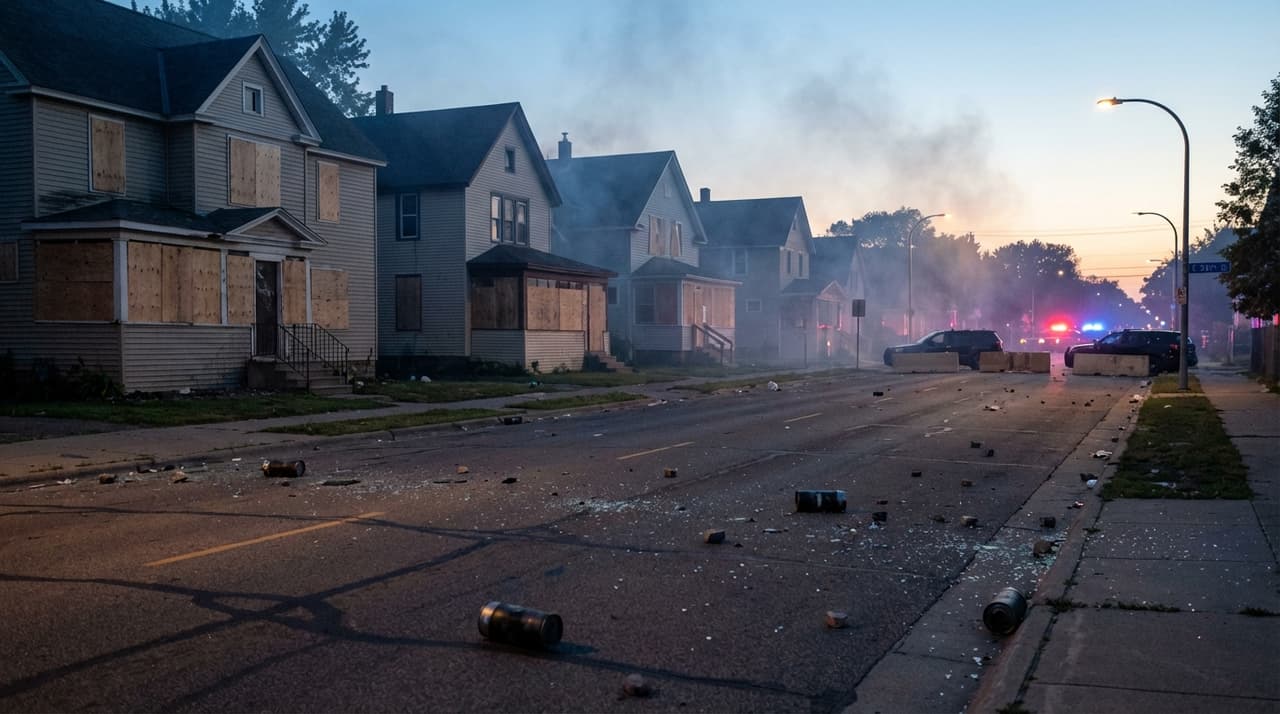
The escalation comes one week after an ICE agent fatally shot 37-year-old Renee Good and follows a second shooting incident on Wednesday night in which a federal immigration officer shot and wounded a Minneapolis man who attacked the officer with a shovel and broom handle. Protests have intensified, with federal officers deploying tear gas and engaging with crowds throwing rocks and fireworks, according to people familiar with the matter. Smoke filled Minneapolis streets as clashes between protesters and federal forces intensified, and Police Chief Brian O'Hara characterized a Wednesday night gathering as an unlawful assembly.
Minnesota Governor Tim Walz characterized the situation as chaos, stating it "defies belief" and describing the federal presence as "a campaign of organized brutality against the people of Minnesota by our own federal government." Minneapolis Mayor Jacob Frey called the situation "not sustainable" and "an impossible situation," noting that the federal force—five times the size of the city's 600-officer police force—has "invaded" Minneapolis and is scaring residents. Efforts to reach the White House for additional comment were unsuccessful.
Minnesota Attorney General Keith Ellison announced he is prepared to challenge any invocation of the Insurrection Act in court. He called on Republican officials to set aside partisan politics and oppose what he characterized as "dire threat of escalation from the federal government." Meanwhile, Homeland Security Secretary Kristi Noem stated that Trump has the right to invoke the Insurrection Act in Minnesota, and White House officials have used inflammatory language, with deputy chief of staff Stephen Miller claiming the Democratic Party is "committed to inciting a violent insurrection," and press secretary Karoline Leavitt calling Renee Good a "leftist insurrectionist."
The Department of Homeland Security has made more than 2,000 arrests in Minnesota since early December, and without a deal to de-escalate, the situation appears set to intensify. Trump has previously threatened to invoke the Insurrection Act during his administration, including threats involving Illinois last fall and during protests at a federal ICE field office in South Portland, Oregon, in fall 2025, where he referred to rioters as "insurrectionists." The Supreme Court recently ruled that Trump's previous efforts to deploy the National Guard into Democratic-led cities exceeded his authority, adding a layer of legal complexity to the current standoff.
As tensions mount, the impasse between federal immigration enforcement efforts and local opposition remains volatile, with both sides digging in for a protracted conflict that could test constitutional boundaries and reshape federal-state dynamics in law enforcement.