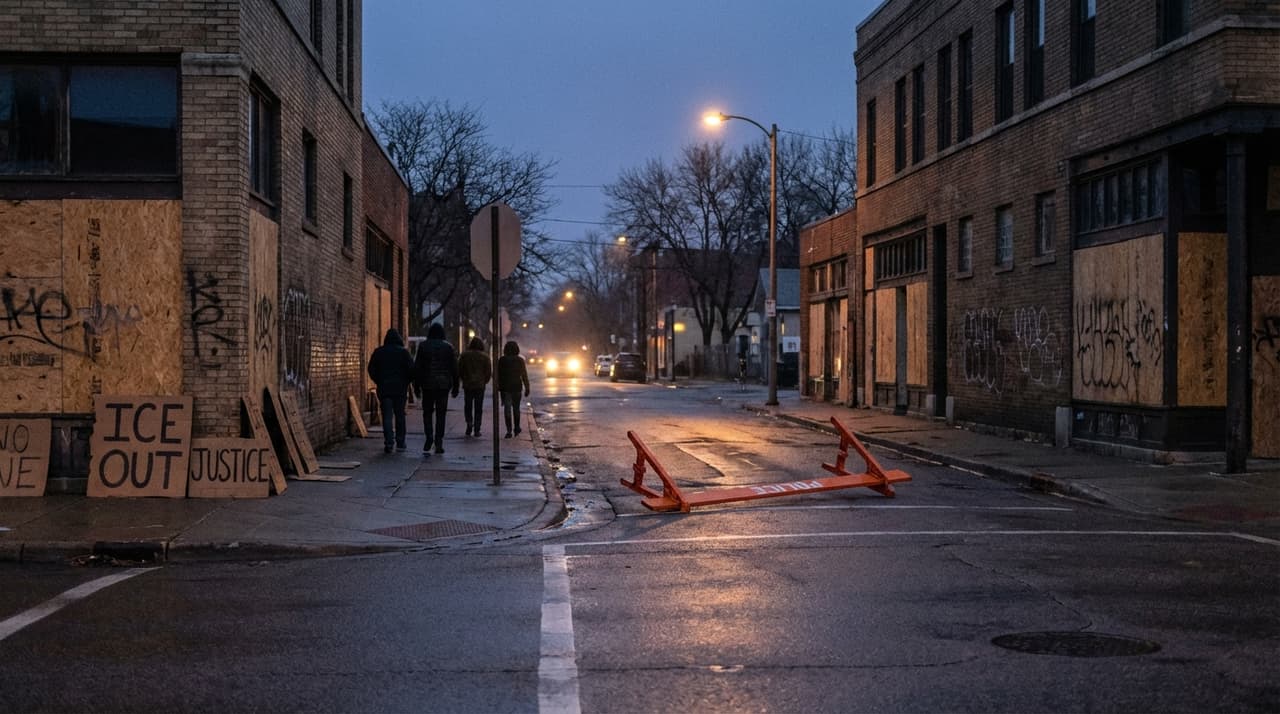
- President Trump retreats from invoking the Insurrection Act, citing no current reason for military deployment in Minnesota.
- Protests intensify over ICE operations, including fatal shootings, with political tensions flaring between federal and state officials.
- Legal and historical precedents raise concerns over federal overreach and civil liberties in domestic law enforcement.
In a rapid shift, President Donald Trump stated on Thursday, January 15, 2026, that there is no present justification to activate the Insurrection Act in response to ongoing protests in Minneapolis-Saint Paul, despite earlier threats. This reversal came after he targeted Minnesota's Democratic leaders on Truth Social, accusing them of enabling "professional agitators" attacking 3,000 ICE agents involved in "Operation Metro Surge." The protests, which have escalated since last week, stem from an intensified immigration crackdown by ICE, including the fatal shooting of U.S. citizen Renee Good and a second shooting of Venezuelan national Julio Cesar Sosa-Celis.
White House Press Secretary Karoline Leavitt defended the initial threat as a historical tool used sparingly by past presidents, while Minnesota Governor Tim Walz urged calm and rejected any escalation, appealing for peaceful demonstrations. According to people familiar with the matter, internal discussions within the administration highlighted divisions over the potential deployment of federal troops, with some officials warning of legal hurdles following a recent Supreme Court ruling that blocked Trump's prior National Guard mobilizations in cities like Chicago.
Efforts to de-escalate the situation have hit a snag as protesters continue to disrupt ICE operations targeting criminals such as rapists and drug traffickers, with local residents expressing fears over public safety. Republicans, including Senate Majority Leader John Thune and Senator Lisa Murkowski, have urged restraint, emphasizing reliance on local law enforcement rather than federal intervention. Critics, like Baher Azmy, legal director at the Center for Constitutional Rights, labeled the threat an "autocratic power grab," noting it inverts the Act's historical use against white supremacy during events like Reconstruction.
Without a deal to ease tensions, the standoff could risk further violence or even military deployment, particularly as midterm elections approach. Stakeholders, including ICE agents and federal law enforcement, are closely monitoring developments, with debates raging over federal overreach versus the need for security. Trump officials have accused Governor Walz of inciting violence by comparing ICE to Nazis, a claim Walz's office has not directly addressed despite attempts to reach out for comment.
Industry-specific elements come into play as the 1807 Insurrection Act allows presidents to deploy troops domestically, overriding the Posse Comitatus Act, but past uses—such as during the 1992 Los Angeles riots—typically involved local requests, which are absent here. This move follows parallel unrest tied to immigration enforcement in other Democrat-led areas, signaling a broader national crackdown warning from the administration. In the short term, risks include heightened tensions, while long-term implications could normalize federal troops for law enforcement, raising civil liberties concerns without local consent.
Correction: An earlier version of this article misstated the date of Trump's statement; it was made on January 15, 2026, not January 14.