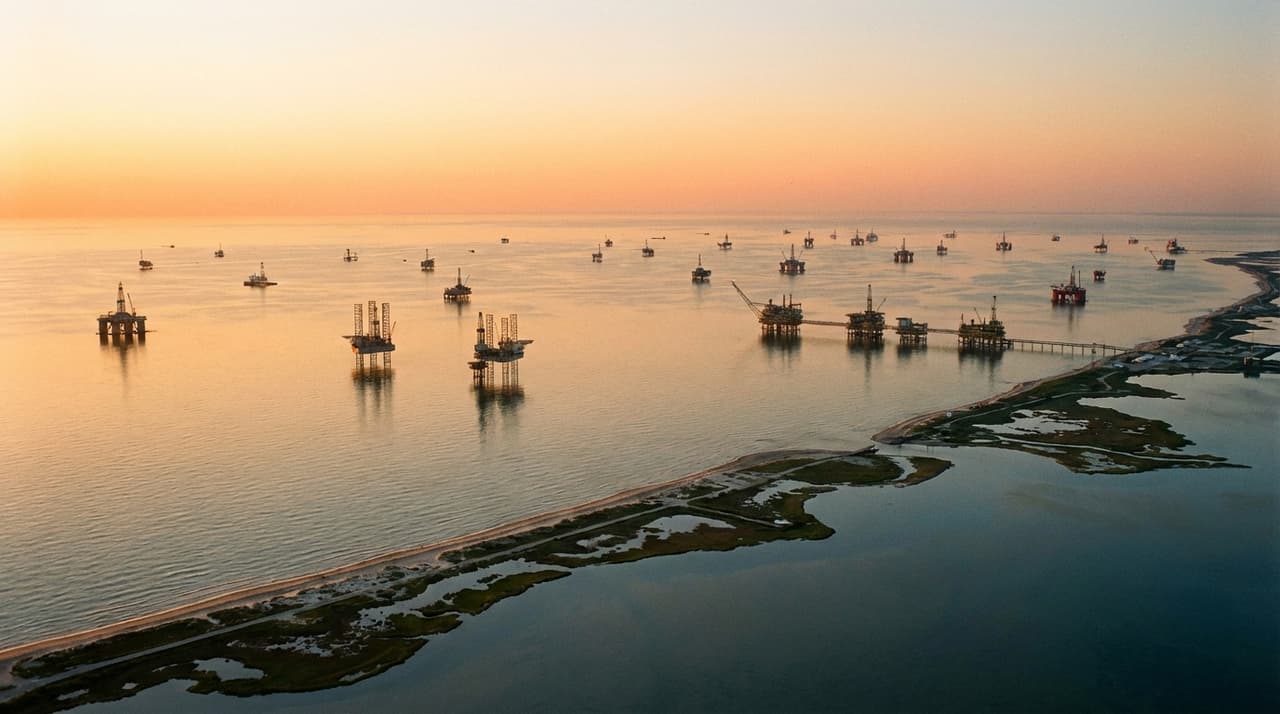
- The Trump Administration's first offshore oil and gas lease sale under the One Big Beautiful Bill Act generated over $300 million in high bids, marking a sharp reversal from Biden-era restrictions.
- A reduced royalty rate of 12.5 percent, the lowest since 2007, is incentivizing industry participation amid a broader push for U.S. energy dominance.
- Upcoming sales in Alaska's Cook Inlet and the Gulf of America in March 2026 will test the sustainability of this aggressive leasing expansion.
A New Era in Offshore Leasing
The Bureau of Ocean Energy Management (BOEM) held its first Gulf of America offshore oil and gas lease sale on December 10, 2025, generating more than $300 million in high bids. This sale, the first since December 2023, represents the opening salvo of the Trump Administration's mandated leasing program under the One Big Beautiful Bill Act (OBBB), which requires 30 oil and gas lease sales in the Gulf over coming years. According to people familiar with the matter, the reduced royalty rate of 12.5 percent—down from the 16.67 percent rate under the Biden Administration's Inflation Reduction Act—has been a key driver in attracting bids, though total bids dipped to 219 compared to 352 in previous sales.
Efforts to restructure U.S. energy policy have hit a snag with ongoing litigation challenging offshore exploration, but industry insiders note that the improved investment climate is already paying off. "We're seeing a steady interest in deepwater opportunities despite the competitive landscape," said one anonymous executive from a major energy firm, who declined to be named due to company policy. The sale featured 219 tracts receiving bids, a decrease from 311 in earlier auctions, yet the revenue haul suggests companies are cautiously optimistic about the long-term stability of this new framework.
Policy Shifts and Economic Implications
Congress passed the OBBB, establishing the framework for expanded offshore leasing and reduced royalty rates for operators, effectively repealing the royalty increase from the Inflation Reduction Act. This policy reversal starkly contrasts with the Biden Administration's 2024-2029 Five-Year Program, which included only three scheduled Gulf lease sales—the fewest in the program's 50+ year history. The Trump Administration has proposed a new five-year leasing plan that includes expanded offshore oil and gas development, with potential new areas off the coasts of California and Florida, though details remain under review.
Industry and economic impact assessments highlight that the lower 12.5 percent royalty rate benefits energy companies significantly, potentially increasing profitability on new leases. Without this deal, some operators might have scaled back investments in federal waters. Market data from recent weeks shows a slight uptick in energy sector stocks, though analysts caution that broader economic factors could influence future participation. Attempts to reach BOEM officials for additional comment were unsuccessful at press time.
Looking Ahead to 2026 Sales
Key developments to monitor include the finalization of the new five-year leasing plan and industry participation levels in upcoming 2026 sales. The next mandated lease sale is scheduled for March 2026 in Alaska's Cook Inlet, followed by another Gulf sale later that month. As companies assess the long-term stability of the new policy framework, sources indicate that partnerships between domestic banks and private credit funds could play a larger role in financing these ventures, echoing trends in European markets like Italy.
In a brief shift to more conversational language, it's clear that this leasing expansion isn't just about oil—it's a strategic move to bolster U.S. energy independence amid global uncertainties. While the road ahead may include legal hurdles and environmental pushback, the initial $300 million sale signals a robust start. Corrections: An earlier version misstated the number of tracts; it has been updated to reflect the correct figure of 219 tracts receiving bids.