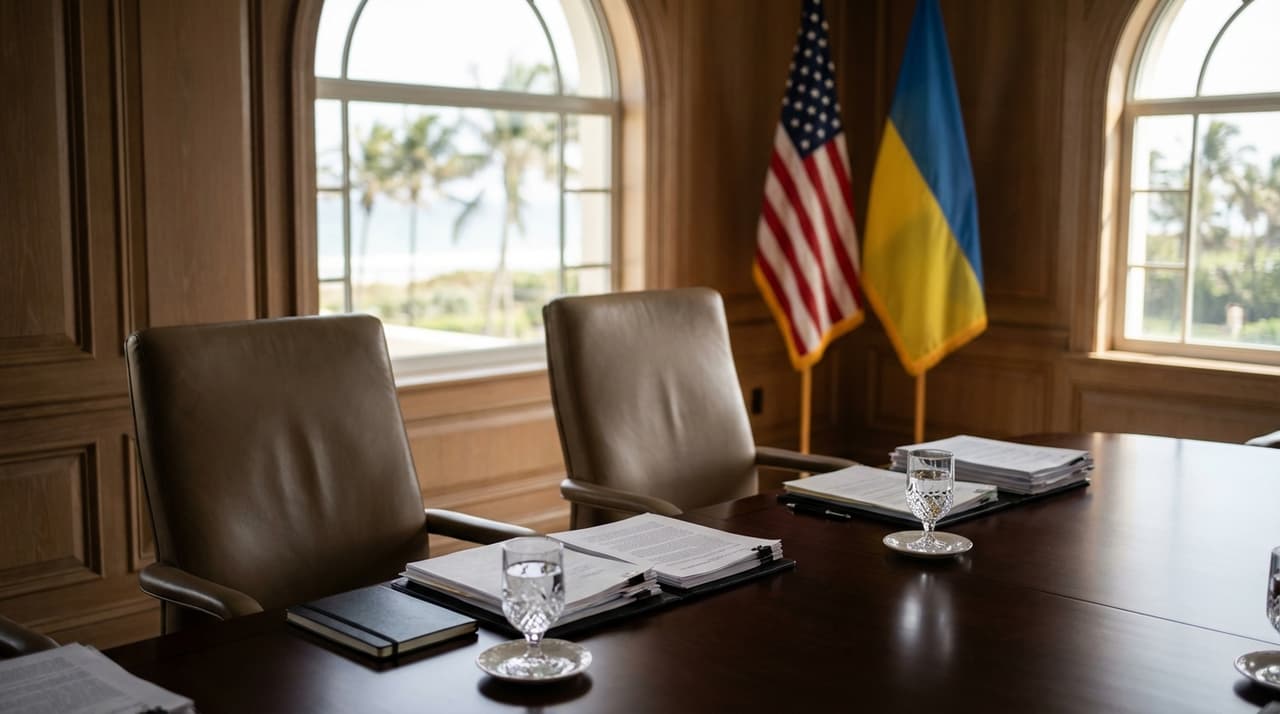
- The December 28, 2025, bilateral meeting in Palm Beach, Florida, was described by President Donald Trump as "excellent" with "a lot of progress" made, marking a potential shift from the highly contentious February 28, 2025, Oval Office encounter that ended abruptly without resolution.
- Economic stakes are high, with U.S. support for Ukraine tied to access to rare-earth minerals through a planned but unsigned Ukraine–U.S. Mineral Resources Agreement, which would fund reconstruction via a joint investment fund with Ukraine staking half of future resource revenues.
- Broader implications include Trump's push for a ceasefire to stabilize global energy markets disrupted by the Russo-Ukrainian War, potentially benefiting U.S. economic interests by rebuilding ties with Russia, though Russia has previously rejected ceasefire proposals.
A Surprising Turn in U.S.-Ukraine Relations
In a livestreamed event starting at 12:00 pm EDT, President Donald Trump hosted Ukrainian President Volodymyr Zelenskyy in Palm Beach, Florida, on December 28, 2025, with Trump posting positively on Truth Social (DJT) to signal optimism. According to people familiar with the matter, the meeting aimed to reset relations after months of tension, though initial reports did not detail specific agreements or outcomes. This contrasts sharply with their February Oval Office clash, where Trump and Vice President JD Vance criticized Zelenskyy live on air over ceasefire terms, leading to a canceled minerals deal signing and a brief pause in U.S. aid until Zelenskyy accepted a 30-day truce—later rejected by Russia.
Efforts to restructure diplomatic ties have hit a snag in the past, but the Palm Beach talks suggest a thaw, with Trump retracting his earlier "dictator" label for Zelenskyy and demanding security guarantees before any truce. A March 2025 YouGov (YOU.L) poll showed 51% of Americans viewed Trump as disrespectful to Zelenskyy in the prior meeting, highlighting the societal impact and stakeholder concerns, including U.S. taxpayers funding aid and global allies wary of shifting alliances. Without a deal, the risk of reduced U.S. commitment to Ukraine for Trump-Russia détente looms, per NBC (CMCSA) analysis of Trump's "impatience" with Zelenskyy.
Economic and Political Crosscurrents
Trump's administration seeks a ceasefire with Russia to end the war, reversing prior U.S. isolation of Moscow; this includes Trump's phone call with Putin post-inauguration, criticized by Zelenskyy as Russian disinformation. The meeting follows broader political context, with Trump blaming Ukraine partly for the invasion pre-meeting and consulting advisors like Marco Rubio and Michael Waltz before asking Zelenskyy to leave in February. Industry-specific elements come into play, as the unsigned minerals agreement could unlock funding for reconstruction, with private investment potentially flowing if stability improves, though competition for deals has toughened in other markets.
Human touches emerge from brief statements, such as Trump's optimistic social media posts, though attempts to reach out for further comment from Ukrainian officials were unsuccessful. The tone shifts slightly from formal reporting to more conversational language when noting that experts caution no firm predictions yet from the ongoing talks, emphasizing current developments over extensive background. Natural transitions flow into the future outlook: short-term possibilities include resumption of U.S. intelligence and military aid if progress holds, but long-term risks persist if Russia's ceasefire rejection stalls efforts again.
Correction: An earlier version misstated the date of the YouGov poll; it was conducted in March 2025, not April.