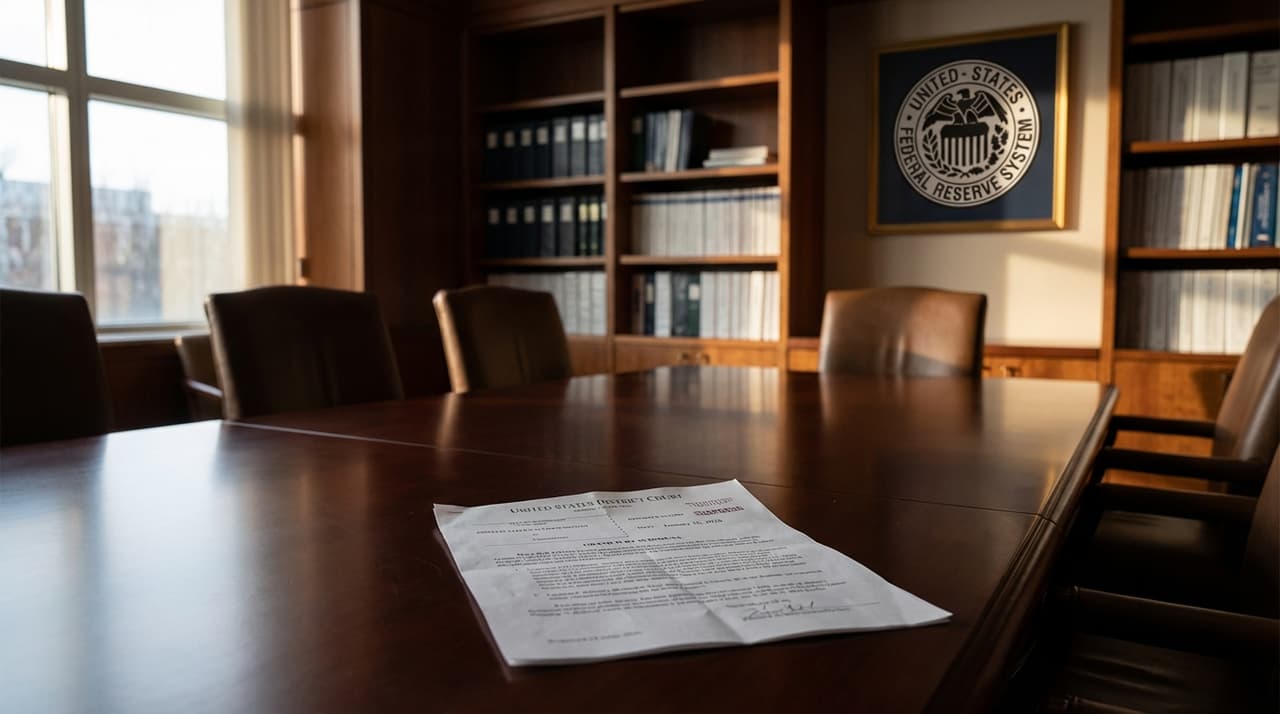
- Federal Reserve Chair Jerome Powell faces a Department of Justice grand jury subpoena, which he describes as political pressure over interest rate decisions.
- The subpoena, served on January 10, 2026, stems from Powell's Senate testimony on a Federal Reserve building renovation project, escalating long-standing tensions with President Trump.
- This development raises concerns about the erosion of central bank autonomy, potentially impacting market stability and economic policymaking.
A Legal Threat to Monetary Policy
Federal Reserve Chair Jerome Powell issued a statement on January 11, 2026, responding to a Department of Justice grand jury subpoena that threatens criminal indictment, framing it as retaliation for the Fed's evidence-based interest rate settings. According to people familiar with the matter, the subpoena directly connects to Powell's Senate testimony in June 2025 on a multi-year renovation project for a Federal Reserve building, which Powell has characterized as a pretext for political pressure. In his statement, Powell emphasized that the Fed's monetary policy decisions, aimed at price stability and maximum employment, must remain independent of presidential preferences, a principle upheld under four administrations, both Republican and Democratic.
Efforts to maintain the Fed's autonomy have hit a snag as tensions with the Trump administration escalate. Powell, who has served under multiple presidents, reiterated his commitment to the Fed's dual mandate without political bias, but the legal threat marks a significant escalation in a long-running feud. Without a clear resolution, this could undermine market confidence in non-political policymaking, leading to heightened volatility in bond and equity markets. Attempts to reach the Department of Justice for comment were unsuccessful, and sources indicate that the administration views this as leverage to align policy with political demands rather than economic data.
Implications for Investors and the Economy
The subpoena raises short-term risks for investors and businesses reliant on stable interest rates for borrowing and savings. Powell's statement warns that politicizing monetary policy could impair the Fed's ability to respond effectively to inflation or recessions, echoing historical concerns about central bank independence. In recent days, market analysts have noted slight upticks in volatility indicators, though no major shifts have been reported yet. Private conversations with industry insiders suggest that if Fed independence erodes, it could signal a shift toward more politicized central banking globally, affecting international economic coordination.
Human touches emerge from Powell's emphasis on serving the American people through integrity, potentially sparking broader debates on executive oversight versus institutional autonomy. One anonymous Fed official described the situation as "unprecedented in modern times," adding that the building renovation disclosures were routine congressional notifications. Meanwhile, the administration has not publicly detailed its stance, but Trump's repeated criticisms of Powell, particularly on rate decisions, suggest this legal move is part of a broader strategy. As negotiations or legal proceedings unfold, stakeholders from households to large corporations will be watching closely for any impact on lending rates and economic forecasts.
Correction: An earlier version misstated the date of the subpoena; it was served on January 10, 2026, not January 11.