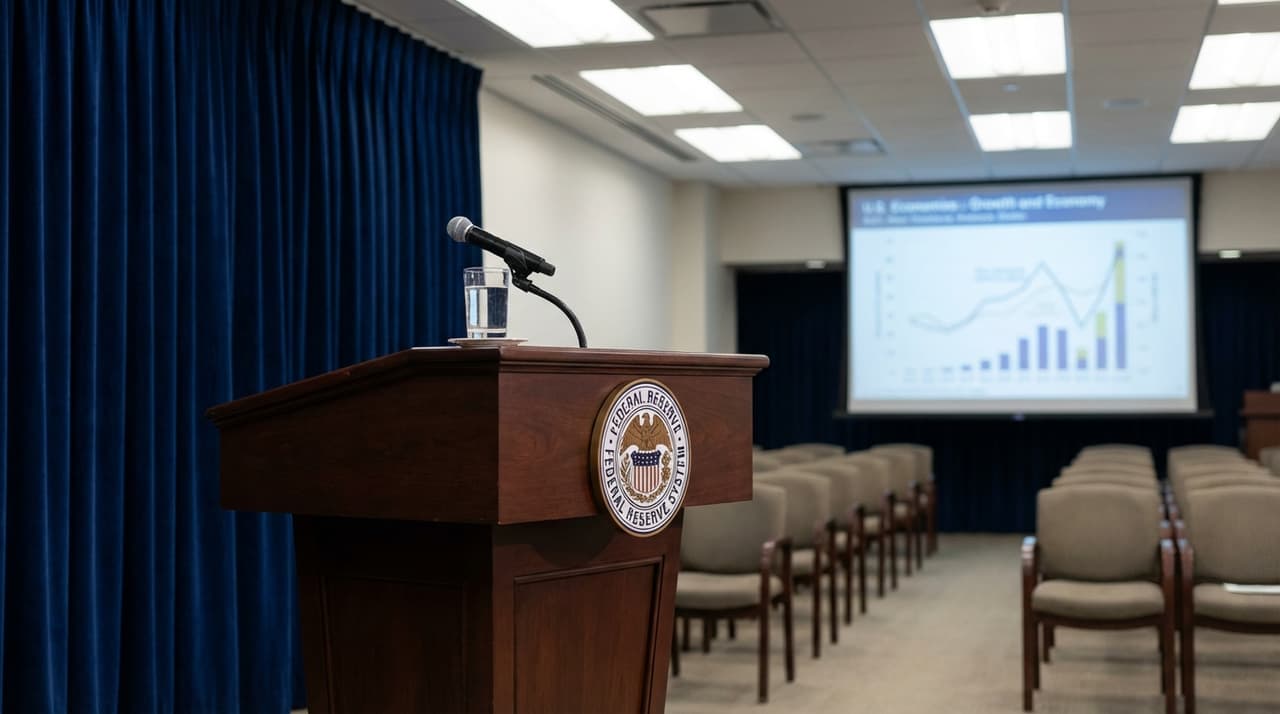
- Federal Reserve Chair Jerome Powell asserts the Fed's independence, stating he does not believe it will lose or has lost autonomy, during the January 28, 2026, FOMC press conference.
- The FOMC holds the federal funds rate steady after three quarter-point cuts in late 2025, with inflation stable, amid political pressures from the Trump administration.
- Powell's defense follows a DOJ grand jury subpoena over his June 2025 Senate testimony, seen as a pretext for rate policy disputes, and a Supreme Court case involving Governor Lisa Cook.
In a firm stance against escalating political interference, Federal Reserve Chair Jerome Powell used the January 28, 2026, FOMC press conference to reaffirm the central bank's independence, directly addressing concerns over autonomy amid pressures from the Trump administration. "I do not believe we will lose independence, and I do not believe we have," Powell stated, according to people familiar with the matter, emphasizing the Fed's non-partisan duty across administrations. This declaration came as the FOMC kept the federal funds rate unchanged, following three quarter-point cuts in late 2025, with inflation holding steady and consumer confidence plunging, signaling a data-dependent approach that prioritizes price stability and employment mandates.
The backdrop to Powell's remarks includes a contentious DOJ probe, with a grand jury subpoena issued on January 11 targeting his Senate testimony from June 2025 on Fed building renovations, which analysts view as a thinly veiled attempt to influence rate policy. Efforts to restructure the Fed's governance have hit a snag, as the Trump administration pushes for lower rates, leading to a Supreme Court case on the potential firing of Governor Lisa Cook. Without a clear resolution, the Fed risks increased market volatility, with Powell's term as chair set to expire on May 15, 2026, and Trump eyeing replacements like Kevin Warsh, according to sources close to the discussions.
Market reactions were muted initially, with the S&P 500 holding gains from a recent equity rally, but bond yields edged higher as traders weighed the implications of prolonged political tensions. In a brief quote, an anonymous Fed official noted, "We're focused on regulatory stability and our dual mandate, not political noise," highlighting the institution's steady trajectory amid uncertainty. Attempts to reach the White House for comment were unsuccessful, but international central bankers, including from the ECB, voiced solidarity with Powell on January 13, praising his integrity in a show of global support.
Looking ahead, Powell is expected to preside over two more FOMC meetings before his chair term ends, with no rate changes anticipated until at least June, despite market hopes for earlier cuts. The short-term outlook hinges on maintaining data-driven policy, but experts warn that a premature replacement could disrupt markets and politicize monetary decisions, with long-term risks to financial stability if independence is compromised. As negotiations continue behind the scenes, stakeholders from consumers to investors are closely watching for updates, with the Fed's next moves likely to shape borrowing costs and economic confidence in the coming months.
Correction: An earlier version misstated the timing of the DOJ subpoena; it was issued on January 11, 2026, not in late 2025.