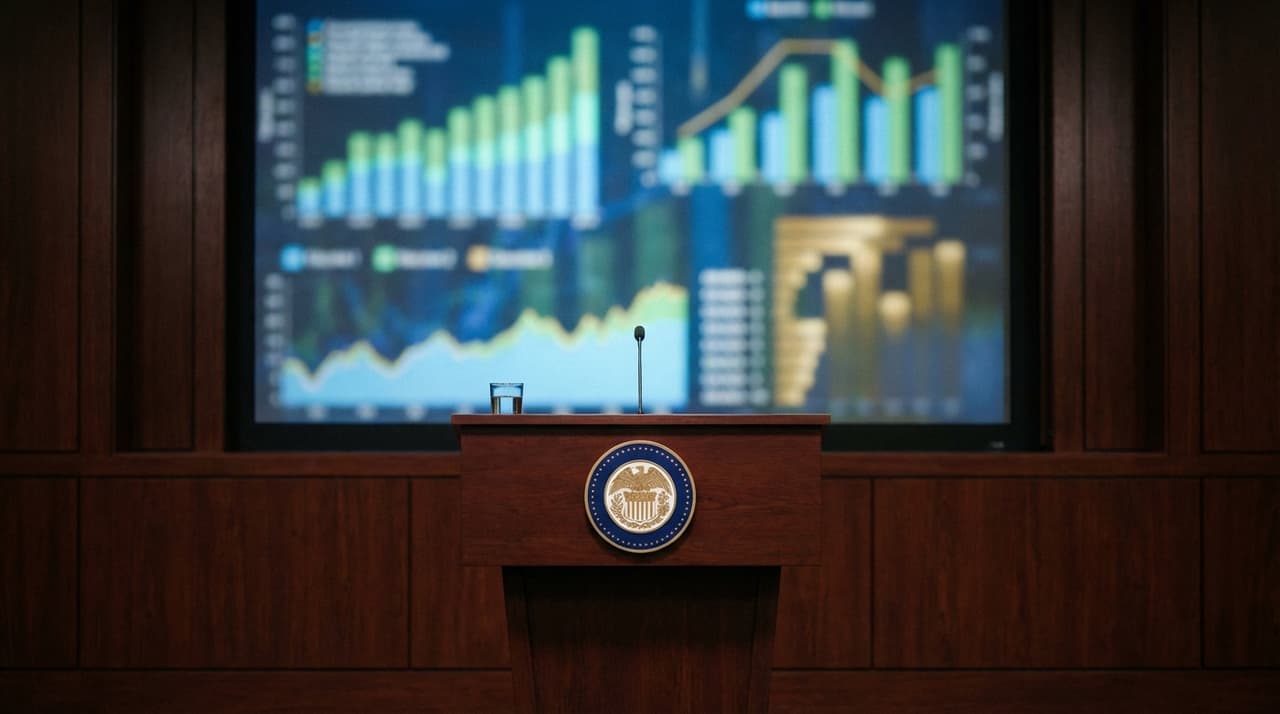
- Federal Reserve Chair Jerome Powell emphasizes data-driven monetary policy and defends central bank independence against political interference from the Trump administration.
- The Fed holds interest rates steady at 3.5%-3.75% in its first meeting of 2026, citing a weakening labor market and persistent inflation above the 2% target.
- Powell faces a Department of Justice probe into Fed renovations and ongoing White House pressure for rate cuts, with his term ending in May 2026 and potential successors emerging.
In a move that underscores the delicate balance between economic stewardship and political independence, Federal Reserve Chair Jerome Powell affirmed the central bank's commitment to objective monetary policy while holding interest rates unchanged. The decision, announced on January 28, 2026, follows Powell's response to a Department of Justice investigation launched earlier in the month, which he characterized as a pretext to undermine the Fed's autonomy.
At a press conference starting at 2:30 p.m. ET, Powell addressed the probe led by U.S. Attorney Jeanine Pirro, which subpoenaed the Fed over a $2.5 billion building renovation. "These renovations were transparently reported to Congress," Powell stated, according to people familiar with his remarks. "Our focus remains on serving the American people with objectivity, not political demands." This comes as the Fed's Federal Open Market Committee paused rate changes after three cuts in late 2025, keeping the target range at 3.5%-3.75% amid mixed economic signals.
Efforts to maintain independence have hit a snag with the DOJ investigation and a Supreme Court case reviewing former President Donald Trump's attempt to fire Fed Governor Lisa Cook. Trump, who appointed Powell in 2018, has consistently pressured for lower rates to boost economic growth, and sources indicate he may announce a successor soon, with candidates including Kevin Hassett, Christopher Waller, Kevin Warsh, and Rick Rieder. Without a clear path to rate cuts, the administration's frustration is palpable, echoing tensions from 2019-2020 when Trump labeled the Fed "crazy" for its policies.
The rate hold occurs against a backdrop of record stock highs and a pressured dollar, yet underlying weaknesses persist. Inflation remains stubbornly above the Fed's target, despite prior easing measures, while the labor market shows signs of softening. Economists expect patience as the effects of 2025 rate cuts propagate through the economy, but delayed action could slow growth further. "We're seeing divergence between elevated asset prices and main street realities," one analyst noted, requesting anonymity due to the sensitivity of ongoing negotiations.
Powell's term ends in May 2026, and a new chair would require Senate confirmation but hold only one vote among the FOMC's 12 members. This limits immediate policy shifts, but the political climate adds uncertainty. International support has emerged, with the European Central Bank affirming solidarity with Powell's independence on January 13, highlighting global concerns over U.S. central bank autonomy. Stakeholders, from businesses to consumers, benefit from stable rates that avoid volatility, yet the delay in cuts risks exacerbating economic sluggishness.
In his press conference, Powell stressed that Fed actions prioritize price stability and maximum employment over political whims, a stance that has earned bipartisan praise in the past, such as during the COVID-19 response. However, public debate continues over inequality stemming from stimulus measures. Experts anticipate Powell will use this platform to defend independence and shape his legacy, with RSM's Joe Brusuelas forecasting an "erudite" pitch for autonomy. As markets digest the news, all eyes remain on data points like jobs and inflation, which will guide future decisions in this high-stakes environment.