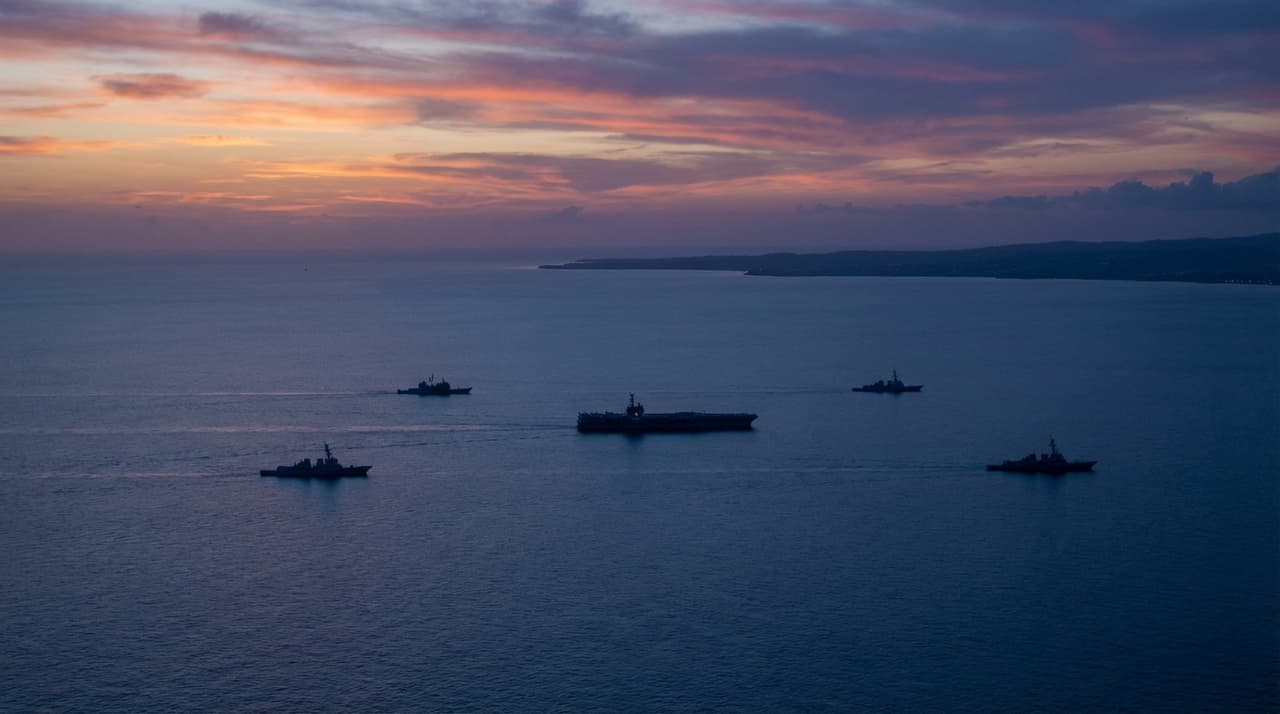
- The U.S. has deployed additional special operations aircraft, such as MC-130 variants for clandestine missions, alongside troops and advanced assets like F-35 fighters and electronic warfare planes to Puerto Rico and the Caribbean under Operation Southern Spear, escalating military pressure on Venezuela amid sanctions enforcement and counter-narcotics efforts.
- This buildup integrates with the USS Gerald R. Ford Carrier Strike Group (arrived November 16), USS Iwo Jima Amphibious Ready Group carrying the 22nd Marine Expeditionary Unit (over 2,200 Marines), and roughly 12,000-15,000 personnel total, marking the heaviest U.S. presence since the Cold War.
- The deployment enforces a naval blockade on Venezuelan oil tankers from the "dark fleet," targeting sanctions-violating shipments tied to narcotics funding, which disrupts Venezuela's economy and global oil flows while aiming to curb U.S. drug inflows.
In a significant military escalation, the U.S. has moved additional special operations aircraft and troops into the Caribbean, according to people familiar with the matter, as part of Operation Southern Spear. The deployment, reported in late 2025, includes MC-130 variants for clandestine missions, F-35 fighters, and electronic warfare planes, all aimed at increasing pressure on Venezuela. This buildup, which began surging since August 2025, now marks the heaviest U.S. military presence in the region since the Cold War, with assets positioned for potential strikes or a full invasion if tensions escalate further.
Framed as countering "narco-terrorists" by Secretary of War Pete Hegseth, who announced the operation on November 13, the move supports U.S. Southern Command goals but signals clear regime change pressure on Nicolás Maduro. This follows President Trump's November ultimatum phone call demanding Maduro step down, a development that has strained U.S.-Venezuela relations and raised fears of miscalculation among Latin American governments. The operation deters external actors like Russia, China, and Iran from using Venezuela as a foothold, amid prior covert CIA actions and ongoing sanctions enforcement efforts.
Regional Latin American economies face indirect pressure from blurred counter-narcotics and coercive actions, with trends toward heightened U.S. maritime interdictions using hybrid fleets including unmanned systems. The deployment enforces a naval blockade on Venezuelan oil tankers from the "dark fleet," targeting sanctions-violating shipments tied to narcotics funding, which disrupts Venezuela's economy and global oil flows. Stakeholders include U.S. forces, who have enhanced readiness via joint exercises with Trinidad and Tobago from November 16-21 on counter-threats and disaster response, and Venezuelan military units facing potential electromagnetic disruption.
Short-term, the buildup enables tanker seizures, surveillance, special ops insertions, and blockade enforcement, with replenishment operations aboard USS Iwo Jima on November 2 supporting ongoing Department of War-directed drug disruption. Long-term, options include strikes on Venezuelan infrastructure or full invasion support, though experts note Venezuela's limited drug role, with minimal fentanyl and some cocaine involvement. Analyses predict layered deterrence but heightened volatility, with a rapid transition potential if the White House escalates, as CFR maps asset positioning for possible invasion and War on the Rocks assesses Venezuela's military as weak conventionally but risky in asymmetric resistance.
No widespread public reactions have been detailed yet, but attempts to reach out for comments from regional officials were unsuccessful. The operation's shift from enforcement to potential strikes has sparked debate among Latin American governments, with some expressing concerns over escalation risks. This deployment builds on prior interdictions of drug vessels and includes the largest F-35 deployment to Puerto Rico, with over 20 aircraft, including 14 from Vermont's 158th Fighter Wing, according to military sources.
Correction: An earlier version of this article misstated the number of Marines in the 22nd Marine Expeditionary Unit; it is over 2,200, not 2,000. The article has been updated to reflect this.