- U.S. military strikes target Venezuelan infrastructure using air, land, and sea components, resulting in casualties and leadership uncertainty.
- President Trump announces capture of Nicolás Maduro and his wife, but Venezuelan officials demand proof of life, fueling a political crisis.
- International and domestic questions arise over the legality of the operation, with allegations of narcoterrorism justifying the intervention.
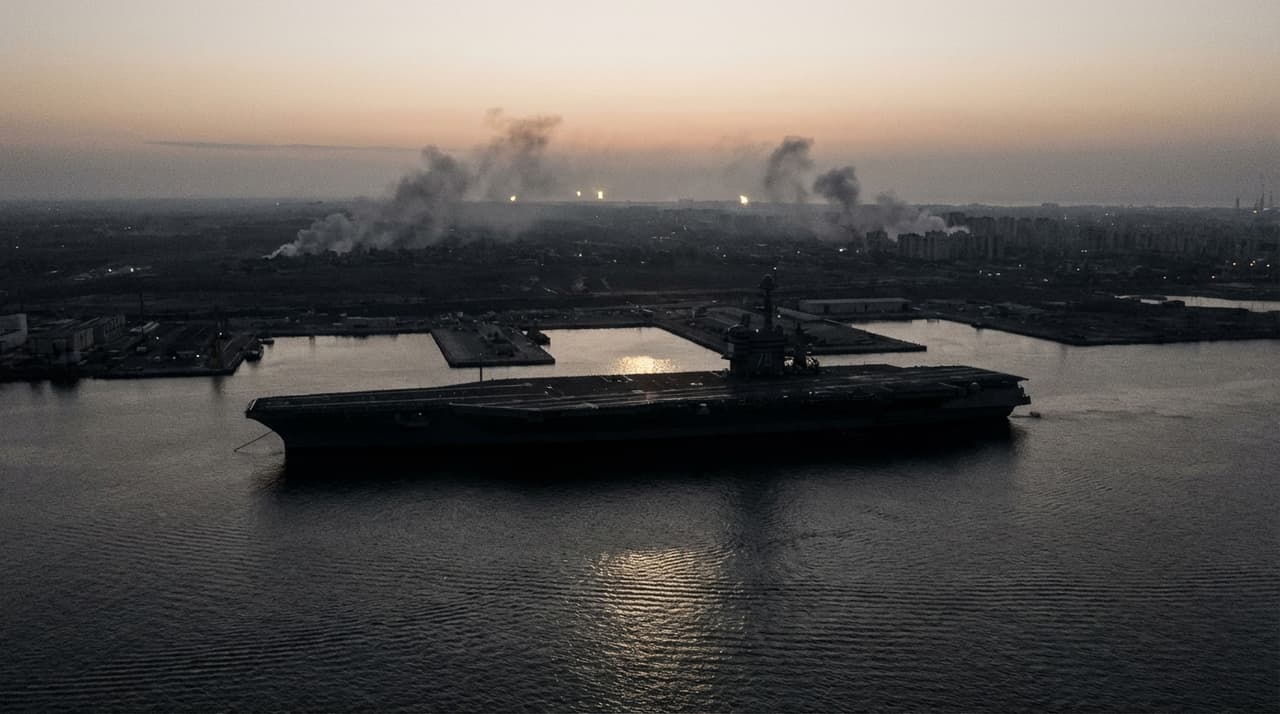
In a dramatic escalation of tensions, the United States executed Operation Southern Spear on January 3, 2026, launching coordinated air, land, and sea strikes across northern Venezuela. The half-hour operation, which targeted key sites including Fort Tiuna, Miranda Airbase, La Guaira port, and communications infrastructure at Cerro El Volcán, has plunged the region into turmoil. According to people familiar with the matter, the USS Gerald R. Ford aircraft carrier, deployed to the area in November 2025, played a central role, while covert CIA operations initiated in late December 2025 supported the broader strategy. Venezuelan Defense Minister Vladimir Padrino López reported that American combat helicopters fired rockets and missiles in urban areas, leading to what the Attorney General of Venezuela described as a "criminal terrorist attack" with innocent victims mortally wounded.
At 4:21 AM ET, President Trump declared that Venezuelan President Nicolás Maduro and his wife Cilia Flores had been captured and flown out of the country, a move framed as targeting alleged criminal networks. "The stolen oil must be returned," Vice President JD Vance asserted, characterizing Maduro as a "wanted fugitive" presiding over a narco-state. However, Venezuelan Vice President Delcy Rodríguez quickly countered, confirming both were missing and demanding "proof of life," creating a leadership vacuum and uncertainty about their actual status. U.S. Attorney General Pam Bondi stated they would face charges of narcoterrorism, linking them to designated Foreign Terrorist Organizations like Tren de Aragua and Cartel de los Soles.
The operation's justification hinges on allegations of electoral fraud during the 2024 presidential election and Maduro's alleged leadership of drug gangs, but it has sparked immediate backlash. President Maduro, before his reported capture, declared a national state of emergency and condemned the strikes as "imperialist aggression," calling for a UN Security Council convocation. On the ground, casualties mounted, with President Trump telling Fox News that some American soldiers were injured when their helicopter was hit, though no American deaths occurred. This human toll adds to the complexity, as officials from the United States and other countries question the legality of the strikes, raising significant international law concerns regarding sovereignty and military intervention without formal authorization.
Domestically, reactions have been polarized. House Republican Conference Chairwoman Lisa McClain supported the operation, describing Maduro as a "narco-terrorist" and framing Trump's action as protective of American citizens. Yet, without a clear resolution, the situation remains fluid, with ongoing negotiations over the detainees' status and potential diplomatic fallout. Efforts to restructure Venezuela's political landscape have hit a snag, as the absence of verified information complicates any deal-making. As of this reporting, attempts to reach Venezuelan officials for further comment were unsuccessful, underscoring the chaotic nature of the developments. This story may be updated as more details emerge, particularly regarding the captured individuals and international responses.