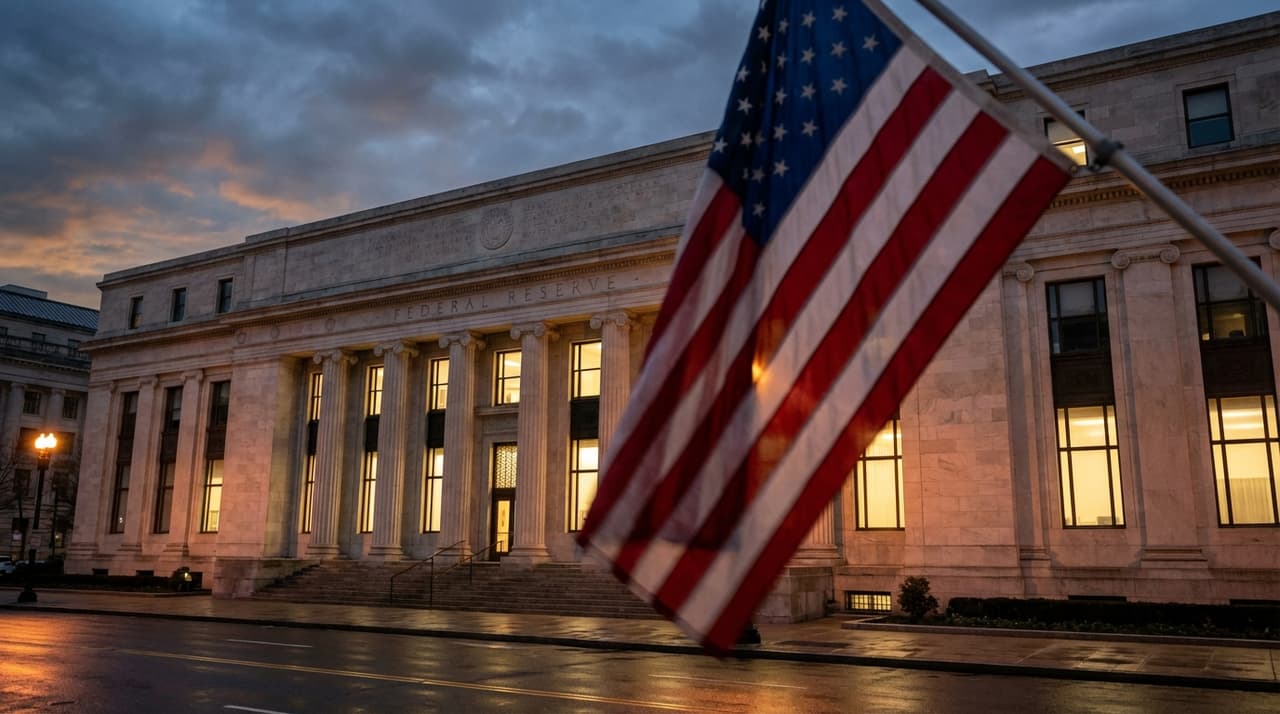
- The Federal Reserve held interest rates steady amid growing political pressure, sparking a 0.1% drop in the dollar index to 96.369.
- Dissents from Governors Christopher Waller and Stephen Miran for a rate cut fuel speculation of political influence, with Fed Chair Jerome Powell defending the bank's autonomy.
- Broader dollar weakness persists, with the currency down about 10% in 2025, as traders maintain net-short positions and eye potential easing ahead.
A Defiant Stance Amid Mounting Pressure
The Federal Reserve held interest rates steady at 3.50%-3.75% on January 28, 2026, a decision that came against a backdrop of escalating concerns over political interference from the Trump administration. In a press conference following the announcement, Fed Chair Jerome Powell pushed back firmly on questions about the central bank's independence, stating, "We haven’t lost it. I don’t believe we will." His remarks followed dissenting votes from Governors Christopher Waller, a Trump appointee, and Stephen Miran, who advocated for a rate cut—a move that some analysts interpret as a sign of political pressures creeping into monetary policy deliberations.
According to people familiar with the matter, the internal debate was particularly heated this month, with ongoing issues like Justice Department subpoenas against Powell over his 2025 testimony adding to the tension. The dollar index, or DXY, fell 0.1% to 96.369 in response, according to Commerzbank, extending a broader decline that has seen the currency slump about 10% in 2025. "The Fed's hold was expected, but the dissents and political overtones are what's really rattling markets," said one currency strategist, who requested anonymity due to the sensitivity of the topic. "It's not just about rates anymore; it's about whether the Fed can stay above the fray."
Market Reactions and Broader Implications
Traders have maintained net-short dollar positions, with rate futures pricing in two or more cuts in 2026, reflecting a growing expectation that political pressures could lead to premature easing. This comes amid a complex global backdrop: the Bank of England is eyeing a potential 3.5% cut in February 2026, creating divergence from the Fed's stance, while the U.S. Treasury recently requested a rare "rate check" on the USD/JPY pair, hinting at possible intervention with the Bank of Japan. The dollar's weakness has boosted safe havens like gold and pressured U.S. imports, exacerbated by the highest tariffs since the Great Depression, which are contributing to one-time price hikes and inflation risks above the Fed's 2% target.
Efforts to restructure the Fed's leadership have hit a snag, with the Trump administration pushing to remove Governor Lisa Cook and facing legal hurdles. Powell's term ends in May 2026, and the announcement of a successor is imminent, adding another layer of uncertainty. "Without a clear commitment to independence, the dollar could face acute weakness," noted an analyst from a major European bank, echoing sentiments from a Reuters poll that forecasts the euro hitting $1.20 by the end of 2026. Attempts to reach the White House for comment on the pressure campaign were unsuccessful, but Powell's defense is expected to prompt real-time responses from administration officials in the coming days.
Looking Ahead: A Fragile Balance
In the short term, the dollar is likely to remain sideways or weaker, with a 97% chance of the Fed holding rates at its next meeting as it assesses incoming data on inflation and job market softness. Long-term, bearish sentiment prevails, with modest declines forecast for 2026 as more Fed easing than global peers narrows the U.S. growth differential. The situation stems from 2025 events, including three rate cuts since September amid job worries and tariffs, but the current political dynamics are unprecedented in their intensity. As one industry insider put it, "This isn't just about economics; it's about whether the Fed can withstand a full-court press from the political arena." The coming months will be critical, with the selection of a new chair and potential board changes serving as key triggers for market volatility and the dollar's trajectory.