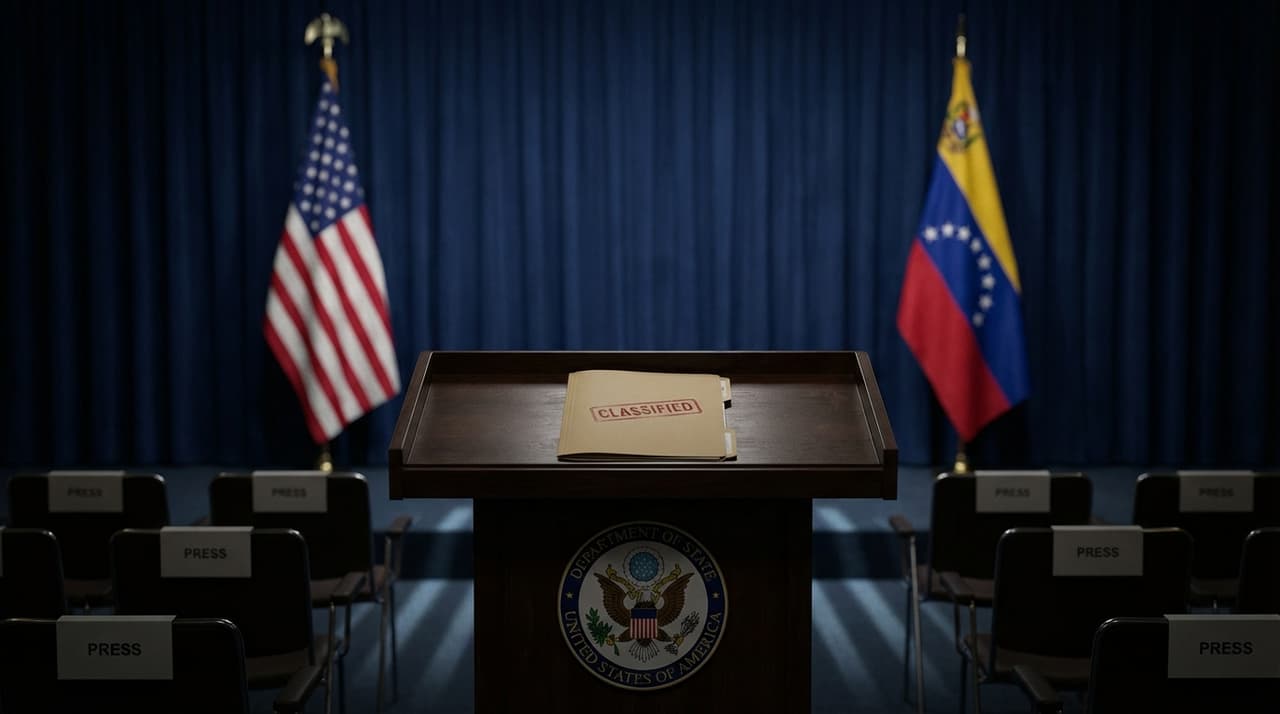
- U.S. Secretary of State Marco Rubio reaffirms that the United States does not recognize Nicolás Maduro as Venezuela's legitimate president, calling him a "narco-terrorist" leader.
- The Treasury Department designates the Cartel de los Soles, allegedly led by Maduro and regime officials, as a Specially Designated Global Terrorist organization for facilitating drug trafficking to the U.S.
- These actions coincide with Venezuela's municipal elections, which Rubio criticizes as manipulative, amid ongoing suppression of opposition forces.
Escalating Sanctions and Accusations
In a sharp escalation of pressure, the Trump administration has intensified its campaign against Nicolás Maduro's regime, with Treasury Secretary Scott Bessent accusing Maduro of leading narco-terrorism against the United States. The Treasury Department's designation of the Cartel de los Soles as a Specially Designated Global Terrorist organization came just one day prior, on December 19, 2025, targeting the network for its role in facilitating drug trafficking to the U.S. via groups like Tren de Aragua and the Sinaloa Cartel. According to people familiar with the matter, this move is part of a broader strategy to undermine Maduro's grip on power, which the U.S. has not recognized since 2019.
Rubio's statements, made one year after the disputed July 28, 2024 presidential election, dismiss any legitimacy for Maduro, labeling him a "narco-terrorist" leader. Efforts to restructure Venezuela's political landscape have hit a snag, with the regime deploying military and police to suppress opposition during municipal elections on the eve of the presidential vote anniversary. Without a deal for democratic transition, the country faces continued economic collapse, exacerbated by U.S. sanctions targeting narco-trafficking networks that corrupt institutions like the military and judiciary.
Economic and Political Fallout
Venezuela's economy is in freefall under Maduro, with U.S. sanctions aimed at disrupting the flow of drugs to the U.S. and Europe, which officials say undermines national security and regional stability. The U.S. has increased its reward for Maduro's capture to $25 million earlier in 2025, reflecting the urgency of countering what Rubio describes as a "terrorist organization masquerading as a government." In a briefing last September, Rubio outlined aggressive anti-drug hunts in Venezuela, contrasting cooperation with allies like Ecuador, where efforts have been more collaborative.
The political context remains fraught, with the U.S. supporting opposition figures like María Corina Machado, who won the 2025 Nobel Peace Prize for her democratic advocacy. Rubio dismissed UN assessments denying Venezuelan drug involvement, emphasizing Maduro's indictment by a Southern District of New York grand jury for narco-terrorism since 2020. G7 allies and others continue to withhold recognition of Maduro's regime, as reiterated in State Department remarks on the July 2025 anniversary and November G7 meetings.
Human Impact and Regional Implications
Maduro's crackdown includes arrests and disappearances of opposition leaders tied to Machado's organization, stifling any hopes for a democratic transition. Venezuelans face electoral manipulation and violence, while U.S. stakeholders grapple with the threat of drug influx. Regional neighbors, such as Trinidad, have praised U.S. actions for curbing spillover crime, highlighting the cross-border implications of Venezuela's instability.
Looking ahead, short-term measures may include escalated U.S. sanctions and accountability actions against Maduro's "illegitimate grip," potentially involving military-aided disruptions of trafficking without UN approval. Long-term, the U.S. aims for Venezuela's democratic restoration, holding the regime accountable to counter narco-terrorism. Experts note that Maduro is acutely aware of opposition threats like Machado, and Trump has pledged to prioritize America First by targeting facilitators like the Cartel de los Soles.
Correction: An earlier version misstated the timing of the Treasury Department's designation; it occurred on December 19, 2025, not December 18.