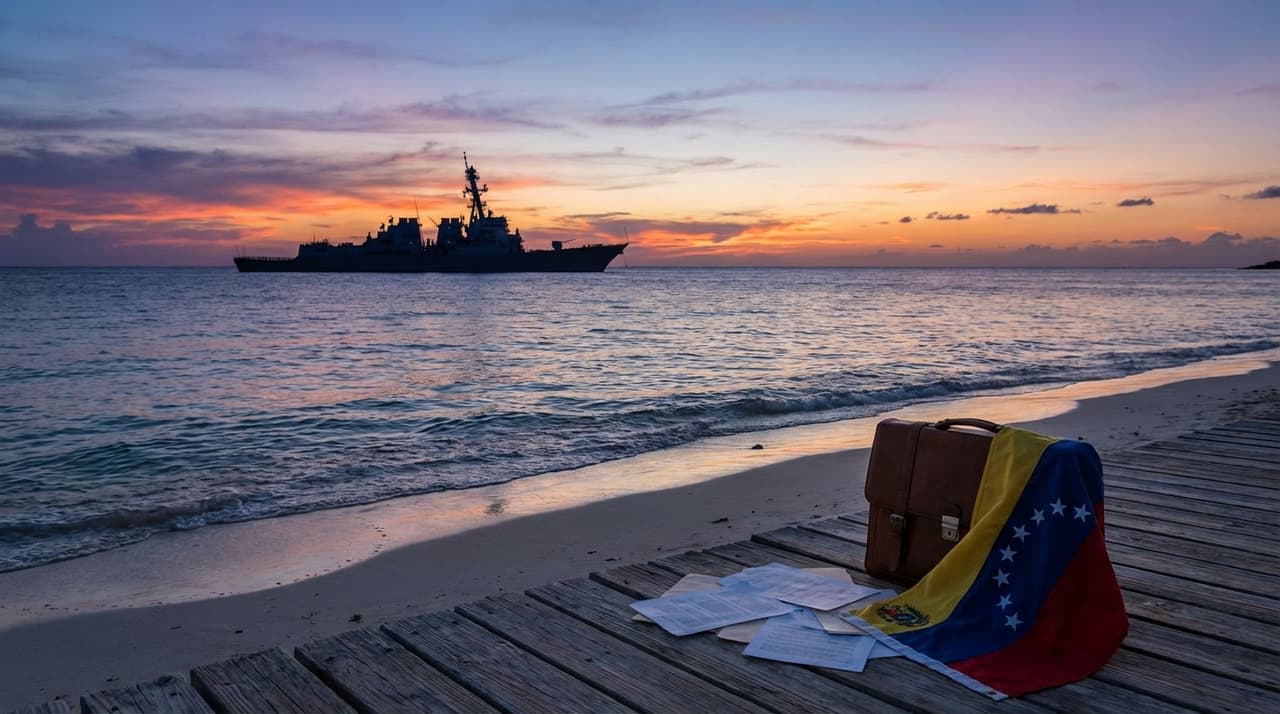
- Marco Rubio, as U.S. Secretary of State under President Trump, is aggressively targeting Venezuela's Nicolás Maduro, drug cartels, and leftist governments to promote regional stability and U.S. national interests.
- Recent moves include designating groups like Tren de Aragua as foreign terrorist organizations, increasing a bounty on Maduro to $50 million for drug charges, and conducting a U.S. military strike on a Caribbean narco-boat that killed 11.
- Efforts involve mass deportations to El Salvador's prisons, with a $4.76 million U.S. payment, and a Caribbean military buildup sparking invasion speculation, as Rubio advocates military tactics over interdiction.
In a sharp escalation of U.S. policy in Latin America, Secretary of State Marco Rubio is driving a multifaceted campaign aimed at dismantling criminal networks and challenging regimes perceived as threats to hemispheric security. According to people familiar with the matter, Rubio's strategy aligns closely with President Trump's "imperial" hemispheric approach, focusing on Venezuela, drug cartels, migration flows, and leftist governments to curb instability that impacts U.S. interests.
Rubio has recently designated Venezuela-linked criminal groups, such as Tren de Aragua, as foreign terrorist organizations, a move that enables more aggressive military responses. This was followed by a U.S. military strike on a Caribbean narco-boat, resulting in 11 fatalities, signaling a shift from traditional law enforcement methods to direct action. "Our goal is regional stability and security and the national interest of the United States," Rubio was quoted as saying, dismissing human rights critiques that have emerged from these operations.
The financial and logistical dimensions of this push are becoming clearer. A recent deal with El Salvador's President Nayib Bukele facilitates mass deportations of migrants, many Venezuelan and without criminal ties, to prisons criticized as "inhumane," with the U.S. providing a $4.76 million payment. Rubio praised Bukele's security gains in a statement, though critics argue this rhetoric may serve as a pretext for broader military intervention. Attempts to reach Venezuelan officials for comment were unsuccessful, but sources indicate that the increased bounty on Maduro—now at $50 million for drug charges—has heightened tensions in the region.
Market observers note that these policies aim to disrupt cartels' migrant trafficking revenue and counter China's growing economic influence in Latin America, potentially reducing narcotics flows that impact U.S. markets. However, deportations are straining receiving nations' economies, and the Caribbean military buildup has fueled speculation about a potential invasion of Venezuela, with Rubio advocating for military over interdiction tactics. In a slight conversational shift, one analyst remarked, "It's a high-stakes gamble that could either reduce migration and narcotics or escalate conflicts with leftist states."
Looking ahead, short-term actions may include further strikes or deportations, while long-term outcomes hinge on successful dismantling of cartels and Maduro's regime. Experts caution that legal blocks on deportations and human rights backlash could complicate efforts, but Rubio-Trump synergy on addressing "chaos" remains a driving force. As of the latest updates, expanded anti-cartel rewards and terrorist labels for 10 Latin groups have been announced, with pushback on China's regional ties amid ongoing Trump summit plans.