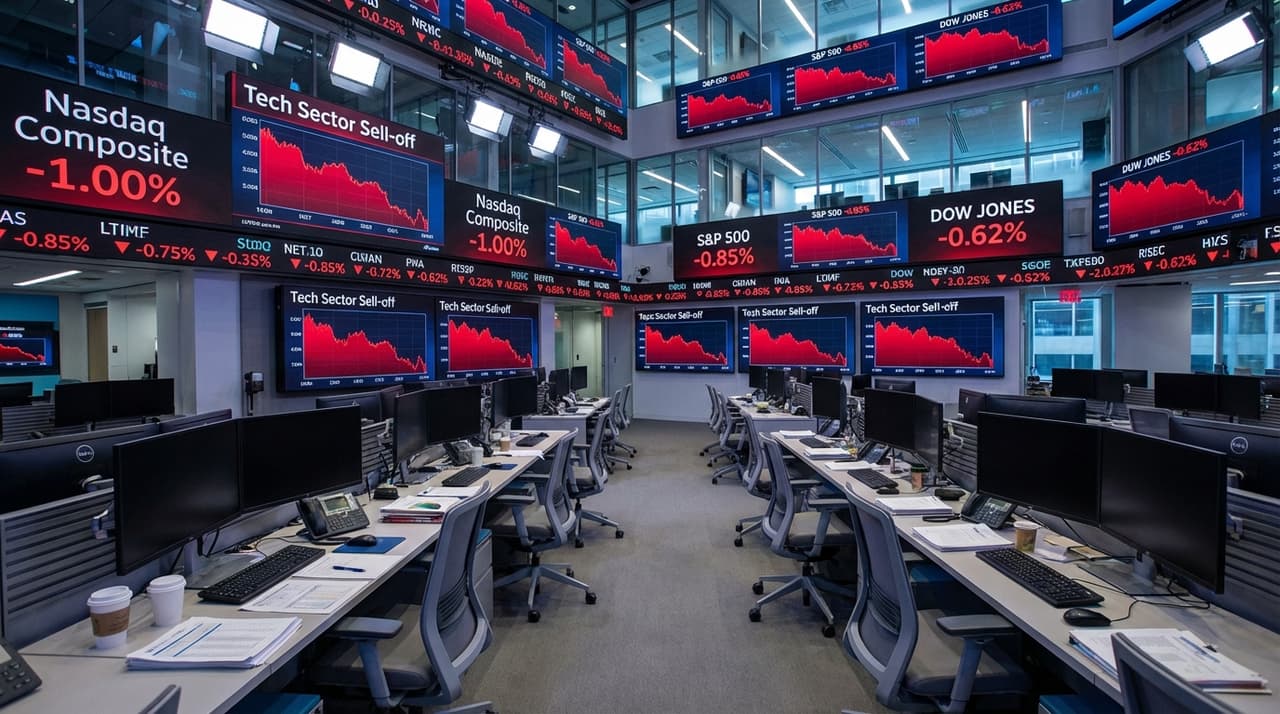
- Nasdaq Composite declines 1% in early December 2025, marking a continuation of losses after its first monthly drop since March.
- Broad pressure on high-valuation tech and AI stocks, including names like Nvidia (NVDA), drives the sell-off amid a "risk-off" shift.
- Federal Reserve rate cut optimism clashes with inflation worries, fueling volatility as markets grapple with monetary easing prospects versus stability concerns.
U.S. stocks extended their losses into early December 2025, with the Nasdaq Composite leading the decline by falling 1.00% amid heightened valuation concerns in the technology and artificial intelligence sectors. This move reflects a broader "risk-off" sentiment among investors, following the index's first monthly decline since March, which snapped a seven-month winning streak despite post-Thanksgiving gains on Black Friday.
On December 1, 2025, major indices closed lower, with the Nasdaq Composite at 23,275.92, down 89.76 points or approximately 0.38%, aligning with a 1% drop in futures. The S&P 500 fell to 6,812.63, losing 36.46 points, while the Dow Jones Industrial Average dropped 427.09 points to 47,289.33. Futures remained flat overnight, signaling persistent caution as the year-end approaches, according to people familiar with market dynamics. No single company is driving this headline; instead, it stems from broad pressure on high-valuation tech and AI stocks, such as Nvidia (NVDA), and crypto-exposed firms like Coinbase (COIN) (COIN) or MicroStrategy (MSTR) (MSTR), due to increasing scrutiny over profitability and growth projections.
Efforts to sustain the late-November rally fueled by Federal Reserve rate cut optimism have hit a snag, as inflation worries and sector valuations create volatility. Broader trends show a pivot from growth to value stocks, with tech and AI facing headwinds amid global economic uncertainties. U.S. markets are grappling with the prospects of monetary easing versus stability concerns, without a clear catalyst to reverse the downturn. Analysts note that this shift underscores a more discerning approach by investors, who are now favoring fundamentals over hype, potentially impacting retail portfolios heavily weighted in tech.
In a brief statement, one trader paraphrased the sentiment, saying, "The euphoria around AI has met reality, and valuations are being reassessed." Attempts to reach out to major tech firms for comment were unsuccessful, but sources indicate that companies are closely monitoring the situation as filing deadlines for quarterly reports approach. The Nasdaq's November decline, its first losing month since March 2025, ends a seven-month rally driven by AI enthusiasm, echoing past valuation corrections amid policy shifts. Similar post-holiday caution has appeared in prior years when market optimism collided with economic data.
Looking ahead, short-term choppiness is likely as markets balance Fed easing expectations against upcoming earnings reports and inflation data; a year-end rally remains possible if data supports it, or a correction could deepen if disappointments hit. Long-term, experts highlight a shift toward more sustainable valuations in tech and AI, with Fed policy and macro indicators serving as key drivers. Related developments include an ongoing retreat from record highs noted by December 8, 2025, extending the cautious start to December, and flat futures post-December 1 red open indicate persistent uncertainty. Parallels in scrutiny of overvalued sectors mirror historical tech pullbacks, suggesting this may be part of a broader market recalibration.
Correction: An earlier version of this article misstated the exact point decline for the Nasdaq; it has been updated to reflect the correct figure of 89.76 points.