- Jamieson Greer emphasizes a monitor-and-verify approach, warning that non-compliance could lead to renegotiation or escalated enforcement.
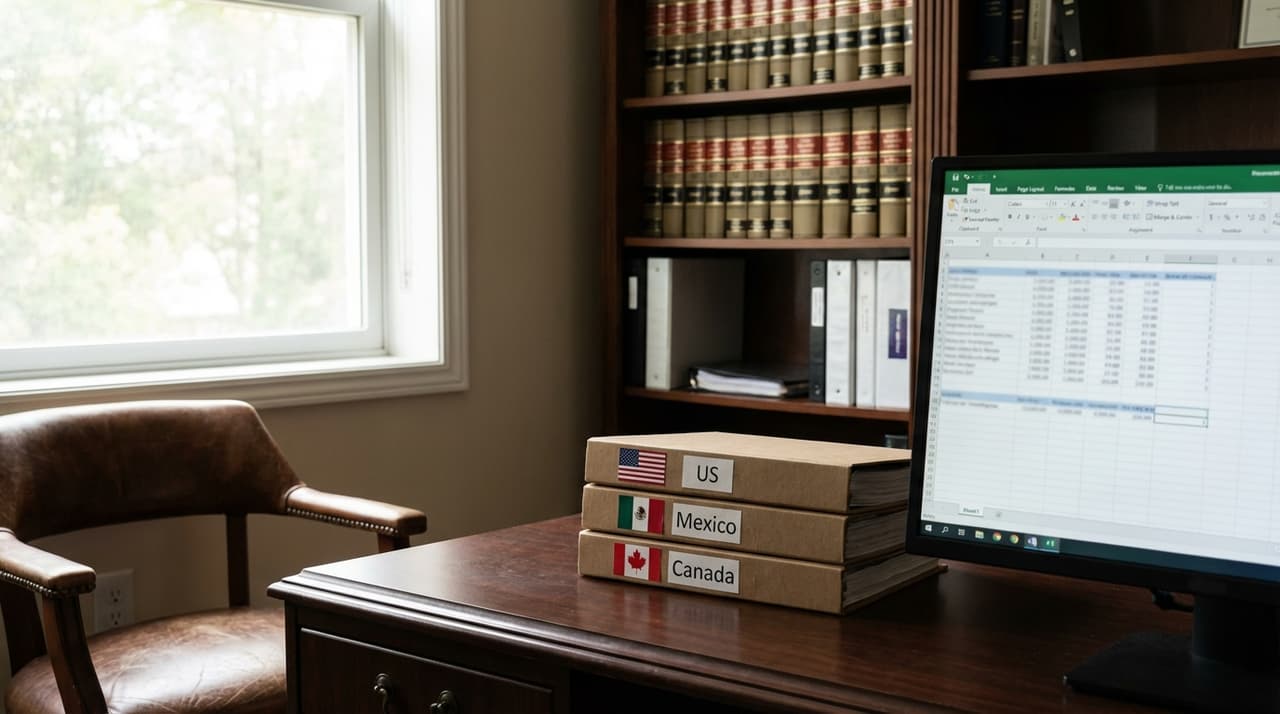
- Compliance concerns with USMCA partners, particularly Mexico and Canada, are highlighted in a recent report to Congress.
- Ongoing Section 301 investigations and industry pressure underscore a broader enforcement-heavy strategy affecting North American supply chains.
U.S. Trade Representative Jamieson Greer has been signaling that if partner countries do not comply with existing trade agreements, the U.S. is prepared to "talk more" and potentially renegotiate or escalate enforcement, particularly in the context of China and USMCA partners. In recent comments, Greer has stressed a monitor-and-verify approach to compliance, noting that China is currently viewed as complying with recent bilateral trade commitments, including specific purchase and market-access obligations, but emphasizing that U.S. scrutiny remains high, according to people familiar with the matter.
In a formal report to Congress on the USMCA joint review, Greer outlined a series of compliance concerns with Mexico and Canada, covering issues like rules of origin, labor and environmental enforcement, energy policy, dairy market access, and customs practices. He made clear that continued preferential treatment under USMCA is contingent on resolving these issues in the U.S. national interest. "Without a deal, the company would be forced into bankruptcy," one industry insider noted, though Greer's focus is on governmental compliance rather than corporate failure.
The USTR under Greer has also initiated or continued Section 301 investigations and targeted actions, including reviews of China's implementation of the Phase One agreement, Brazil's trade practices, and Nicaragua's labor and human-rights related acts. This underscores a broader enforcement-heavy strategy that industry groups, such as the American Iron and Steel Institute, are pushing for, arguing that lax enforcement harms U.S. manufacturing and distorts global steel markets. Efforts to restructure its debt have hit a snag, a source said, referring to broader economic tensions rather than specific corporate deals.
Trade enforcement and threats of reopening deals directly affect North American supply chains, especially in autos, steel, agriculture, and critical minerals, by influencing where firms source inputs and site production. USMCA-related decisions on rules of origin, tariffs, and labor enforcement can materially alter cost structures and competitiveness for U.S., Mexican, and Canadian producers, with knock-on effects for employment and investment in the region. In a brief statement, a USTR spokesperson reiterated that "regulatory stability is key for investors," echoing sentiments from private sector leaders.
Greer's stance is framed by U.S. domestic politics that favor tougher trade enforcement, particularly toward China and perceived loopholes in USMCA that allow third-country content to enter the U.S. via Mexico or Canada. Members of Congress have formally pressed Greer to tighten USMCA disciplines, including stronger rules of origin and measures to address Chinese content routed through Mexico. The USTR press docket shows a steady stream of enforcement actions and framework deals, indicating an activist trade policy posture.
Workers and unions in North America generally support stricter enforcement because it can reduce offshoring and unfair import competition, especially in autos, steel, and other heavy industries. Import-dependent businesses and consumers may face higher costs or supply disruptions if non-compliance leads to tariffs or tighter rules, especially in sectors like agriculture inputs and consumer products. Civil society groups focused on labor and environmental standards see Greer's review mechanisms as tools to improve conditions, though they often argue enforcement should go further.
Short term, expect continued facility-specific labor cases in Mexico, targeted tariff adjustments, and ongoing verification of China's compliance. If Greer judges that some partners are slipping on commitments, "talk more" likely means tougher negotiations or potential threats of tariffs. Long term, the U.S. is likely to push for tighter rules of origin and more robust investment screening with Mexico and Canada, which could gradually reconfigure supply chains toward more regional sourcing. Expert submissions suggest that if enforcement is perceived as weak, pressure from Congress and industry will increase; if too aggressive, it could lead to frictions with allies.
Related developments include USTR recently announcing frameworks for reciprocal trade agreements with several countries, such as El Salvador and Argentina, showing that while enforcement is tightening, the U.S. is also pursuing new market-opening arrangements. Parallel debates are occurring in other sectors, like steel overcapacity and export controls on sensitive technologies, where allied countries are similarly tightening enforcement in response to Chinese policies and broader geopolitical tensions.
Correction: An earlier version of this article misstated the focus of Greer's comments; they pertain to governmental compliance under trade agreements, not corporate restructuring.