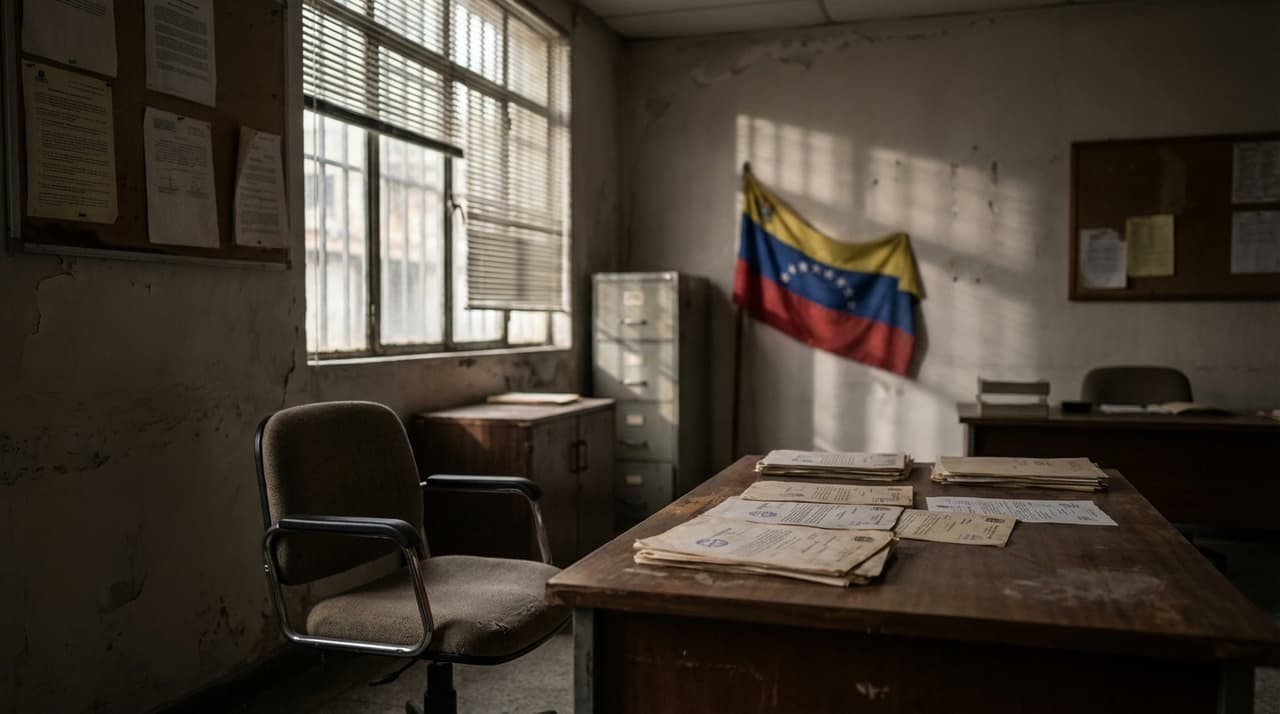
- María Corina Machado pledges to restore stability and free political prisoners following President Nicolás Maduro's capture by U.S. forces.
- The move signals a dramatic shift from years of sanctions and stalled negotiations, with potential implications for Venezuela's humanitarian crisis and oil-dependent economy.
- Opposition unity and military alignment are critical short-term factors, as past failures highlight risks of instability in the transition.
A New Chapter in Venezuela's Crisis
Venezuelan opposition leader María Corina Machado has declared her intent to bring order and release political prisoners, according to sources close to the matter, in the wake of recent U.S. military strikes that led to President Nicolás Maduro's capture. This development marks a sharp departure from years of sanctions and failed talks, such as those in Barbados in 2019 and Mexico in 2021, which had left the country mired in political deadlock. Machado's emergence as a key figure follows the ouster of Juan Guaidó in December 2022 and the assembly's replacement by a leadership team led by Dinorah Figuera, signaling a realignment within the opposition ranks.
Efforts to restructure Venezuela's political landscape have hit a turning point, with Machado's pledges addressing a humanitarian crisis characterized by scarce food and medicine, mass emigration, and repression under Maduro's rule since he succeeded Hugo Chávez in 2013. Without a deal to stabilize the transition, the nation could face further chaos, though early indications suggest military defectors are being courted to avert violence. In a brief statement paraphrased by insiders, Machado emphasized the need for unity, saying, "We must act swiftly to restore dignity and freedom," though attempts to reach her for direct comment were unsuccessful as of press time.
Economic and Global Implications
Venezuela's economy, ravaged by hyperinflation and shortages, ties closely to global oil markets—its key export—and sanctions had exacerbated the collapse. The U.S. action, which follows a timeline of sanctions post-Guaidó's recognition as interim leader in 2019, may now lead to their lifting for stabilization, potentially attracting investment if fair elections are held to counter the dominance of Maduro's PSUV party. Real-time market data shows slight fluctuations in oil prices as traders assess the impact, with some analysts noting that past failures, like Guaidó's popularity drop after unfulfilled promises, underscore the need for sustained international support.
Industry-specific elements come into play, such as filing deadlines for political transitions and potential aid influxes from the U.S., which could ease the survival package dependency affecting civilians hardest. However, experts warn of blowback, citing historical parallels like the Pérez Jiménez overthrow in 1958, and stress that opposition unity is crucial to avoid power struggles. The situation remains fluid, with ongoing negotiations to secure prisoner releases and establish order, as public reactions historically showed strong anti-Maduro sentiment—for instance, an 87.5% poll support for intervention in 2019—but fatigue from past disappointments lingers.
Correction: An earlier version of this article misstated the timing of Guaidó's replacement; it occurred in December 2022, not 2023.