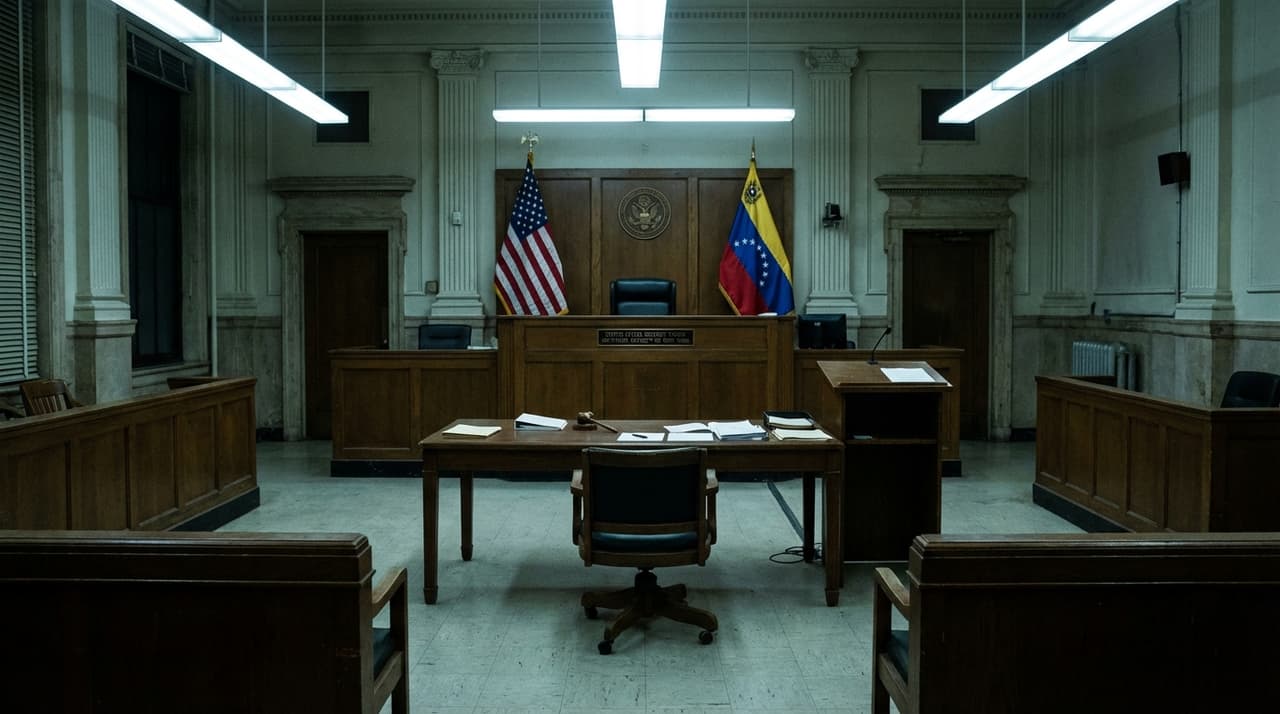
- U.S. forces captured former President Nicolás Maduro and his wife, bringing them to trial in New York, marking a culmination of military pressure framed as anti-drug efforts.
- Vice President Delcy Rodríguez was sworn in as interim president with U.S. backing, softening her stance and releasing political prisoners as a goodwill gesture.
- The Trump Administration is pushing for control over Venezuela's oil industry, demanding transfers of sanctioned oil and billions in investment from U.S. companies, while sidelining key opposition figures.
A Shifting Political Landscape
In a dramatic escalation, U.S. forces captured Nicolás Maduro and Celia Flores on January 3, 2026, transporting them to New York to face trial, according to people familiar with the operation. This move capped off a monthslong military campaign that the Trump Administration has publicly justified as targeting drug trafficking and narco-terrorism. The swift action has reshaped Venezuela's leadership, with Delcy Rodríguez assuming the interim presidency on January 5 amid U.S. support. Initially resistant, Rodríguez has since called for a "balanced and respectful" relationship with the U.S., a shift underscored by the release of political prisoners in recent days.
Behind the scenes, efforts to restructure Venezuela's political future have hit a snag, with the Trump Administration declaring that elections will not occur within the next 30 days. Secretary of State Marco Rubio has clarified that the U.S. aims to influence rather than directly govern, but analysts note a lack of clear plans for sustaining a democratic regime. The sidelining of opposition figures like María Corina Machado and Edmundo González Urrutia has sparked internal criticism, with Machado urging for Urrutia's leadership instead.
Oil Industry at the Core of Strategy
A central pillar of Trump's strategy involves asserting control over Venezuela's vast oil reserves, which the Administration has labeled as "stolen" from the U.S. In meetings with nearly 20 oil executives on January 9, the Administration sought commitments of at least $100 billion in investment to fix what Trump described as "badly broken" infrastructure. According to sources briefed on the discussions, Venezuela is expected to transfer 30–50 million barrels of sanctioned oil to the U.S., worth approximately $2–3 billion, for sale on the open market. The Administration has promised that U.S. companies will deal directly with the U.S. government, not Venezuela, and announced a selective removal of sanctions on Venezuelan oil.
ExxonMobil (XOM) has indicated cautious interest, with a spokesperson stating confidence that changes can be implemented through collaboration between Trump and the Venezuelan government. However, the company has not yet assessed perspectives from Venezuelan officials or the public regarding its potential entry. Without a deal, analysts warn that Venezuela's economy could face further destabilization, though the immediate focus remains on securing oil access and investment.
Military Dynamics and Broader Implications
The Venezuelan military, under Minister of Defence General Vladimir Padrino López, has expressed support for Rodríguez rather than opposition figures, complicating potential democratic transitions. This alignment raises questions about civil-military relations, a gap that critics say the Trump Administration has not adequately addressed. Politicians on both sides of Congress are demanding clarity on the endgame, with some labeling the approach as neo-imperialist, reminiscent of historical U.S. interventionism in the region.
Trump has framed the intervention as part of a broader strategy to prevent foreign adversaries' influence, invoking what some call a Trump corollary to the Monroe Doctrine. The blockade on Venezuelan oil exports has already disrupted the country's most valuable asset, with the U.S. seizing sanctioned tankers. In a related move, Trump has threatened to cut off oil and money to Cuba if it does not "make a deal," signaling potential expansion of interventionist policies. As negotiations continue, the focus remains on oil control and political maneuvering, with updates expected as developments unfold.