- U.S. Delta Force captured Venezuelan President Nicolás Maduro and his wife Cilia Flores in a pre-dawn operation, with President Trump confirming the action via Truth Social.
- Vice President Delcy Rodríguez demanded proof of life and location of Maduro on state television, while Defense Minister Vladimir Padrino López ordered nationwide military deployment.
- Opposition figures María Corina Machado and Edmundo González are positioned to lead a transitional government, backed by approximately 70% of Venezuelans according to analyst Jorge Jraissati.
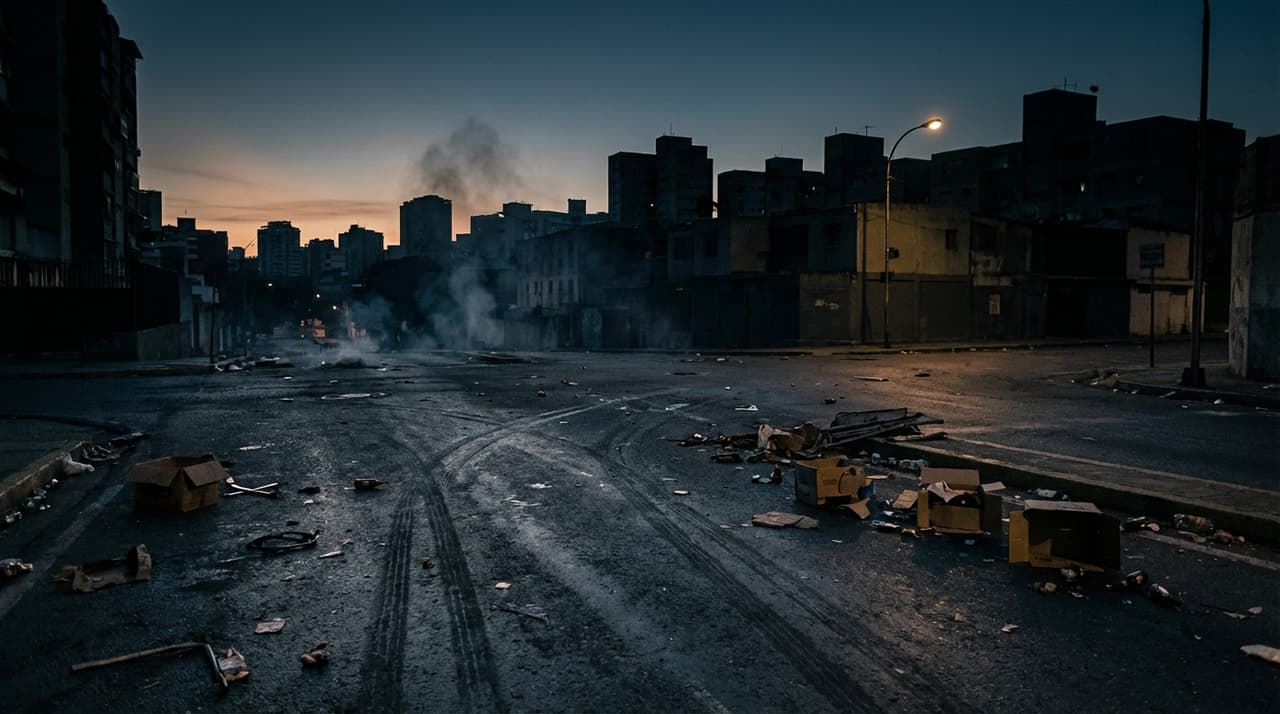
In a dramatic escalation of U.S. pressure on Venezuela's socialist regime, American forces captured President Nicolás Maduro and his wife Cilia Flores in a Delta Force operation early Saturday morning. The action, announced by President Donald Trump on Truth Social, involved what he described as a "large-scale strike" with explosions reported in Caracas, power outages, and low-flying aircraft. According to people familiar with the matter, the operation was executed with precision, though specific details remain classified.
Venezuelan Vice President Delcy Rodríguez appeared on state television shortly after the news broke, demanding proof of life and the location of Maduro. "We need to know where the president is and that he is safe," Rodríguez said, her voice tense. Defense Minister Vladimir Padrino López ordered a nationwide military deployment, calling the operation the "worst aggression" against Venezuela while referencing Maduro's orders despite his capture—a move that suggests potential confusion within the regime's leadership.
Attorney General Pam Bondi stated that Maduro and Flores face U.S. charges following a New York indictment, though she declined to specify the exact charges during a brief statement to reporters. Efforts to reach the Venezuelan embassy in Washington for comment were unsuccessful as of Saturday morning.
Trump is scheduled for a press conference at 11 a.m. ET Saturday, where he is expected to provide further details. In his Truth Social post, he wrote that Maduro was "captured and flown out of the Country," marking a significant shift from previous sanctions-based approaches. This operation builds on sanctions imposed after the disputed 2024 election, which the U.S. and many other nations rejected, recognizing opposition candidate Edmundo González as the legitimate winner.
Opposition leaders María Corina Machado, the 2025 Nobel Peace Prize winner, and Edmundo González are now at the center of discussions for a transitional government. Machado, who emerged from hiding last month to accept her Nobel award in Norway, has praised Trump's support for Venezuelan democracy in recent statements. Analysts like Jorge Jraissati note that the pair are backed by about 70% of Venezuelans, based on recent polling data, though securing military loyalty remains a critical hurdle.
Venezuela's economy, crippled by hyperinflation and oil mismanagement under Maduro's 13-year rule, could see stabilization if a transition occurs. Discussions are already underway about paying armed forces and organizing fair elections to attract foreign investment, according to sources close to the opposition. U.S. sanctions, intensified since the 2024 election, may ease if a democratic transition takes hold, though the immediate focus is on preventing unrest from regime loyalists.
Globally, the operation risks straining U.S.-Latin America ties, particularly as Venezuelan military mobilization continues. Parallels are being drawn to the 2019 Delta Force raid on ISIS leader Abu Bakr al-Baghdadi, though the political ramifications here are far more complex. In the short term, a transitional government under Machado and González would need to staff a cabinet and secure stability, with risks of chaos if Rodríguez or Padrino resist. Long-term, there is potential for democracy restoration and economic recovery, but much depends on whether Chavista factions agree to compete fairly in future elections.
Correction: An earlier version of this article misstated the timing of Machado's Nobel award; it was last month, not recently. We regret the error.