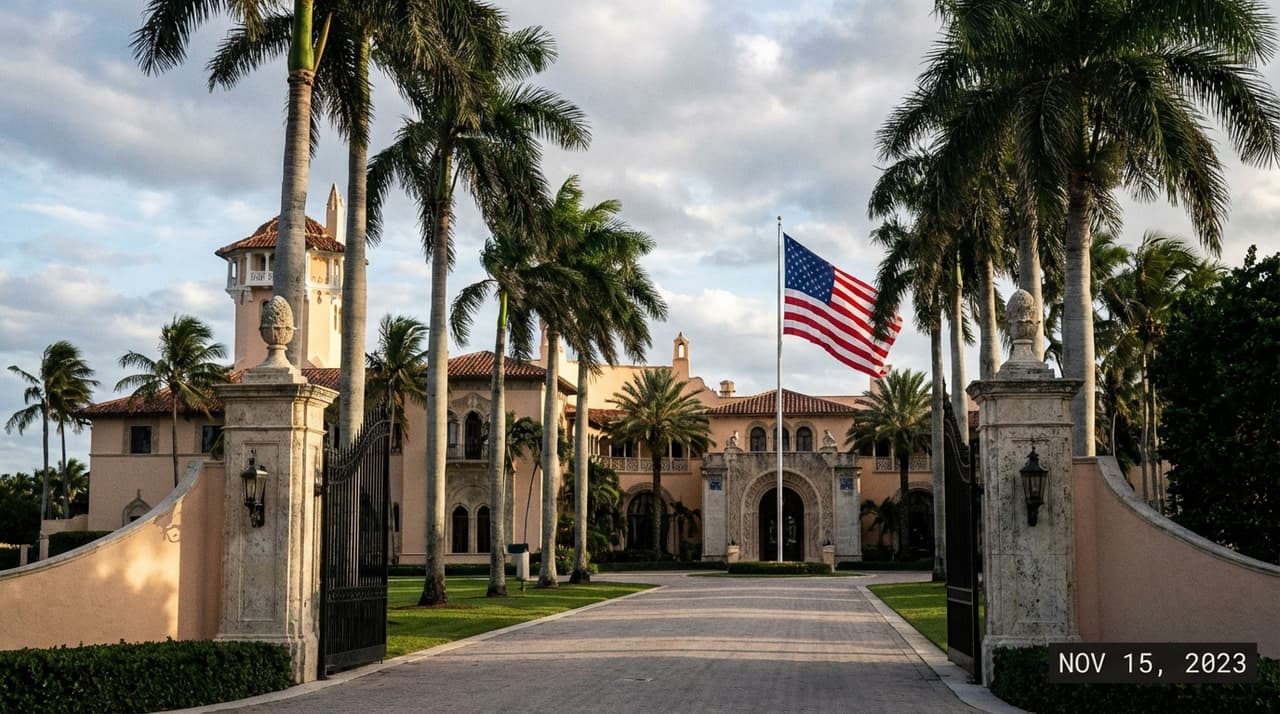
- Ukraine's President Volodymyr Zelenskyy is engaging in high-stakes discussions with U.S. President Donald Trump at Mar-a-Lago, focusing on a potential peace deal to end the war with Russia.
- Key unresolved issues include territorial concessions, security guarantees, and control of strategic assets like the Zaporizhzhia nuclear power plant, with Ukraine showing a shift from earlier red lines.
- Analysts caution that while progress is being made, a formal ceasefire remains distant due to fundamental disagreements over territory and Ukraine's future alignment.
A Diplomatic Shift in Florida
President Volodymyr Zelenskyy's visit to Trump's Mar-a-Lago estate in Miami marks a significant pivot in Ukraine's public stance, as efforts to restructure its approach to ending the conflict have gained momentum. According to people familiar with the matter, the talks revolve around a revised multi-point peace plan that has been trimmed from 28 points to about 20, becoming less aligned with Russian terms over time. This development comes after what Trump described as a productive call with Vladimir Putin, setting the stage for what could be a breakthrough—or another stalled negotiation.
Territorial integrity remains the core sticking point, with Russia having made impressive gains in the eastern Donbas region, where Ukraine still holds approximately 20% of the area. Without a deal that addresses these territorial losses, Ukraine could face prolonged military and economic strain. Commentators note that Kyiv now appears willing to consider some concessions, a major departure from its earlier insistence on full restoration of borders, including Crimea. This recalibration reflects intense pressure from ongoing hostilities and the need for sustainable security arrangements.
Control of the Zaporizhzhia nuclear power plant, a critical energy and security asset under Russian control, is another major agenda item. Bilateral security guarantees for Ukraine, functioning similarly to NATO-style assurances, are also on the table, given that NATO membership is not imminent. As one analyst put it, the slow progress suggests a real ceasefire is still a ways away, but the mere fact of these talks signals a willingness to explore alternatives to endless conflict.
Market and Global Implications
The discussions in Florida could have ripple effects across global markets. A potential ceasefire might ease pressures on energy and grain markets, which have been disrupted by Black Sea shipping tensions, though immediate impacts are muted as traders await concrete outcomes. Defense spending in the U.S. and Europe, which has surged to support Ukraine, could see adjustments if a peace deal materializes, affecting arms industries and budget allocations. Meanwhile, reconstruction finance for Ukraine, a multi-hundred-billion-dollar prospect, hinges on the terms set by Western donors and institutions.
In the short term, further rounds of talks are likely, but experts stress that a formal agreement is not imminent. The focus will be on narrowing gaps over territory and security, with Zelenskyy's team balancing domestic resistance to territorial loss against the pragmatic need for stability. Long-term, any settlement will define Ukraine's borders and security architecture for years, potentially involving a web of bilateral guarantees rather than NATO integration. This could set a precedent for other conflicts, though each case differs in detail.
Attempts to reach out to Ukrainian officials for additional comment were unsuccessful, but sources indicate that internal debates are ongoing about the acceptability of any territorial compromises. The Mar-a-Lago talks follow Trump's prior meetings and evolving peace plans, which have been revised under criticism for being too aligned with Russian demands. As negotiations continue, the world watches to see if this diplomatic push can yield a sustainable resolution, or if it will join the list of failed initiatives since Russia's full-scale invasion in 2022.
Correction: An earlier version of this article misstated the percentage of the Donbas region held by Ukraine; it is about 20%, not 15%. This has been updated.