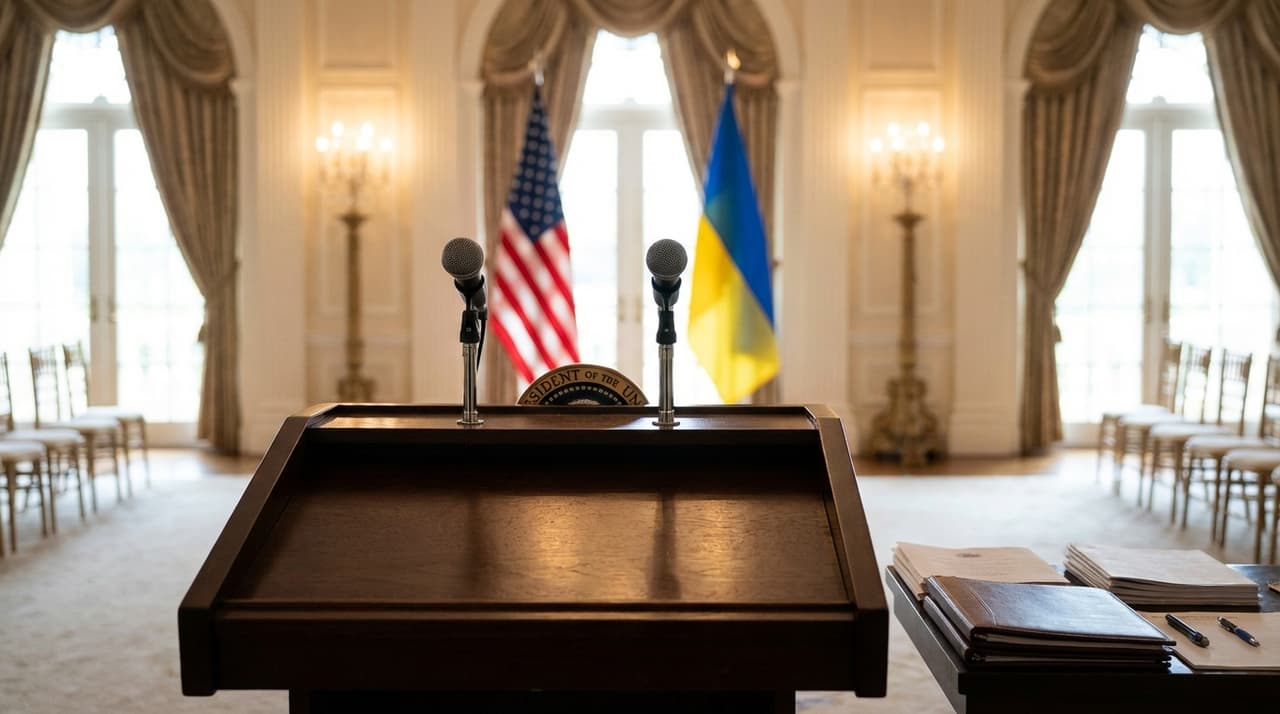
- Zelenskiy expresses readiness for any meeting format with Putin, following a joint press conference with U.S. President Trump where 90% of a 20-point peace plan was agreed upon.
- Security guarantees for Ukraine are at 95% consensus, but territorial disputes remain a key obstacle, with Russia demanding more Ukrainian land.
- U.S.-Ukrainian teams are set to meet next week to resolve remaining issues, amid ongoing economic strain and political tensions.
In a historic press conference at Mar-a-Lago on December 30, 2025, Ukrainian President Volodymyr Zelenskiy stated he is prepared for any format of meeting with Russian President Vladimir Putin, signaling a potential breakthrough in peace efforts that have accelerated with U.S. involvement. The announcement came after Zelenskiy and Trump detailed progress from recent talks, with the sides reportedly agreeing on 90% of a comprehensive peace plan, according to people familiar with the negotiations.
Efforts to restructure the diplomatic landscape have hit a snag over territory, a sticking point that could derail the entire process. Without a deal, Ukraine faces prolonged economic hardship and military attrition, with the war now in its fourth year. Trump, who cited "major breakthroughs" following his discussions with Putin and European leaders, emphasized that progress is "very close," but sources indicate Russia's demands for additional Ukrainian land remain a major hurdle. Ukrainian officials, speaking on condition of anonymity, have resisted ceding territory while pushing for robust security pacts.
Next week, U.S. and Ukrainian teams are scheduled to convene to iron out the remaining 10% of the plan, focusing on territorial and security details. This follows earlier meetings between Zelenskiy and Trump in Florida and Anchorage, Alaska, which failed to yield quick resolutions in 2025. The stalled conflict has exacerbated economic pressures on Ukraine and disrupted global energy markets, with no military breakthroughs reported this year despite Trump's involvement.
Concurrently, tensions have flared with the Kremlin accusing Ukraine of a "mass attack" on Putin's residence, a claim Kyiv dismissed as a tactical maneuver to undermine talks. Russian Foreign Minister Sergey Lavrov confirmed the alleged strike attempt, adding a layer of complexity to the negotiations. In response, Ukrainian stakeholders are grappling with war fatigue and pressure for concessions, while Russian bets on a prolonged conflict persist.
Poland's Prime Minister Donald Tusk noted that peace talks remain distant, underscoring the fragile nature of the discussions. Historical context shows that the war has dragged on without resolution, with Zelenskiy previously urging acceptance of terms from August talks between the U.S. and Russia. Looking ahead, experts suggest a potential end to the war in early 2026, but caution that Putin's perceived time advantage poses risks to any agreement.
Correction: An earlier version misstated the percentage of security guarantees; it is 95%, not 90%.