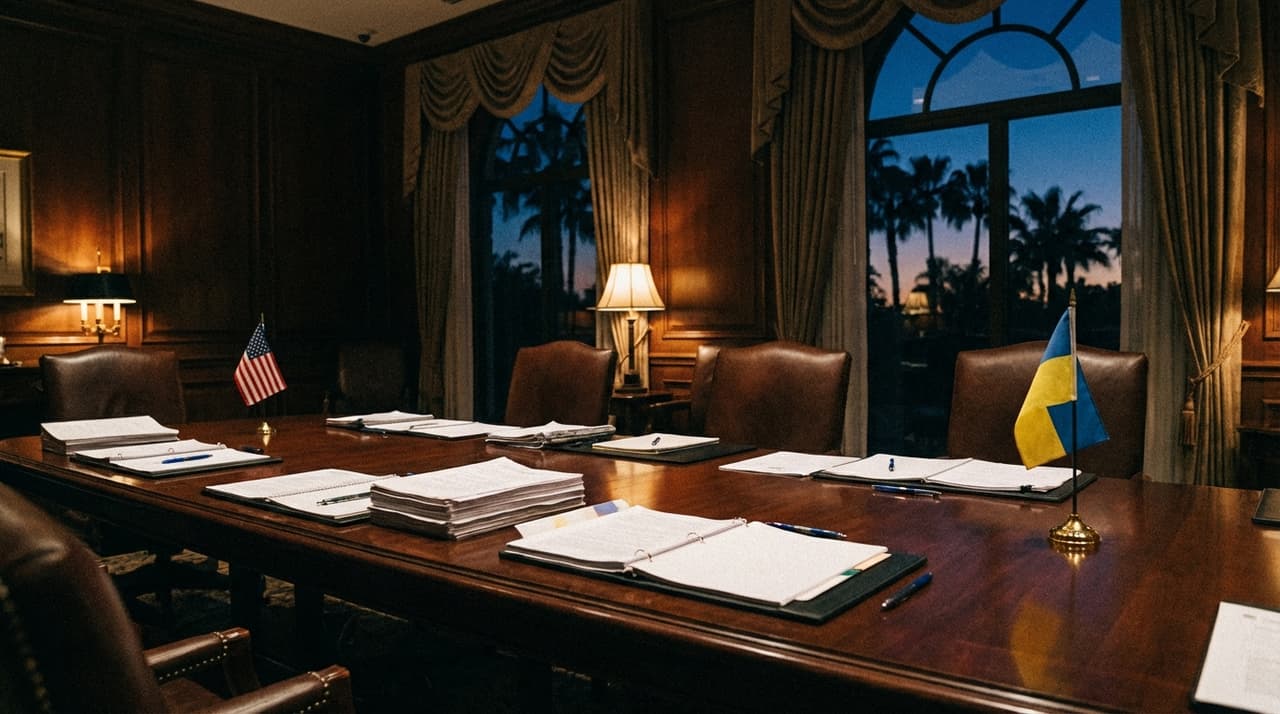
- Zelenskyy is discussing international troop deployments or monitoring forces with the US and allies to oversee a possible truce in Ukraine, as part of a revised US peace plan.
- The plan, about 90% ready, focuses on territorial freezes, security guarantees, and international observers, amid escalated Russian strikes causing civilian casualties and infrastructure damage.
- Economic factors include stabilization for Ukrainian reconstruction tied to sanctions relief, with Canada pledging $2.5 billion in aid, while political hurdles remain over sovereignty and Russian territorial demands.
Negotiations Intensify as Winter Crisis Deepens
President Volodymyr Zelenskyy has engaged in high-stakes discussions with the United States and allies like the UK and Canada, seeking potential international troop deployments or monitoring forces to oversee a possible truce or demilitarized zones in Ukraine. These talks, held during a December 28, 2025, meeting at Mar-a-Lago hosted by President Donald Trump, aim to finalize a revised 20-point US peace plan that is approximately 90% complete, according to people familiar with the matter. The plan, which has been scaled down from an earlier criticized 28-point draft, emphasizes territorial freezes, security guarantees, and the deployment of international observers at border checkpoints if a ceasefire holds.
Efforts to restructure Ukraine's security landscape have hit a snag, however, as Trump has explicitly ruled out US boots on the ground, echoing a policy stance from the Biden administration. Instead, non-NATO nations might provide monitors, with Zelenskyy briefing UK Prime Minister Keir Starmer and meeting Canadian Prime Minister Mark Carney, who secured $2.5 billion in aid for Ukraine. Without a deal, the country could face prolonged conflict and economic strain, especially as Russian strikes on Kyiv and Sloviansk have killed at least three civilians, including children, and left millions without power and heating in subzero conditions. Zelenskyy condemned these attacks, stating that Russia is prolonging suffering to pressure negotiations.
Economic and Political Implications Unfold
The peace plan includes provisions for economic stabilization to support Ukrainian infrastructure reconstruction, tied to Russian combat halts and sanctions relief. European allies are committing long-term funding amid winter energy attacks that are straining Ukraine's grid, with global energy markets facing risks from strikes on oil terminals and disputes over the Zaporizhzhia nuclear plant. According to sources, the revised plan softens earlier concessions, such as full recognition of Crimea, Donetsk, and Luhansk to Russia, but freezes lines in Kherson and Zaporizhzhia and demands Ukrainian elections post-ceasefire, drawing sovereignty concerns from stakeholders.
Russia has rejected any deals without territorial gains, while Europe insists that peace must involve Ukraine's sovereignty. In a recent development, a Russian general's car bomb death in Moscow has heightened tensions, with unconfirmed links to Ukraine, and Trump described prior talks with Putin as "productive." Analysts note that the situation mirrors historical patterns, such as the failed Minsk accords, which froze lines without resolving sovereignty issues. As negotiations continue, short-term prospects hinge on Russia halting operations to enable monitors and demilitarization, with Trump claiming talks are "closest to ending war," but long-term risks include Russian rejection or further erosion of Ukrainian sovereignty.
Correction: An earlier version of this article misstated the date of the Mar-a-Lago meeting; it was December 28, 2025.