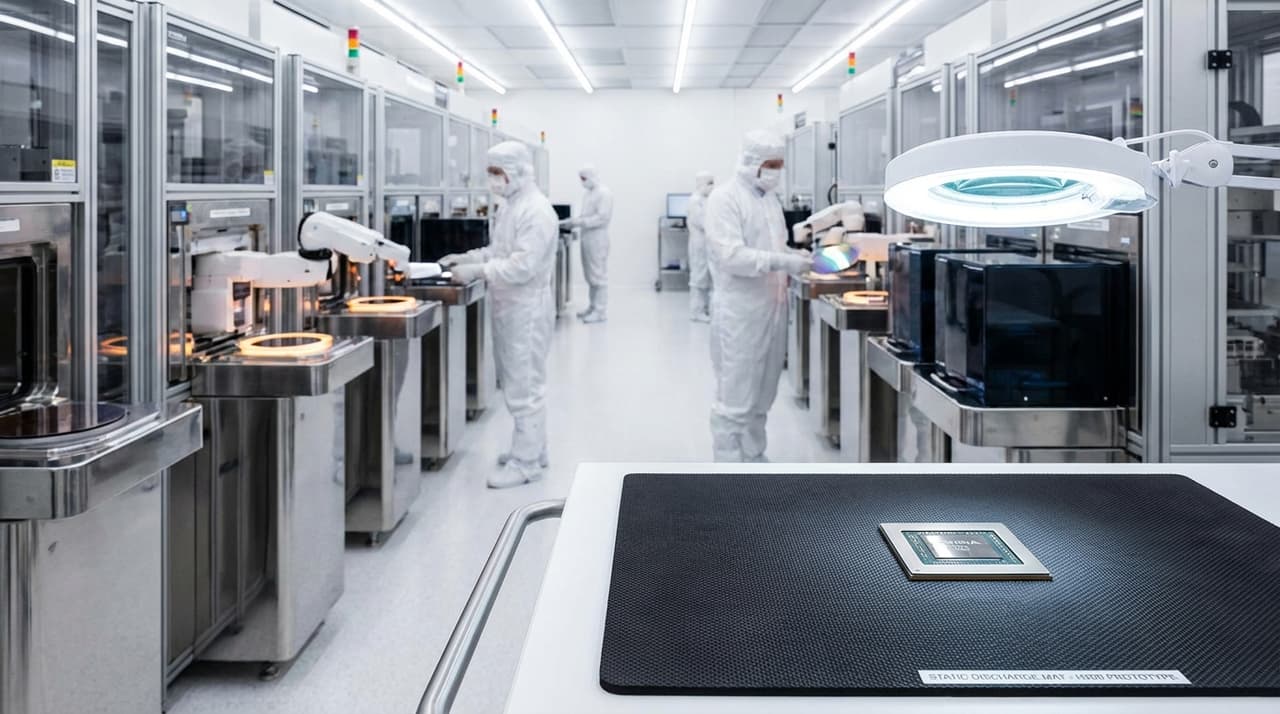
- The Trump administration has approved Nvidia (NVDA) H200 AI chip exports to China under strict conditions, reversing previous Biden-era restrictions.
- Democratic lawmakers are pushing for full disclosure of all license requests and approvals, citing national security concerns.
- The policy shift allows controlled access to slow China's push for chip independence while maintaining U.S. technological superiority.
In a significant reversal of U.S. export policy, the Trump administration has greenlit shipments of Nvidia's H200 AI chips to China, according to people familiar with the matter. The approval comes with stringent conditions, including a 25% import duty on each chip and a requirement that all units pass through U.S. territory for inspection before entering China. This decision, finalized after months of internal debate, aims to balance commercial interests with national security while preventing China from accelerating its domestic chip development efforts.
Democratic lawmakers have responded swiftly, requesting that the Commerce Department disclose all license requests and approvals related to H200 exports. "We need full transparency on these approvals to ensure they don't compromise our technological edge," said one congressional aide, who spoke on condition of anonymity. The legislative push reflects bipartisan unease, with a group of U.S. senators introducing legislation that could block advanced chip exports—including the H200—to China for up to 30 months.
Nvidia, a leading semiconductor company, has lobbied extensively for eased restrictions after losing its entire Chinese market share following earlier bans. The H200, delivering roughly six times the performance of the previously approved H20 model, is seen as a transitional product as Nvidia prioritizes newer Blackwell and Rubin architectures. Supply remains tight, with production unlikely to scale unless demand from both U.S. and Chinese regulators materializes strongly.
Chinese regulators are already conducting internal reviews, discussing projected demand with major tech firms like Alibaba (BABA), ByteDance, and Tencent (TCEHY). Officials from the National Development and Reform Commission are considering stricter approval regimes, potentially requiring buyers to submit detailed justifications and bundle H200 purchases with mandatory domestic chip components. Public-sector procurement of H200 chips may be banned entirely, according to sources briefed on the discussions.
Trump announced the policy shift directly to Chinese President Xi Jinping in December, framing it as a move to balance commercial interests with security needs. Xi reportedly responded positively, though no formal details were disclosed. The approval leverages the "AI Diffusion Rule" established in January 2025, which created a "green zone" for lower-powered models while blocking flagship GPUs. Enforcement includes traceable logistics and optional location-verification software to confirm chips operate in authorized geographies.
Without this deal, Chinese AI developers would face continued constraints on large-scale training, relying more heavily on domestic alternatives like Huawei's Ascend 910C. The controlled access model is designed to maintain U.S. advantage while slowing China's push for semiconductor independence by 2027. However, some lawmakers worry any exports risk fueling Chinese military advancements. "We can't afford to let cutting-edge technology fall into the wrong hands," a Democratic senator noted in a recent statement.
Nvidia could begin shipping H200 chips to approved Chinese customers as early as February 2026, pending final regulatory clearances. The Commerce Department review announced in December 2025 might expand approvals for other advanced chips, though specifics remain unclear. Meanwhile, Beijing is strategically using import access to incentivize domestic chip adoption, potentially requiring bundling with Chinese accelerators.
Correction: An earlier version misstated the timeline for potential shipments; they could begin in February 2026, not January.