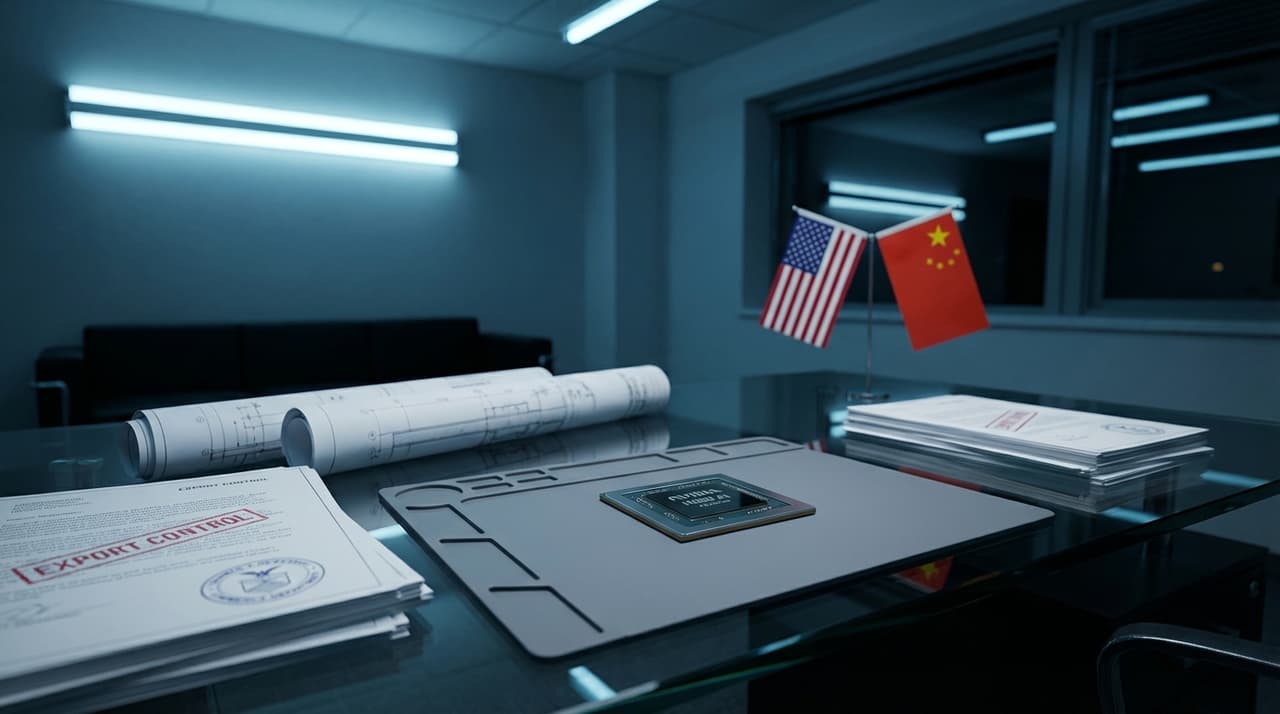
- Nvidia (NVDA)'s H200 AI chips will be permitted for export to China following a special U.S. national security review and a 25% surcharge on sales to approved customers.
- The policy shift from "total denial" to "managed access" aims to balance national security concerns with maintaining U.S. economic dominance in AI hardware.
- Enforcement challenges loom due to past smuggling cases and China's potential regulatory pushback, with final approvals still pending.
In a significant pivot, the U.S. government has announced that Nvidia will be allowed to export its H200 AI chips to China, but only after undergoing a special national security review and subject to a 25% surcharge on sales. The move, described by people familiar with the matter as a "managed competition strategy," seeks to address mounting concerns about China's military-civil fusion while keeping revenue within the U.S. economy. The H200 chips, manufactured in Taiwan and routed through the U.S., will be structured to ensure the 25% cut flows to the U.S. Treasury.
Critics warn the deal could erode the U.S. AI advantage or indirectly benefit China's military, pointing to past cases where U.S. chips were smuggled into China via third countries. "Without rigorous oversight, this risks being a short-term revenue win at the cost of long-term strategic erosion," one industry analyst cautioned, speaking on condition of anonymity. Nvidia and U.S. officials, however, argue that controlled access is necessary to stay competitive, as denying all exports might accelerate China's push toward self-sufficiency and cede market share to domestic rivals like Huawei (002415.SZ).
China's AI sector faces a severe shortage of high-end compute, making access to H200 chips highly valuable despite the surcharge. Recent Chinese regulations have effectively shut out Nvidia from certain state-backed projects, but private firms like Alibaba (BABA) and ByteDance may still seek the chips for AI training. Efforts to reach Nvidia for comment were unsuccessful, but in recent earnings calls, CEO Jensen Huang has emphasized the importance of global markets for AI infrastructure. The company reported record revenue in fiscal 2025, driven by explosive demand for AI accelerators, with data center revenue growing over 100% year-on-year.
The policy marks a departure from the Biden-era "total denial" approach, allowing the H200 while keeping Nvidia's cutting-edge Blackwell and future Rubin chips banned. Each export will require a security review, reflecting ongoing dual-use risks. In parallel, Huawei's Ascend 910C has gained traction as a domestic alternative, with major Chinese firms reportedly shifting to it for large-scale AI training. "What institutional investors are really focused on is regulatory stability," a financial executive noted, echoing broader market uncertainties. Final approvals are pending, and enforcement will be closely watched, given the high stakes in the global AI race.
Correction: An earlier version misstated the timeline for final approvals; they are still pending as of this report.