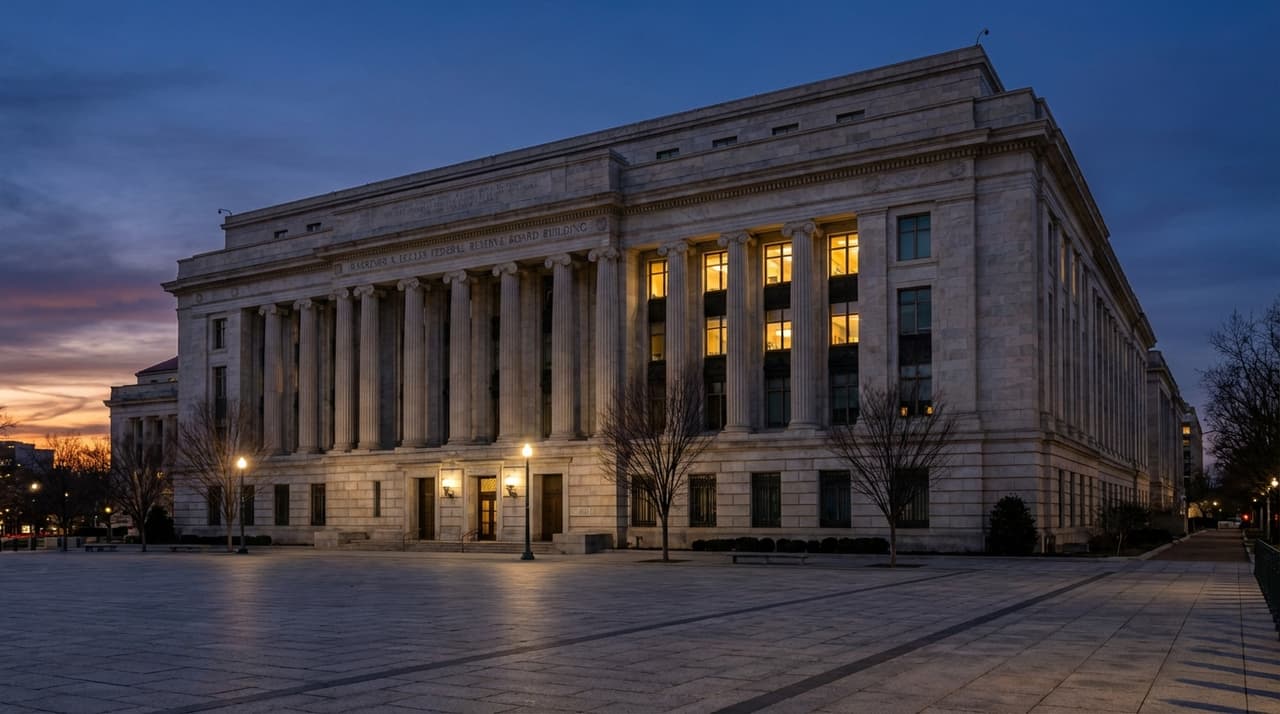
- Federal Reserve Chair Jerome Powell states a rate hike is not anyone's base case, emphasizing policymakers' reluctance to reverse course after three cuts in 2025.
- The Fed holds the federal funds rate steady at 3.5%–3.75% during its January 28, 2026, meeting, with markets pricing in no hike and the next potential 25-basis-point cut not until June 2026.
- Powell's press conference is overshadowed by grand jury subpoenas issued to the Fed, raising concerns over political pressure and central bank independence.
Federal Reserve Chair Jerome Powell delivered a clear message to markets on Wednesday: don't expect rate hikes anytime soon. Speaking after the Federal Open Market Committee voted unanimously to hold the federal funds rate steady at 3.5%–3.75%, Powell told reporters that a rate increase "isn't anyone's base case" right now.
The comment underscores what several Fed watchers had been anticipating—an extended pause in the central bank's easing cycle following three rate cuts in 2025 that lowered borrowing costs to their lowest levels since 2022. According to people familiar with the matter, the decision reflects growing confidence among policymakers that inflation, while still above the Fed's 2% target, is trending in the right direction.
"What we're seeing is a committee that's comfortable with where rates are for now," Powell said during his quarterly press conference. "The data we've received since our last meeting supports patience as we assess how previous policy adjustments are working through the economy."
Market reaction was muted, with Treasury yields barely moving and equity indices showing little change in after-hours trading. The lack of volatility suggests investors had largely priced in today's outcome, with betting markets like Kalshi showing high odds of a 0bps change for January 28.
Behind the scenes, however, tensions are simmering. December 2025 FOMC minutes revealed significant divisions among committee members, with most anticipating cuts in 2026 if inflation continues to ease but others expressing concern about labor market risks. Today's meeting saw similar dissents, with two members voting to hold and one advocating for a larger cut.
The political backdrop adds another layer of complexity. Powell's press conference marked his first public appearance since the Fed received grand jury subpoenas, a development that has raised eyebrows among economists who worry about political pressure on central bank independence. When asked about the subpoenas, Powell declined to comment specifically but emphasized the Fed's commitment to data-driven decision-making.
Economic indicators present a mixed picture. While inflation remains elevated at 2.4% according to the latest PCE readings—down from earlier peaks but still above target—job growth has slowed sharply and unemployment has stabilized around 4.4%–4.5%. Revised December projections show higher GDP growth (2.3% for 2026) and slightly lower inflation forecasts, with Fed economists noting smaller initial impacts from recent tariff measures than previously anticipated.
For households and businesses, the extended pause means borrowing costs will remain at current levels for the foreseeable future, delaying relief from the 2025 cuts amid what Powell called "sticky" inflation components. This could curb spending and investment, particularly in rate-sensitive sectors like housing and autos where financing costs directly impact affordability.
Looking ahead, the Fed's balance sheet remains steady at approximately $6.58 trillion in January 2026, providing continued liquidity support as policymakers navigate this holding pattern. Most analysts now expect one 25bps cut in June 2026, with low odds of additional moves unless economic conditions deteriorate more significantly.
As the press conference concluded, Powell struck a cautiously optimistic tone. "We've made substantial progress," he said, "but the job isn't done yet." With inflation still above target and political pressures mounting, that job just got a little more complicated.
Correction: An earlier version of this article misstated the timing of the next potential rate cut. Markets are pricing it for June 2026, not earlier.