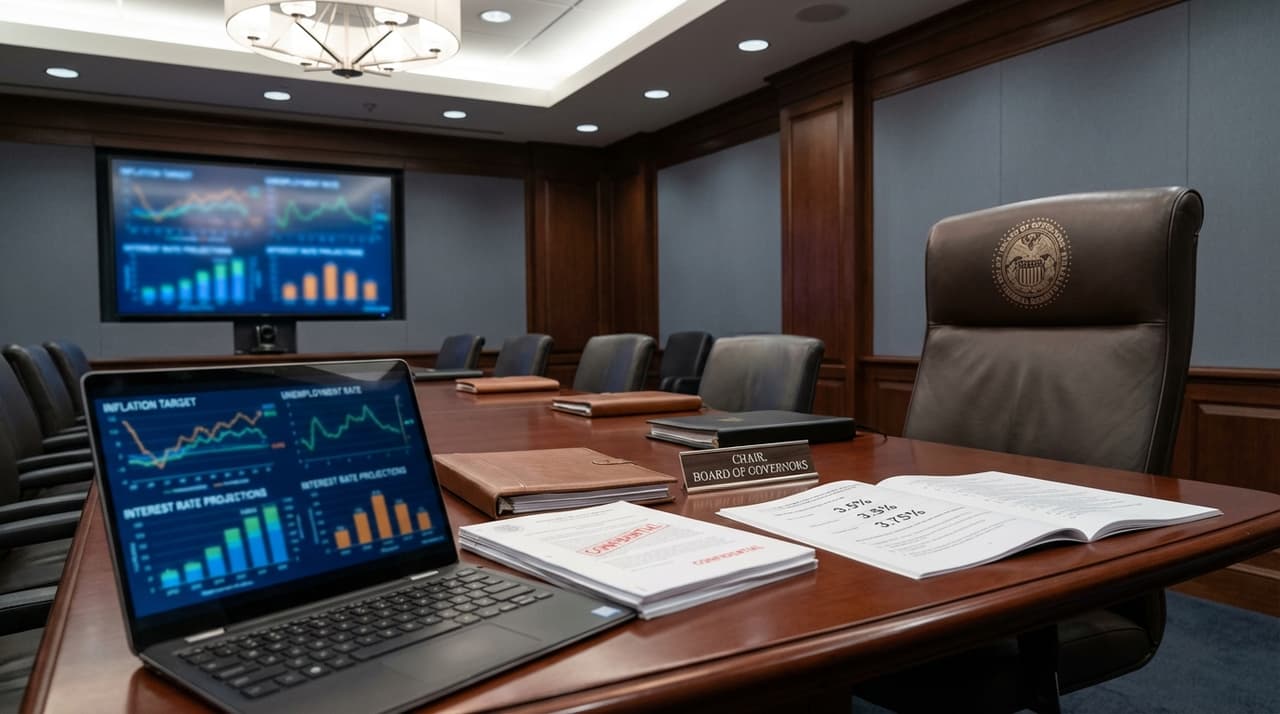
- The Federal Reserve maintains the federal funds rate at 3.5% to 3.75%, with Chair Jerome Powell stating the current stance is appropriate.
- The decision follows three rate cuts in 2025 and reflects a cautious approach amid elevated inflation and low job gains.
- Two FOMC members dissent, favoring a 0.25 percentage point cut, highlighting internal divisions as Powell faces political pressure and a DOJ investigation.
A Delicate Balance in Monetary Policy
Federal Reserve Chair Jerome Powell emphasized that the current stance of monetary policy is appropriate, as the Federal Open Market Committee voted to hold the federal funds rate steady at 3.5% to 3.75% on January 28, 2026. This move, according to people familiar with the matter, reflects the Committee's assessment that existing policy balances the Fed's dual mandate of maximum employment and stable prices, even as economic uncertainty remains elevated.
Economic activity has been expanding at a solid pace, but job gains have stayed low and inflation continues to be somewhat elevated, remaining above the Fed's 2% longer-term target. Powell noted in a statement that the Committee is attentive to the risks on both sides of its mandate, with efforts to support growth while curbing price pressures hitting a snag in recent months. Without sustained progress on inflation, the Fed would be forced into a more restrictive stance, though officials have signaled patience for now.
Internal Divisions and External Pressures
The decision was not unanimous, with two committee members—Stephen I. Miran and Christopher J. Waller—voting against maintaining the current rate and preferring a 0.25 percentage point cut. This dissent underscores ongoing disagreements within the FOMC about the longer-term trajectory, as some members push for further cuts to bolster employment while others advocate waiting for clearer signs of inflation decline. One anonymous source close to the discussions described the debate as intense, with filings showing a split over timing and magnitude of future adjustments.
Powell's stance comes amid significant political pressure from the Trump administration, which has urged more aggressive rate cuts, and a Department of Justice criminal investigation related to testimony about Fed building renovations. Powell's term as Chair concludes in May 2026, and President Trump has not yet announced a replacement, adding to institutional uncertainty. Attempts to reach the White House for comment were unsuccessful, but market watchers note that political dynamics could influence future policy shifts.
Looking Ahead with Caution
Most economists forecast the Fed will implement approximately two rate cuts during 2026, likely at the June meeting or later, as the Committee carefully assesses incoming data and the evolving outlook. Powell reiterated that the Fed will monitor labor market conditions, inflation pressures, and financial developments to determine if additional adjustments become appropriate. In the meantime, the cautious approach allows previous rate reductions to work through the economy, with real-time market data showing muted reactions in bond yields and equity indices following the announcement.
Industry-specific elements, such as filing deadlines for economic reports and ongoing negotiations over fiscal policy, will play a key role in shaping future decisions. As one analyst put it, the Fed is walking a tightrope, balancing growth support with inflation control in a volatile environment. For now, patience prevails, but the path forward remains fraught with challenges.