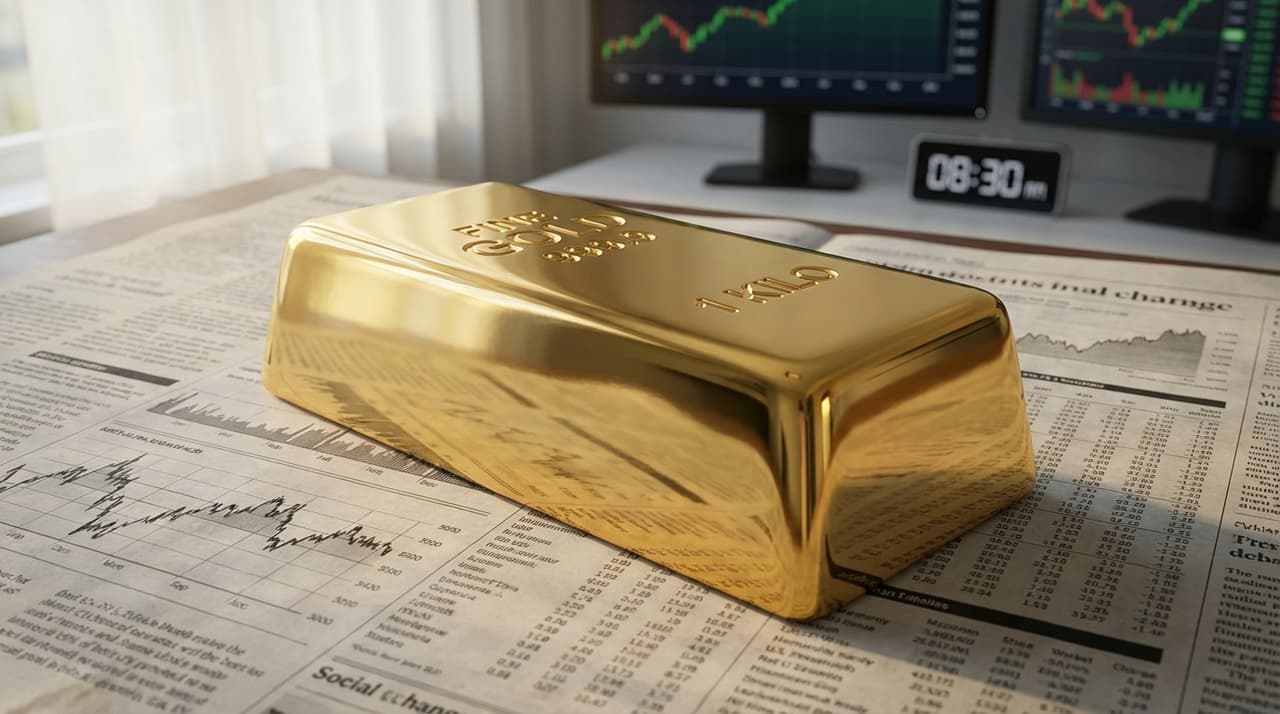
- Gold prices decline 4% to $5,150.49 per ounce, marking a pullback from recent highs.
- The drop reflects profit-taking after a remarkable 2025 performance with over 50 all-time highs and 60% returns.
- Structural support remains strong with central banks expected to purchase around 800 tonnes in 2026 and monetary easing anticipated.
Gold extended losses in early trading, with spot prices falling 4% to $5,150.49 per ounce, according to market data. This decline represents a correction from the metal's exceptional 2025 rally, which saw prices reach approximately $5,400 earlier this year amid over 50 all-time highs and returns exceeding 60%. Traders cited profit-taking and shifting market sentiment as key drivers behind the recent weakness, though underlying support factors remain largely intact.
Efforts to restructure market positioning have hit a snag as investors digest macroeconomic signals and adjust expectations for monetary policy. According to people familiar with the matter, the pullback is occurring within a broader context of robust structural support, with central banks purchasing approximately 850 tonnes of gold in 2025 and expected to continue buying around 800 tonnes in 2026—equivalent to 26% of annual mine output. In Q4 2025 alone, retail-focused ETFs experienced inflows exceeding 280 tonnes, surpassing central bank demand, providing a cushion against further declines.
Monetary conditions continue to favor gold, with the U.S. Federal Reserve having reduced rates in 2025 and consensus estimates showing investors anticipate around 75 basis points of further rate cuts in 2026. Lower real interest rates reduce the opportunity cost of holding non-yielding gold, historically supporting prices. A weaker U.S. dollar—expected from Fed easing and narrowing interest rate differentials—creates what analysts describe as a 'dual tailwind' for gold through both lower real yields and denomination effects.
Macroeconomic uncertainty persists, reinforcing gold's appeal as a safe-haven asset. Core inflation remains above central bank targets globally, large budget deficits characterize major economies, and geopolitical tensions between the U.S. and China continue. These factors, combined with ongoing monetary accommodation, suggest the bull market may be poised to continue despite near-term volatility.
Price forecasts for 2026 vary based on economic scenarios. The World Gold Council projects gold could rise 5–15% from current levels, depending on economic severity, while acknowledging significant upside potential if growth slows and rates fall further. J.P. Morgan (JPM) forecasts prices to average $5,055 per ounce in Q4 2026 and rise toward $5,400 by end of 2027. Other institutions, including UBP and State Street Global Advisors, suggest $5,000+ gold remains viable in 2026 given structural support from central bank demand, retail inflows, and geopolitical dynamics.
A bearish scenario with approximately 20% probability exists if the U.S. dollar rebounds, growth accelerates—particularly from AI productivity gains—and geopolitical risks ease under potential policy shifts. In such conditions, gold could retreat to $3,500–$4,000, according to analysts. Current price weakness may reflect initial market concerns about stronger growth or policy adjustments, though structural factors supporting gold, including elevated sovereign debt levels, remain intact.
Attempts to reach major gold market participants for comment were unsuccessful at press time. Market participants will be watching closely for upcoming economic data releases and central bank communications, which could influence near-term price action. Without sustained demand, the recent correction could deepen, though many observers expect support levels to hold given the broader macroeconomic backdrop.
Correction: An earlier version of this article misstated the percentage decline; it has been updated to reflect the correct 4% drop.