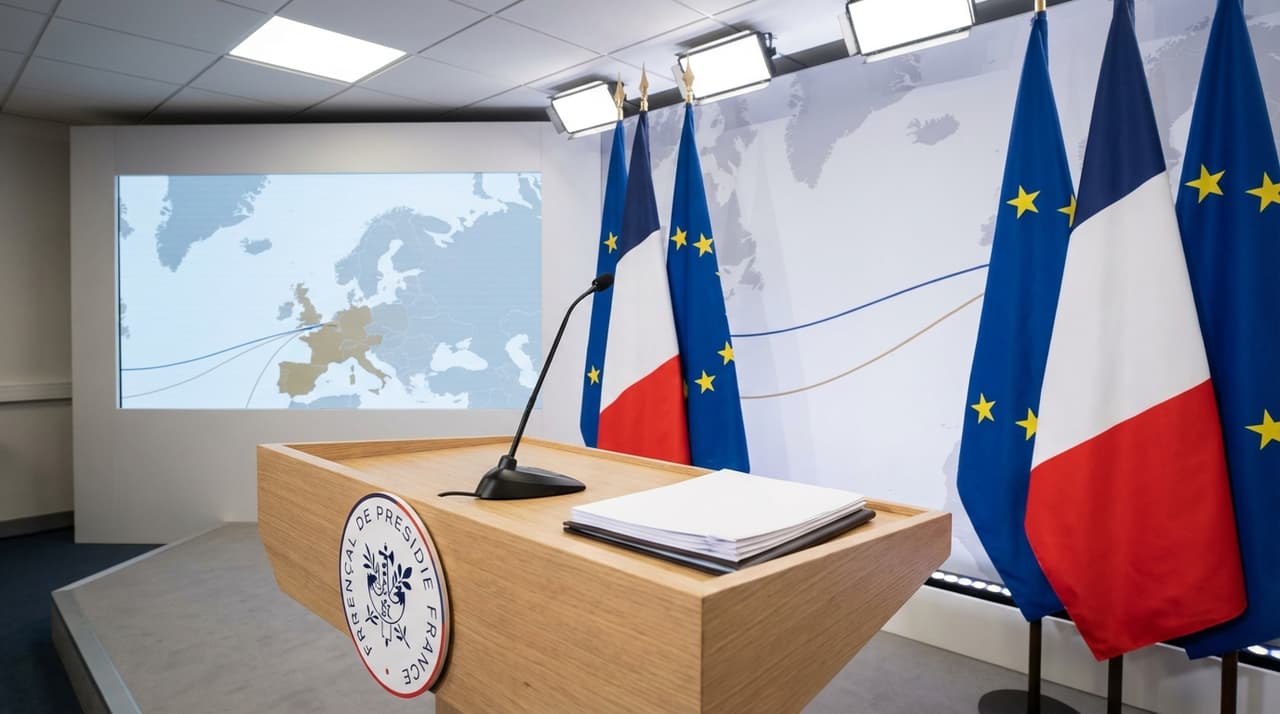
- France's President Emmanuel Macron declares that intimidation and threats will not influence France's positions on Ukraine or Greenland, labeling US-proposed tariffs as unacceptable and affirming a coordinated European response if tariffs proceed.
- US President Donald Trump announced on January 17, 2026, via social media a 10% import tariff on goods from eight European countries, escalating to 25% by June 1 unless the US secures "complete and total purchase" of Greenland from Denmark, targeting nations including France, Germany, and the UK.
- The tariffs risk disrupting over €500 billion in annual EU-US trade, with legality under Supreme Court review, and build on prior 15% tariffs some Europeans accepted for Ukraine and security ties, amid US concerns over Greenland's critical minerals like rare earths.
Macron's Firm Stance Amid Escalating Tensions
French President Emmanuel Macron stated unequivocally that no intimidation or threat can sway France's stance on Ukraine or Greenland, calling US-proposed tariffs unacceptable and affirming that Europeans will respond in a united, coordinated manner if tariffs are confirmed. This comes as US President Donald Trump's announcement of tariffs on eight European countries, including France, Germany, and the UK, starting February 1, 2026, with escalation to 25% by June 1 unless the US secures full ownership of Greenland from Denmark, has heightened transatlantic tensions. According to people familiar with the matter, Macron's remarks directly counter Trump's move, emphasizing European solidarity with Denmark and rejecting any territorial demands that violate sovereignty.
Efforts to de-escalate the situation have hit a snag, with recent White House talks with Danish and Greenlandic ministers resulting only in a vague working group, according to sources. Without a deal, the tariffs could trigger a trade war, potentially inflating US import costs and straining NATO economic ties. Market analysts note that the tariffs, if implemented, might lead to higher prices for goods like pharmaceuticals, echoing previous threats Trump made to France and Germany. In response, Macron warned of "cascading consequences" from any US seizure of Greenland and announced increased French land, air, and sea forces for NATO drills in Greenland, as Denmark boosts its military presence and hosts US-invited Arctic security meetings.
Industry-specific elements include filing deadlines for the tariffs, set to begin on February 1 unless reversed, and the ongoing NATO Arctic drill, Operation Arctic Endurance, which includes US participation but risks fracture if escalation continues. Human touches emerge from Greenlanders rallying in Nuuk for self-governance, braving harsh weather to reject US control, with protests emphasizing that "small countries are not for sale." A bipartisan US delegation has reportedly reassured Denmark, but Trump's rhetoric continues to heighten anxiety across the Danish kingdom, according to stakeholders.
Natural transitions reveal that Trump has pushed for Greenland acquisition since 2019, intensifying post-2025 reelection with ownership demands for security, echoing failed purchase attempts and recent actions in Venezuela. Europe previously conceded tariffs for Ukraine aid, but territory remains a "red line" that violates international law. In the short term, tariffs loom unless reversed, with experts predicting an alliance crisis if annexation is pursued, as it undermines NATO credibility. Long-term implications could include EU coordinated retaliation, weakened transatlantic ties, and intensified Arctic resource races, with CFR analysis noting that Europe's past playbook of concessions fails against territorial demands.
Correction: An earlier version of this article misstated the tariff escalation date; it is June 1, 2026, not May 1.