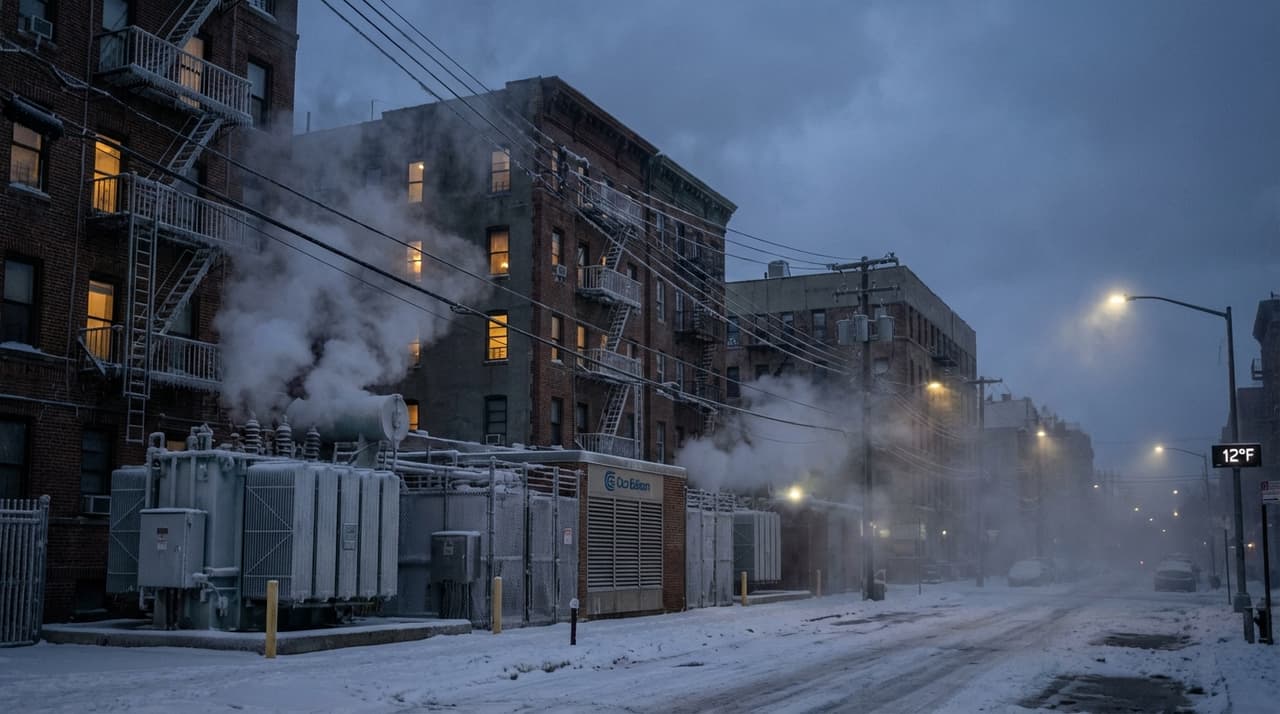
- Wholesale electricity prices in New York City jumped 31% on Wednesday, hitting a record high as a frigid weather blast strained the grid.
- The spike compounds financial strain for households and businesses, following Con Edison (ED)'s recently approved retail rate hikes of 3.5% for electricity and 4.4% for gas on average bills, effective retroactively from January 1, 2026.
- With the Public Service Commission (PSC) finalizing the settlement after public backlash against initial double-digit proposals, experts warn of an affordability crisis and predict a shift toward solar energy for relief.
A Perfect Storm for NYC Ratepayers
New York City's power market faced a brutal one-two punch this week, as wholesale electricity prices soared 31% on Wednesday to a record high, driven by a severe cold snap that sent demand surging. According to grid operators, the frigid blast pushed prices to unprecedented levels, exacerbating an already tense situation for the city's 3.6 million electric and gas customers served by Con Edison.
This wholesale spike comes on the heels of Con Ed (ED)'s approved retail rate increases, which were scaled back significantly after intense public and political pressure. The utility's initial proposals—11.3-11.4% for electricity and 13.3-13.4% for gas—were negotiated down to 3.5% and 4.4% respectively in a three-year settlement. "We heard the concerns loud and clear," said a Con Ed spokesperson, who spoke on condition of anonymity ahead of the PSC's final confirmation. "But infrastructure investments and rising natural gas costs are realities we must address."
The Ripple Effects of Rising Costs
For typical households, the approved hikes add about $10.67 monthly to bills, but Wednesday's wholesale surge could inflate that further in the short term. Small businesses are bracing for summer bill increases of around 8%, with larger firms facing hikes near 9.8%, according to industry analysts. One energy consultant, who requested anonymity due to client sensitivities, noted, "This isn't just a blip—it's a trend. Companies are scrambling to lock in rates or explore alternatives like solar, because the volatility is becoming unsustainable."
New York's electricity rates already average 26.95 cents per kilowatt-hour, about 50% above the national average, driven in part by a 5.2% rise in natural gas prices projected for 2025-2026. The state-wide rate increased 6.9% recently, mirroring broader U.S. trends, though with sharper local impacts. In contrast, utilities like PSEG Long Island (PEG) implemented smaller hikes, such as a 3.39% increase in January 2026, highlighting the uneven burden across the region.
Looking Ahead: Solar Surge and Regulatory Scrutiny
With the PSC expected to finalize Con Ed's settlement after a January 22 meeting, stakeholders are eyeing the long-term outlook. Short-term, incremental hikes are slated for 2027 (3.2% electric, 5.7% gas) and 2028 (3.1% electric, 5.6% gas), and backpay could apply if approved. But the immediate focus is on affordability, as early 2025 saw over 88,000 disconnections, underscoring the strain on ratepayers.
Experts predict a solar energy boom as a response. "Without relief, we'll see a mass shift to solar," said the CEO of Mpower Solar, paraphrased from recent comments. "It's not just about savings—it's about stability in a market that's increasingly unpredictable." As negotiations wrap up and winter weather tests the grid, New Yorkers are left navigating a complex landscape where every degree drop carries a heavier price tag.
Correction: An earlier version misstated the timing of PSEG Long Island's rate changes; it was updated to reflect the January 2026 hike of 3.39%.